
www.buildingsandcities.org/insights/news/life-cycle-pv.html
Life Cycle Inventories of PV Systems
Emerging insights into the specific environmental footprints of PV systems.
The latest LCA Forum considered key issues in research and recent developments in life cycle assessment and carbon footprinting of electricity generation with various photovoltaic technologies and systems.
Introduction and overview
The 91st LCA Forum1 on 31 October 2025 at the University of Applied Sciences, Wädenswil (ZHAW) was opened with a welcome address given by MATTHIAS STUCKI (ZHAW, CH). He emphasised that photovoltaic (PV) electricity is a cornerstone of the global energy transition. While the environmental footprint of PV power systems has significantly decreased over the past decade, transparent and up-to-date life cycle inventory (LCI) data from manufacturers remain scarce. He said it is time to provide a broad overview on the state of LCI data for PV power systems and show ways forward to improve coverage and reliability of these LCI data.
The forum explored technological developments, evolving supply chains, and their implications for LCI modelling and impact assessment. Emphasis was placed on emerging technologies, circularity strategies, and the role of PV in improving the environmental performance of electricity mixes world-wide.
State of PV in CH and key industries
STEFAN OBERHOLZER (Swiss Federal Office of Energy, CH) ) provided an overview of Switzerland’s energy mix, energy outlook, and recent developments in the national policy framework. A key element is the Federal Act on a Secure Electricity Supply from Renewable Energy Sources, approved by popular referendum in 2024, which supports the expansion of renewables in line with the net-zero climate target (https://www.bfe.admin.ch/bfe/en/home/supply/electricity-supply/federal-act-renewable-electricity-supply.html). PVs have expanded rapidly in the last years, reaching around 14% of final electricity consumption (10% in 2024). From 2026 onwards, regulations on local electricity communities and dynamic grid tariffs will enter into force. The presentation concluded with an overview of current PV R&D activities in Switzerland (https://pv.energyresearch.ch).
FIONN BECKER (Fronius International, AT) highlighted in his presentation the critical role of communication among stakeholders, especially in the electronics and PV-inverter sectors. Fronius has observed this issue in semiconductor technology, prompting a detailed review. Different sources report varying environmental impacts of production, making it hard to compare final PV-inverter products. Semiconductor components contribute a large portion of an PV-inverter’s environmental footprint. Therefore, involving more experts within companies is essential to identify these differences and ensure clear, consistent communication.
ABEER ALI KHAN (First Solar, DE) presented best‑practice principles for ensuring credibility and comparability of PV module life‑cycle assessments, stressing that not all verification is created equal. He highlighted that insufficient verification enables untraceable and incomparable results, increasing greenwashing risk. He recommended 1) minimising this risk by applying national grid electricity mixes, internationally accepted tabulated LCI data (e.g. IEA PVPS), and a kWp functional unit to avoid uncertainties; 2) prioritising to Type I ecolabels (ISO 14024), such as EPEAT, which provide higher verification rigor, traceability, and assurance; and 3) ensuring full transparency through public LCI disclosure via IEA PVPS and peer‑reviewed scientific publications.
LCA of PV electricity
NOUHA GAZBOUR (CEA, FR) presented the work of the ADEME in collaboration with CEA, CERTISOLIS and OIE – Mines Paris – PSLtoestablish aggregated inventories of PV modules for public use. LCI data from 89 validated LCAs were first extracted anonymously by CERTISOLIS, covering materials, energy, packaging, infrastructure, transport, and waste. The CEA then defined standard manufacturing processes and Bills of Materials (BOM) for each component, identifying mandatory, secondary, and missing materials to support data harmonisation. Based on this, inventories were analyzed and harmonised by CEA, classifying materials as mandatory, optional, or substitutable to reduce uncertainties. Corresponding activities were identified or created in the ecoinvent database by CEA and Certisolis. Finally, the OIE – Mines Paris – PSL team aggregated the data into average inventories per component, weighted by production capacity, and exported them in multiple interoperable formats for LCA use. Results showed a reduction of the carbon footprint of more than 50% for the different components of PV value chain compared to the inventories actually proposed in Ecoinvent.
MICHAEL GOETZ (ZHAW, CH) reported the status and preliminary results of the ongoing update of life cycle inventory (LCI) data and life cycle assessment (LCA) results for PV electricity within International Energy Agency Photovoltaic Power Systems (IEA PVPS) Task 12 on photovoltaic sustainability, building on the previous Task 12 LCI report published in 2020 (Frischknecht et al. 2020). An intermediate light update was published as a Task 12 fact sheet, reporting updated LCIA results based on a minor update of key PV supply-chain LCI parameters (Stucki et al. 2024). The current comprehensive update, largely informed by aggregated and anonymized inventories from the French PV tender carbon-footprint scheme (Gazbour 2025), is nearing completion; preliminary results suggest another significant reduction in life-cycle impacts of PV electricity production compared with earlier Task 12 publications. After in-depth review, the dataset and corresponding LCI report is expected to be published in 2026 via IEA PVPS Task 12 (Götz et al. in preparation).
CONRAD SPINDLER (Greendelta, DE) presented the environmental impacts of CIGSe thin-film PV in Europe, comparing them to IEA-PVPS models for mono-crystalline silicon. Glass sheets and production electricity can contribute about two-thirds of the environmental impacts compared to standard modules. However, CIGSe modules can be produced without glass, and modern integrated sputtering machines reduce electricity demands to about 30 kWh per m2. With a low-carbon electricity grid, as used by one industrial partner, glass-free CIGSe modules have three to four times lower climate change impacts per Watt-Peak compared to silicon modules from China. They also have mass densities lower than 2 kg per m2, enabling the use on any kind of roofs. However, the 8% absolute efficiency gap between large-scale and small-scale modules remains a challenge for industrial development.
PV in different application systems
MORITZ WAGNER (Hochschule Geisenheim University, Department of Applied Ecology, DE) outlined agrivoltaics as an approach that integrates food production with solar energy generation by installing photovoltaic systems above agricultural land (Wagner et al. 2023). This dual land use offers both opportunities and challenges. Environmental impacts stem from material and energy inputs during construction, increased land demand, and potential crop yield reductions. However, yield losses are smaller in hot, dry years and may further decline under climate change. At the same time, agrivoltaics generates renewable energy and substitutes fossil-based sources. Overall environmental and economic performance is largely driven by the PV component, while agricultural effects remain central to regulation and public debate. Overall, agrivoltaics represents a promising pathway to enhance land-use efficiency and resilience by jointly addressing food security and renewable energy goals.
ROLF FRISCHKNECHT (treeze Ltd., CH) presented the modelling principles to be applied on PV systems in outdoor area and on building integrated PV (Frischknecht 2025). The study was commissioned by the city of Zürich. He recommended: 1) to refrain from determining and crediting potentially avoided greenhouse gas (GHG) emissions outside the system boundary for both PV systems in outdoor areas as well as in building-integrated, mounted, elevated and installed PV systems; 2) to determine the allocation key to be used for outdoor PV system projects in the city of Zurich on the basis of experience gained from the life cycle assessment of real life case studies (buildings, school yard roofings, highway coverings); 3) to determine a reference value for GHG emissions per kWh of electricity by taking into account the desired production profile, to set it comparatively low (for example at 150% of the specific GHG emissions of the market mix of PV pitched roof systems) and to allow for a certain uncertainty tolerance; and 4) to determine the GHG emissions of buildings, including outdoor facilities and associated PV systems, or of buildings including building-integrated, mounted, elevated or installed PV systems where applicable and to compare them with suitable reference values.
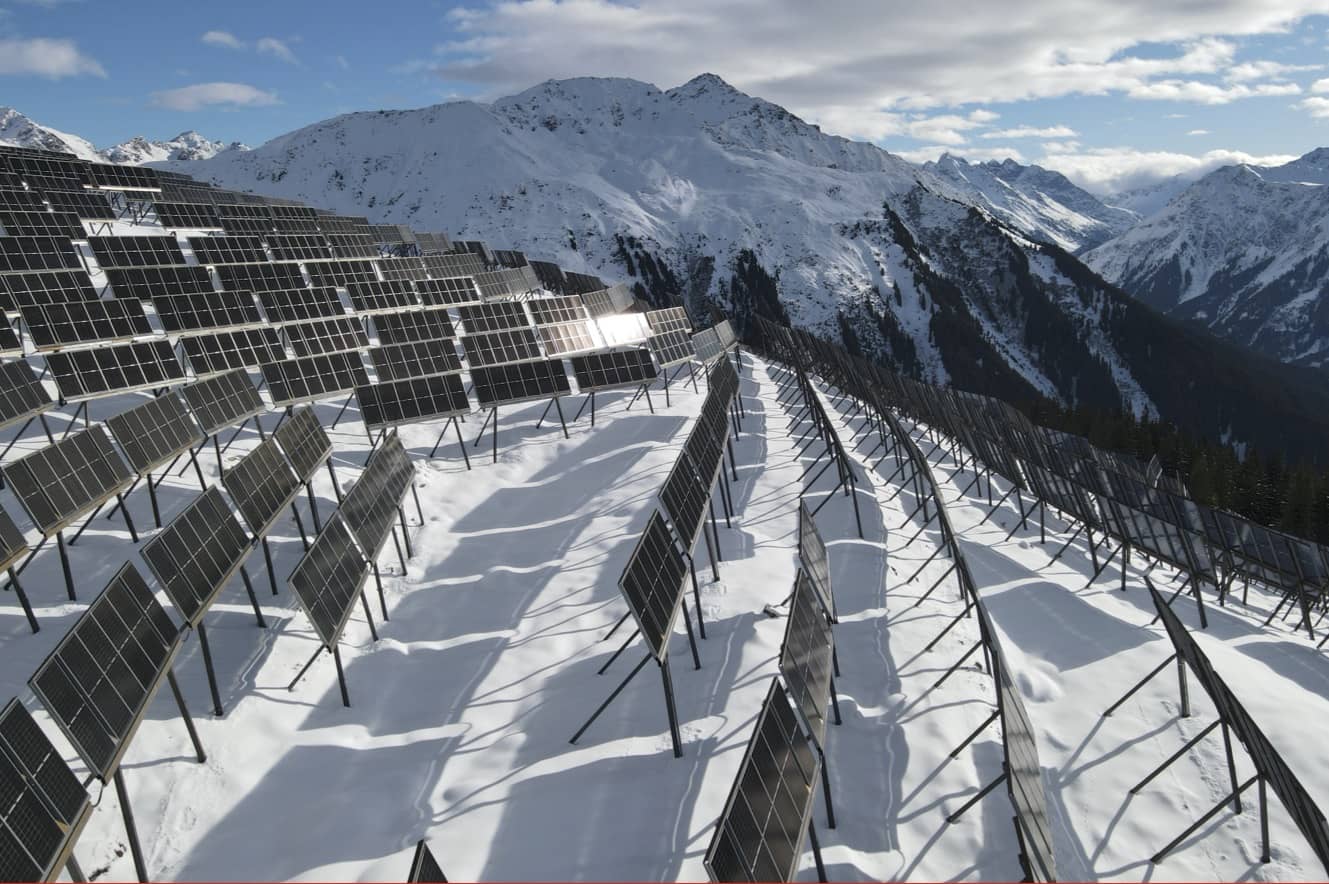
FABIAN ELSENER, (Carbotech, CH) presented the results of his Master's thesis, in which he used life cycle assessment to evaluate the environmental footprint of a high-altitude photovoltaic power plant (Elsener 2024). The case study examined a planned PV installation in the Swiss Alps, comprising nearly 65,000 bifacial single silicon panels that will generate 40 GWh of electricity annually across an area of 270,000 m2 in an altitude over 2,000 metres above sea level. The LCA covered all stages, from manufacturing and construction to operation and deconstruction, with 1 kWh of grid-fed AC electricity defined as the functional unit. The results showed a global warming potential of 32 g CO₂-eq/kWh, with the panels and mounting systems identified as the main environmental hotspots.
MAXIMILIAN BREYER (ifeu – Institute for Energy and Environmental Research Heidelberg, DE) presented the environmental assessment of an offshore floating PV (FPV) concept, covering both LCA and local environmental impacts. He showed that specific efforts in form of breakwater protection against waves, anchors, and other measures lead to higher environmental impacts compared to established renewable energy sources. However, he highlighted that efficient logistics and selecting sites with high solar irradiation are effective ways to mitigate the life cycle impacts. He added that potential local marine impacts such as shading of sensitive biotopes, disturbance of migration routes, or coastal impacts of cable routing must be addressed, but are no fundamental argument against offshore FPV.
DANIELA M. SEITZ (Radboud University, NL) presented an overview of GHG footprints of inland floating PV systems, including estimates of increased aquatic methane emissions at installation sites in addition to the material-related impacts. On-site aquatic methane emissions contribute marginally to the total GHG footprints, but they may raise ecological concerns. Overall, inland floating PV exhibit GHG footprints comparable to other PV technologies, with PV modules typically being the main cause of emissions, suggesting that floating PV can be an environmentally sustainable addition to ground-based and rooftop PV.
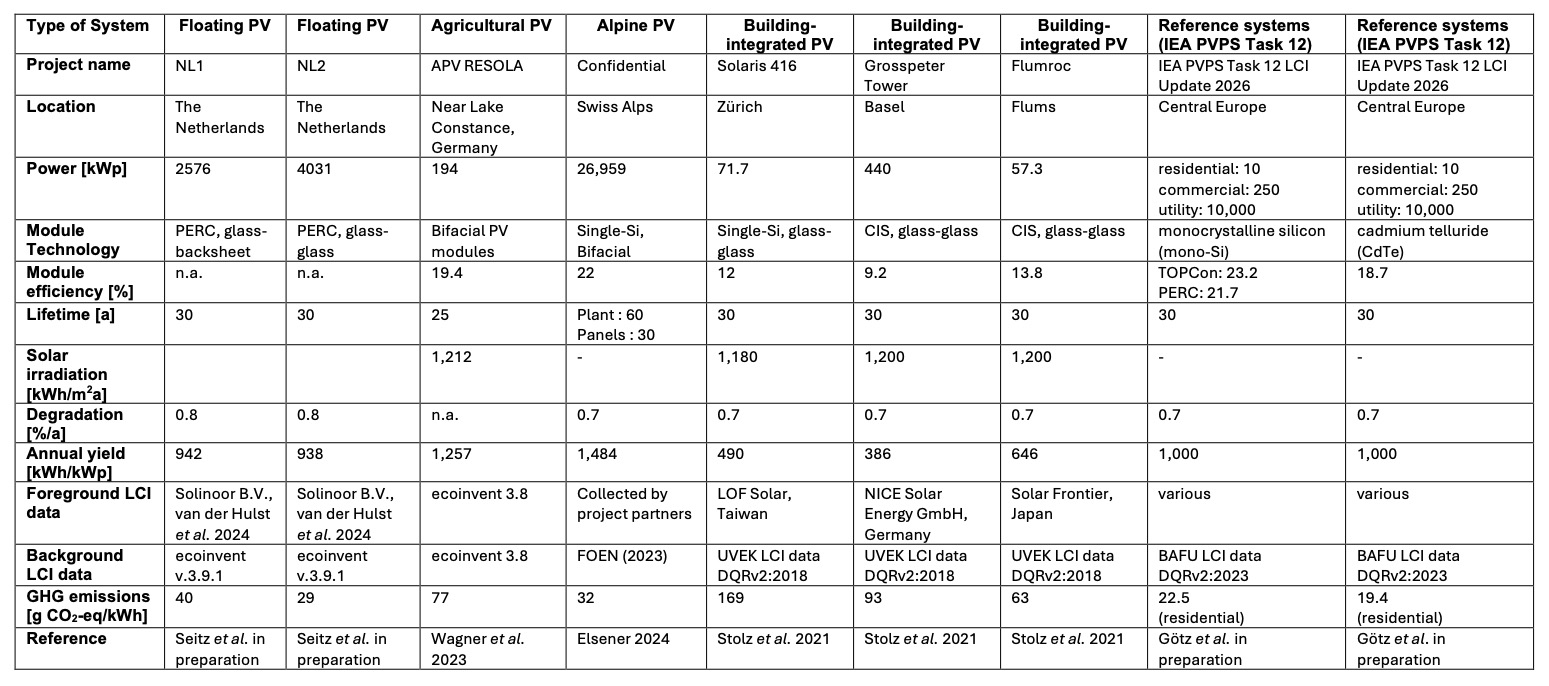
The main characteristics as well as the GHG emissions per kWh electricity produced with the different floating, agricultural, alpine and building integrated PV systems are shown in Table 1 (offshore FPV not included). The yield varies between 390 and 1,485 kWh/kWp and the GHG emissions vary between 30 and 170 g CO2-eq/kWh. According to the case studies presented, the GHG emissions per kWh electricity produced with floating and alpine PV are substantially lower than those produced with agricultural and building integrated PV. The current thorough update of LCI of PV supply chains results in GHG emissions of 22.5 and 19.4 grams CO2-eq per kWh electricity produced a residential roof top PV system with c-Si and CdTe panels, respectively.
Table 1: Floating,
agri, Alpine, building-integrated and residential PV system case studies: main
characteristics and GHG emissions per kWh electricity.
PV circularity and scenarios
MATHILDE MARCHAND LASSERRE (Mines Paris – PSL, FR) presented research on integrating PV end-of-life pathways into LCA, focusing on key methodological challenges such as recycling modeling, allocation choices, uncertainty, and temporal dynamic considerations. Through case studies on silicon PV in France and emerging perovskite/silicon tandem technologies, she showed how different recycling approaches can significantly affect environmental impact results (Wang et al. 2024). She emphasized the need for dynamic and prospective LCA, improved data for emerging technologies, and harmonized frameworks to better capture circularity and long-term sustainability in the PV value chain.
PETER HENRI BRAILOVSKY SIGNORET (Fraunhofer ISE, DE) presented his research on circular production strategies in PV manufacturing. He proposed and validated a methodological framework to construct integral, bottom‑up, process‑based life cycle inventories (LCIs) and to systematically evaluate circularity strategies (Brailovsky 2026). The work comprises comprehensive material and waste flow LCIs from polysilicon to PV modules, a wastewater treatment LCI for solar cell factories, and factory and infrastructure LCIs for a 5 GWp/a vertically integrated polysilicon‑to‑module industrial site. Circularity options such as waste revalorisation and vertical integration (Brailovsky et al. 2023), rinsing‑water recycling and minimal liquid discharge (Brailovsky et al. 2024a), and sustainable structural building systems (Brailovsky et al. 2024b) are assessed. A key outcome is the creation and open disclosure of state‑of‑the‑art LCIs for PV factories and the PV value chain, supporting more robust LCA studies, circularity assessments, and database updates (e.g. ecoinvent).
MARA HAUCK (TNO, NL) presented prospective PV life cycle inventories for CIGS (rigid and flexible), CdTe, and silicon-peroskite tandems that had been developed together with TNO. All inventories start from public or in-house research data and used a common approach to estimate future environmental performance (van der Hulst et al. 2020) and the data are either already public or available upon request. For most investigated impact categories, future impacts are estimated to be lower compared to current data, but the major causes of reduction vary and can be related to the technology development and external developments (‘background’).
ZEENA PATEL (Technische Universität Ilmenau, DE) presented a structured mapping framework for Life Cycle Impact Assessment methodologies addressing resource use impacts. The work contributes to the SustEnMat Project, which investigates next-generation III-V solar cell technologies, with assessing sustainability potential of these technologies. The presentation highlighted methodological gaps, classification challenges, and the need for harmonized indicators to consistently evaluate resource depletion and critical material use in emerging photovoltaic technologies, supporting more robust sustainability assessments in advanced materials research.
Conclusions
ROLF FRISCHKNECHT summarised the main insights highlighting the following three aspects:
- The significant increase in regulatory demand for LCA increases the requirements for the reliability of LCA and ultimately of LCI data. Task 12 of IEA PVPS is perceived as the ideal organisation to ensure quality, consistency and materiality of life cycle inventory data on PV electricity and its supply chains.
- The update of PV electricity life cycle inventory data performed by IEA PVPS Task 12 will profit from consolidated industry data and will further improve data quality and reliability.
- The expansion of PV systems to building-integrated, floating, agricultural and alpine systems entails additional efforts and larger specific environmental footprints of PV electricity. However, this is still much smaller compared to fossil-based electricity.
Note
1. This conference report was jointly authored by: Rolf Frischknecht, Michael Götz, Fionn Becker, Peter Henri Brailovsky, Maximilian Breyer, Fabian Elsener, Nouha Gazbour, Mara Hauck, Abeer Ali Khan, Mathilde Marchand Lasserre, Stefan Oberholzer, Zeena Patel, Daniela M. Seitz, Conrad Spindler, Moritz Wagner and Matthias Stucki. Special thanks to Rolf Frischknecht for coordinating and editing the individual contributions. Conference presentations and videos are available for download from the LCA forum’s website.
References
Brailovsky P., Baumann K., Held M., Briem A.-K., Wambach K., Gervais E., Herceg S., Mertvoy B., Nold S. & Rentsch J. (2023). Insights into circular material and waste flows from c-Si PV industry. EPJ Photovolt., 14, 5. https://doi.org/10.1051/epjpv/2022029
Brailovsky P., Reich J., Subasi D., Fischer M., Dannenberg T., Held M., Briem A.-K., Rentsch J., Preu R., Geißen S.-U. & Nold S. (2024a). Circular water strategies in solar cells manufacturing. Solar Energy, 273, 112536. https://doi.org/10.1016/j.solener.2024.112536
Brailovsky P., Sanchez L., Subasi D., Rentsch J., Preu R. & Nold S. (2024b). Photovoltaic manufacturing factories and industrial site environmental impact assessment. Energies, 17(11), 2540. https://www.mdpi.com/1996-1073/17/11/2540
Brailovsky P. (2026). Circular production strategies and sustainable design criteria in PV manufacturing. Albert-Ludwigs-Universität Freiburg, Freiburg, Germany. https://doi.org/10.6094/UNIFR/276400
Elsener F. (2024). Life cycle assessment of a high-altitude photovoltaic power plant in the Swiss Alps. ZHAW Zürcher Hochschule für Angewandte Wissenschaften, Wädenswil. https://doi.org/10.21256/zhaw-35910
Frischknecht R., Stolz P., Krebs L., de Wild-Scholten M., Sinha P. & Raugei M. (2020). Life cycle inventories and life cycle assessments of photovoltaic systems, report T12-19:2020. International Energy Agency (IEA) PVPS Task 12.
Frischknecht R. (2025). Methodik Ökobilanz für gebäudeintegrierte PV und PV im Aussenraum. treeze Ltd., Uster.
Gazbour N. (2025). LCI from the French tender process. Proceedings fro: 91st LCA Discussion Forum (LCA of photovoltaic power systems), 2025-10-31. https://lca-forum.ch/fileadmin/generic_lib/Resources/Public/Downloads/DF91/04_Nouha_Gazbour.pdf
Götz M., Deuber R., Gazbour N., Brailovsky P. H., Marchand-Lasserrre M., Bovo G., Frischknecht R. & Stucki M. (in preparation). Life cycle inventories and life cycle assessment of photovoltaic systems. International Energy Agency (IEA) PVPS Task 12.
Stolz P., Krebs L., Frischknecht R., Urena Hunziker D. & Muntwyler U. (2021). Life cycle assessment of active glass façades. Commissioned by the Federal Office for the Environment (FOEN), the Federal Office of Energy (SFOE) and the City of Zurich, Office of Building Construction (AHB), Uster and Burgdorf, Switzerland.
Stucki M., Goetz M., de Wild-Scholten M. & Frischknecht R. (2024, May). Factsheet - environmental life cycle assessment of electricity from PV systems: 2023. https://iea-pvps.org/wp-content/uploads/2024/05/Task-12-Fact-Sheet-v2-1.pdf
van der Hulst M. K., Huijbregts M. A. J., van Loon N., Theelen M., Kootstra L., Bergesen J. D. & Hauck M. (2020). A systematic approach to assess the environmental impact of emerging technologies: A case study for the GHG footprint of CIGS solar photovoltaic laminate. Journal of Industrial Ecology, 24(6), 1234-1249. https://doi.org/10.1111/jiec.13027
van der Hulst M. K., Magoss D., Massop Y., Veenstra S., van Loon N., Dogan I., Coletti G., Theelen M., Hoeks S., Huijbregts M. A. J., van Zelm R. & Hauck M. (2024). Comparing environmental impacts of single-junction silicon and silicon/perovskite tandem photovoltaics-a prospective life cycle assessment. ACS Sustain Chem Eng, 12(23), 8860-8870. https://doi.org/10.1021/acssuschemeng.4c01952
Wagner M., Lask J., Kiesel A., Lewandowski I., Weselek A., Högy P., Trommsdorff M., Schnaiker M.-A. & Bauerle A. (2023). Agrivoltaics: the environmental impacts of combining food crop cultivation and solar energy generation. IAgronomy, 13(2), 299. https://www.mdpi.com/2073-4395/13/2/299
Wang L., Oberbeck L., Marchand Lasserre M. & Perez-Lopez P. (2024). Modelling recycling for the life cycle assessment of perovskite/silicon tandem modules. EPJ Photovoltaics, 15(14). https://doi.org/10.1051/epjpv/2024010


Latest Peer-Reviewed Journal Content

Moving homes and energy poverty: residents’ concerns, capabilities and responses
M Jalas, J Rinkinen, S Numminen & E Valkealahti
Reference study for biogenic carbon storage in the residential building stock
O Iliescu, I Talvitie, A Amiri & S Junnila
Building space heating and cooling in NDCs 4.0
T P Lützkendorf
Building component reuse as sociomaterial interaction: lessons from precast concrete
J Uusikartano, L Alkki & V Capitani
Validating national reuse indicators from regional demolition data: a Swedish example
F Ericsson, K Mjörnell & U Janson
Climate change risk and decision-making [editorial]
S Foxell & I Cooper
Technologies of reconstruction [editorial]
P Tombesi
Urban form metrics for building occupancy modelling: applications and impacts
D Reiter, M Jehling & R Hecht
Retrofit realism: affordable low-carbon policies for existing homes
N Eyre & R Khosla
Join Our Community

The most important part of any journal is our people – readers, authors, reviewers, editorial board members and editors. You are cordially invited to join our community by joining our mailing list. We send out occasional emails about the journal – calls for papers, special issues, events and more.
We will not share your email with third parties. Read more
Latest Commentaries
Who is Responsible for Climate Change?
Ian Cooper (Eclipse Research) explores the questions of responsibility raised in the recent Buildings & Cities special issue ‘Climate Change Risk and Decision-Making’. Focusing here on carbon emissions and mitigation, global responses will require grounding in what can work locally. New responsibilities arise for the wide range of built environment decision-makers: clients, professionals and their institutions, central and local governments, product suppliers, financiers, insurers, etc. A framework is needed to manage the complexity of responsibilities especially for variety of actors, the time frames and spatial scales.
Professional Ethics in a Climate Crisis
The climate crisis has progressed into a dangerous phase with tragic consequences often counted in numbers of excess deaths, but also by powerful economic impacts of rising food prices, the increased costs of insurance and lending, costly damage to the built environment. Celia Davies, Director of Impact at the UK’s Town and Country Planning Association (TCPA) and Hugh Ellis, Director of Policy at TCPA, consider the responsibilities of professionals in shaping a built environment which is fit not just for today's climate risks but for the dramatic increase in severe and unpredictable weather which is now locked into our climate systems.