
www.buildingsandcities.org/insights/news/frank-duffy-researcher-and-practitioner.html
Frank Duffy: Researcher and Practitioner
Rob Harris (Ramidus Consulting) reflects on Frank Duffy’s achievements and relevance to the wider research and practice communities.
Dr Francis (Frank) Cuthbert Duffy CBE passed away on 21st February, aged 85, following a long illness. Frank’s extraordinary career had a far-reaching, permanent impact internationally, both on architecture and design, and the wider real estate industry.
Frank’s greatest impact had its origins in the deregulation of financial services in the City of London in 1986 (‘Big Bang’). This singular event transformed London’s real estate market, leading to dramatic changes in the demand for buildings. For Frank, and his colleagues at DEGW, it provided a real time ‘laboratory’ in which to develop and apply thinking about the changing role and design of offices, to wonderful effect.
Key themes
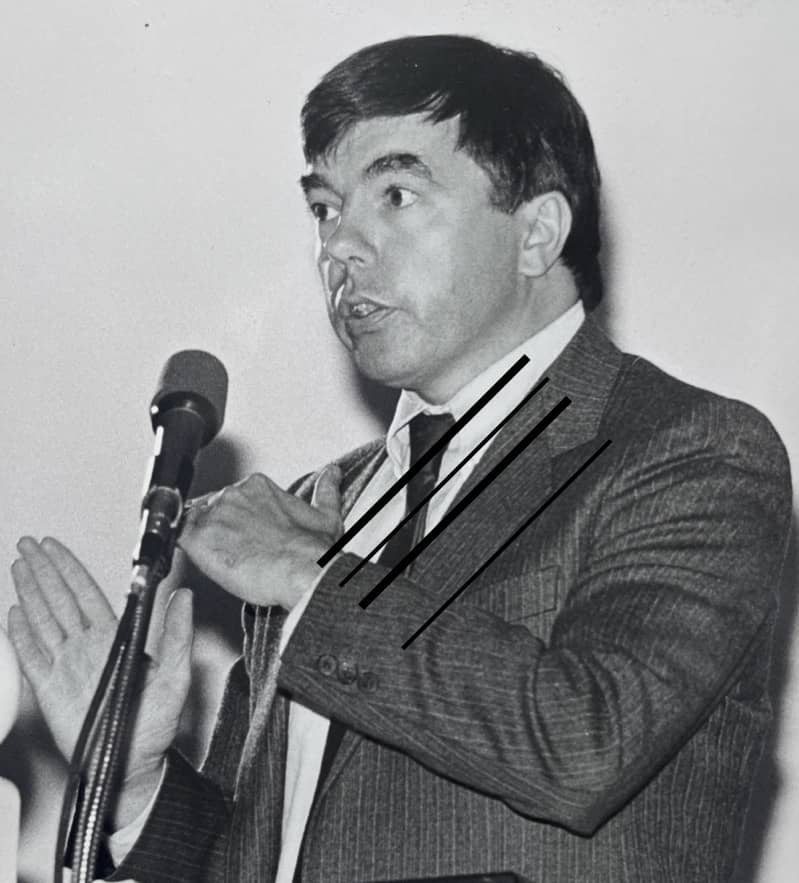
Before Frank’s work, and that of his colleagues at DEGW, offices were regarded as the inert and passive backdrop to work, an expensive bi-product of doing business. Frank’s insight was that the office should be seen as a business resource, to be planned and provided in the same efficient and effective way as other organisational resources. This transformation in thinking can be traced through a number of publications and via four themes: Organisation, Form, Technology and Time.
Organisation
Rather
than seeing office organisations as large, slow moving and bureaucratic
monoliths, he grasped a new interpretation based on change and variability. He
saw that organisations and their relationship with space were changing rapidly
under the twin forces of technology and economic pressure. He speculated that there
would need to be dynamic new ways to accommodate them and to continually
respond to an increasingly unstable and unpredictable business environment.
Frank was also fascinated by the relationship between the individual and the
corporation; the constant negotiation between the two, and how this expressed
itself in the nature of space (Duffy & Worthington 1977).
In 1984 and 1985, DEGW ran a series of focus groups involving City companies that revealed a deep-seated feeling among the participants that the buildings they occupied were inadequate to meet their future operational needs in a rapidly changing business environment. The results of the work were summarised in Accommodating the Changing City (DEGW 1985), the first serious attempt to describe the impact of Big Bang on the built environment.
Frank’s insight, in ecological terms, was that organisations were coming to be managed less as huge corporate machines and more as communities of workers, in which work was increasingly about short-term assignments, communication, mobility and connectivity. In such organisations, knowledge becomes the currency of exchange, and traditional approaches to command and control structures break down. He explored the need for ‘interaction’ and ‘autonomy’ in work to describe the need for different types of work settings to suit different work activities. These were ideas that Frank first developed during his doctoral research at Princeton, between 1968 and 1971.
Form
Under Frank’s
direction, DEGW developed techniques for comparing the
physical characteristics of buildings in a consistent and objective manner, and
matching them with occupier profiles. The earliest work was Four Properties Compared (DEGW 1983) undertaken for Stuart Lipton’s ground breaking One Finsbury Avenue
project in the City of London. This was followed by an altogether more
ambitious project and perhaps the most influential report of the genre: Eleven Contemporary Office Buildings: A
Comparative Study (DEGW 1986), part of the early briefing process for the
Broadgate buildings. The report itself made very clear that the purpose of the
comparison was to remedy the
lack of information about building performance, and to define not how the buildings
were constructed but what they could do: particularly their capacity to
accommodate the new kinds of City organisations.
Technology
Frank understood the role of technology as a change agent.
He co-wrote some of the first research exploring the potential impact of emerging
technologies on work and buildings: Organisations,
Buildings and Information Technology (ORBIT) (DEGW 1983), undertake with
Building Use Studies and EOSYS. Frank also saw early the relationship between
technology and working styles, which he described as “inherently more interactive than old office routines and give people
far more control over the timing, the content, the tools and the place of work”
(Duffy 1997, p 46). He wrote of the
“possibilities inherent in information technology to allow staff to enjoy a new
freedom in relating home, work, and leisure” (Duffy 1997, p 54).
Time
Frank was fascinated by the life cycles of buildings,
particularly the tension between the time horizons of investors (long) and
those of occupiers (short). This interest expressed itself in the masterpiece, Planning Office Space (Duffy et
al. 1976), which described four distinct building elements: shell, services,
scenery and settings, each with increasingly short planning timescales. In
combination, these building features evolve over time, allowing buildings to
adapt to new uses and occupiers: “a whole
series of layers of materials with varying degrees of longevity” (Duffy 2008, p 39).
This crucial insight suggested that each element should be designed inter-dependently, to allow replacement and upgrade at different stages of the building life cycle. Never has this message been more important than today when we consider zero carbon growth, and the balance that must be struck between new build and re-use.
The more subtle significance of time was that the ‘perfect workplace’ was a chimera. It was, quite rightly, always ‘work in progress’, constantly responding to the changing needs of those occupying the space. It was from this perspective that Frank rightly identified and promoted Facilities Management as an essential skill in the workplace life cycle.
Frank brought all of this thinking to public attention with a prodigious published output. Apart from scores of papers and articles, his books included: The Changing City (Duffy & Henney 1989); The Changing Workplace (Duffy 1992); The Responsible Workplace (Duffy et al. 1993); The New Office (Duffy 1997); New Environments for Working (Laing et al.1998) and Work and the City (Duffy 2008).
Professional impact
Frank was imbued with the notion of professional collaboration, and surrounded himself with sociologists, environmentalists, economists, town planners and others who enriched built environment discussion. In 1995, he wrote a proposal for a joint ICE/RIBA “Ginger Group”, which led to the formation The Edge, a multi-disciplinary, campaigning built-environment think tank. In it he wrote that the proposal was a means
"of liberating the two institutes from their exclusivity and concern for internal political pressures. Both institutes will be able to use the Ginger Group as a means of stimulating debate and public interest … without committing themselves to the particular points of view expressed." (Unpublished, 25 October 1995)
And in a fascinating and
thought-provoking paper (Duffy & Rabeneck 2013) he stressed that the desire
and need to collaborate was driven by the urgent need “to address the complex and inherently interdisciplinary issues raised
by the challenge of sustainability in the face of climate change” (p 120) and that
such collaboration should explore:
"the potential for a radical redefinition of professional structures within the wider construction industry as well as practical ways to promote discussion, collaboration and added value." (p 120)
Frank was that rare creature –
both researcher and practitioner. He was passionate about the need for
knowledge, data and understanding to feed into the design and delivery of workspace,
whether this was from primary data gathering or assessing the performance of
existing buildings. To this end, in 1998, he published a collection of papers
under the title: Architectural Knowledge:
the Idea of a Profession. An expansive, perhaps seminal piece of work, in
which he wrote in the Afterword that the globalisation of the architectural
profession was under way, and that, as one
"of the most powerful instruments for developing, applying and transmitting knowledge ever invented, the professional institute, has an enormous amount of potential and is likely to have a much more central place in the society of the twenty first century. The price will be the rewiring of all conventional professional procedures …. The idea of a knowledge-based architectural profession will be catalytic in an increasingly knowledge-based society." (Duffy with Hutton 1998, p 155)
Such insight, almost three decades ago before AI became part of everyday discussion.
Frank was President of the RIBA, 1993-1995, during which time he defended the profession from government proposals to deregister the title of architect and to abbreviate the five-year educational course. He also updated the RIBA’s 1962 report The Architect and His Office with his own Strategic Study of the Profession (1991 to 1995) which took a long-term view and which placed architectural knowledge at the core of the profession (Duffy 1995).
In his later work, Frank sought to link the workplace to a broader consideration of ‘urban place’, anticipating what we now call place making. He argued that ‘place’ “is impregnated with memory, association, recall and resonance”; and that it opens up “unanticipated opportunities” [and] “engenders serendipity”. Place, he wrote, “promotes sociability and networking”; and is “is good at expressing meaning: subtlety, beauty, pleasure” (Duffy 2008, p 58-59).
These were not axioms responding to the fad of the time: they were research-based, robust and defensible principles. He argued that in the knowledge economy, buildings and cities would be measured “by the amount of knowledge … and quantity of ideas that are generated within their fabric” (Duffy 2008, p 59).
Legacy
In the early-1980s, research in the built environment was very limited in its scope and influence. Frank’s work, along with that of a small number of dedicated researchers, had a huge international impact by making research a mainstream activity. In the early days of DEGW’s City research, Frank was not just seeking to redefine ‘the workplace’, he was challenging what he referred to as the ‘the iron grip’ of the supply process. Developers, investors, commercial architects and surveyors had to shift their thinking, and therein lay the bigger impact of Frank and DEGW’s work.
Frank’s appreciation of data and of qualitative evidence, his rigour and his inter-disciplinary approach armed him with the self-belief to challenge the status quo. Together, these qualities led to an unmatched body of work, and it was a privilege to have worked with him and played a very small part along the way. He was an exceptional thinker and doer. He was always questioning, articulate, persuasive and visionary. With his partners at DEGW, he created a diaspora of professional folk who have gone on to have much broader influence.
Frank explored and explained before others did the importance of the intersection between organisation, form, technology and time, and he was fascinated by the evolving mediation between client and user. These are things that the built environment continues to grapple with today, and Frank’s work provides an enduring underpinning to that continuing work.
Note
A more detailed life biography can be found in the Lives Retold series, found at https://livesretold.co.uk/frank-duffy.
References
DEGW. (1983). Four Properties Compared. London: DEGW.
DEGW. (1985). Accommodating the Changing City. London: DEGW.
DEGW. (1986). Eleven Contemporary Office Buildings: A Comparative Study. London: DEGW
Duffy, F. (1983). The Orbit Study: Information Technology and Office Design. London: DEGW/EOSYS.
Duffy, F. (1992). The Changing Workplace. London: Phaidon Press.
Duffy, F. (1995). Strategic Study of the Profession. London:RIBA.
Duffy, F. (1997). The New Office. London: Conran Octopus.
Duffy, F. with Hutton, L. (1998). Architectural Knowledge: The Idea of a Profession. London: E & FN Spon.
Duffy, F. (2008). Work and the City. London: Black Dog Publishing.
Duffy, F., Cave, C. & Worthington, J. (eds). (1976). Planning Office Space. London: The Architectural Press.
Duffy, F. & Henney, A. (1989). The Changing City. London: Bulstrode Press.
Duffy, F., Laing, A. & Crisp, C. (1993). The Responsible Workplace: the Redesign of Work and Offices. Oxford: Butterworth Architecture.
Duffy, F. & Rabeneck, A. (2013). Professionalism and Architects in the 21st Century. Building Research & Information, 41(1),115–122. https://doi.org/10.1080/09613218.2013.724541
Duffy, F. & Worthington, J. (1977). Organisational Design. Journal of Architectural Research, 6(1), 4-9.
Laing, A., Duffy, F., Jaunzens, D. & Willis, S. (1998). New Environments for Working. London: Taylor & Francis.
Latest Peer-Reviewed Journal Content
Moving homes and energy poverty: residents’ concerns, capabilities and responses
M Jalas, J Rinkinen, S Numminen & E Valkealahti
Reference study for biogenic carbon storage in the residential building stock
O Iliescu, I Talvitie, A Amiri & S Junnila
Building space heating and cooling in NDCs 4.0
T P Lützkendorf
Building component reuse as sociomaterial interaction: lessons from precast concrete
J Uusikartano, L Alkki & V Capitani
Validating national reuse indicators from regional demolition data: a Swedish example
F Ericsson, K Mjörnell & U Janson
Climate change risk and decision-making [editorial]
S Foxell & I Cooper
Technologies of reconstruction [editorial]
P Tombesi
Urban form metrics for building occupancy modelling: applications and impacts
D Reiter, M Jehling & R Hecht
Retrofit realism: affordable low-carbon policies for existing homes
N Eyre & R Khosla
Join Our Community

The most important part of any journal is our people – readers, authors, reviewers, editorial board members and editors. You are cordially invited to join our community by joining our mailing list. We send out occasional emails about the journal – calls for papers, special issues, events and more.
We will not share your email with third parties. Read more
Latest Commentaries
Who is Responsible for Climate Change?
Ian Cooper (Eclipse Research) explores the questions of responsibility raised in the recent Buildings & Cities special issue ‘Climate Change Risk and Decision-Making’. Focusing here on carbon emissions and mitigation, global responses will require grounding in what can work locally. New responsibilities arise for the wide range of built environment decision-makers: clients, professionals and their institutions, central and local governments, product suppliers, financiers, insurers, etc. A framework is needed to manage the complexity of responsibilities especially for variety of actors, the time frames and spatial scales.
Professional Ethics in a Climate Crisis
The climate crisis has progressed into a dangerous phase with tragic consequences often counted in numbers of excess deaths, but also by powerful economic impacts of rising food prices, the increased costs of insurance and lending, costly damage to the built environment. Celia Davies, Director of Impact at the UK’s Town and Country Planning Association (TCPA) and Hugh Ellis, Director of Policy at TCPA, consider the responsibilities of professionals in shaping a built environment which is fit not just for today's climate risks but for the dramatic increase in severe and unpredictable weather which is now locked into our climate systems.