
www.buildingsandcities.org/insights/commentaries/reimagining-climate-action.html
Reimagining Climate Action, Community Engagement and Professional Responsibility
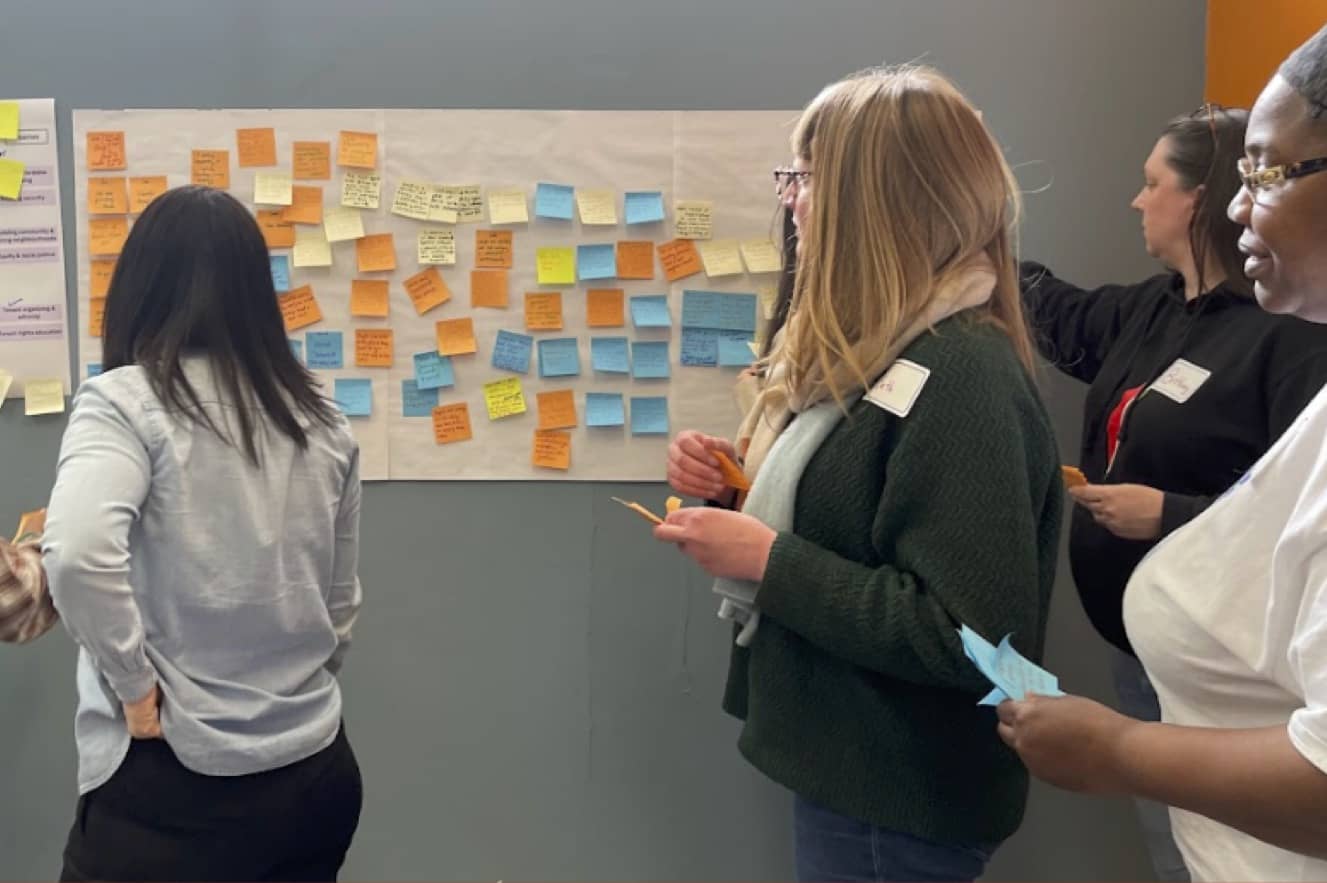
How can cities achieve higher levels of public support for, and behavioural engagement in, climate mitigation and adaptation?
Climate change poses a plethora of challenges for decision- and policy-making on multiple scales. Adopting a risk perspective can identify multiple kinds of risk that must be addressed if climate action is to be successful. John Robinson and Emily Smit (University of Toronto), Pamela Robinson (Toronto Metropolitan University) and Anne Gloger (Catalysts’ Circle) consider the decision-making risks having to do with whether climate mitigation and adaptation policies and programs are likely to achieve their goals.
Key questions to address are:
- How can climate policies be developed in ways that make them likely to be successful in terms of political support and the behavioural responses of citizens?
- What are the implications for professional actors, including community development practitioners, urban planners, and designers?
- How can the need for community-centred approaches to climate action and technical expertise be reconciled?
Don’t lead with climate; lead with local sustainability
Many cities across the globe have net-zero GHG emissions aspirations, which will require unprecedented levels of political support to enable the passage of strong climate policies (e.g. mandate the energy performance of buildings), and behavioural engagement on the part of residents to change their practices and undertake the measures (e.g. retrofitting buildings) that these policies require if climate targets are to be met.
The methods adopted by most cities to build support and engage residents on climate change tend to be focused strongly on public education campaigns, informing residents about the seriousness of the climate challenge, and about the specific actions that will be required to accomplish the city’s climate action goals, often accompanied by information on the co-benefits of such actions, and sometimes by the provision of financial incentives. This approach assumes that if only citizens understood the real nature of the climate problem, they would act accordingly.
However, there is little evidence to suggest that such information-based campaigns will achieve the level of support and engagement required to meet climate goals. Cities are now realizing they will miss their climate targets at the current rates of climate action uptake, and that an alternative approach is required.
One such alternative is to focus on activities that build trust and support actions that advance local agendas. This approach is being tested in a four-year project called Visionary Communities, located in the Kingston-Galloway/Orton Park (KGO) neighbourhood of Scarborough in Toronto, Canada.
This project assumes that engaging on a broader sustainability agenda that is designed to connect with what matters in the community, will enable residents to draw conclusions about climate mitigation and adaptation that are directly relevant to their own realities.
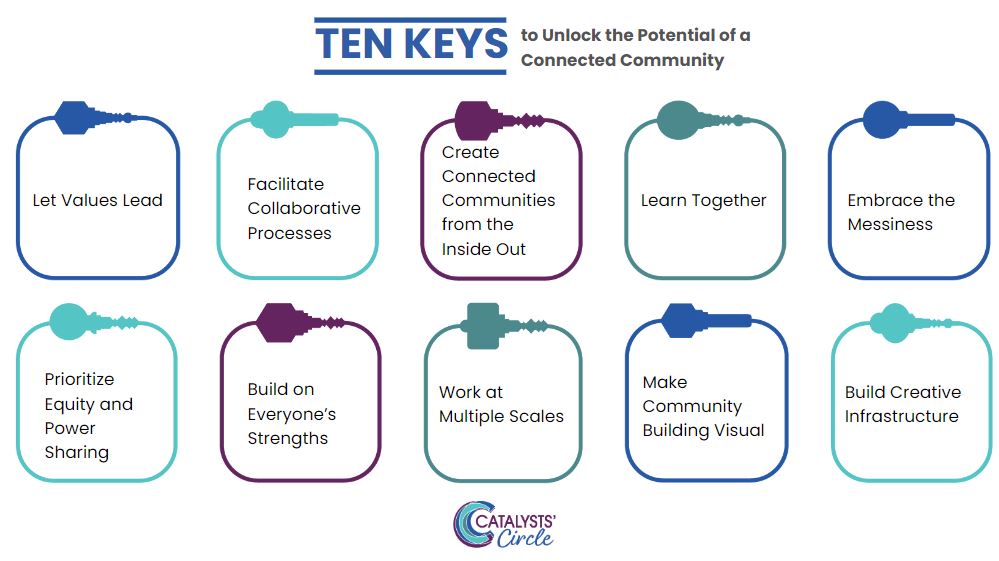
Our work in KGO, therefore, does not lead with climate issues and the City’s agenda but starts with learning about existing local projects, values and priorities, and documenting the long-term aspirations that local people and organisations are working towards. The project (Robinson et al. 2025) is rooted in the Connected Community Approach (see Figure 1) and transdisciplinary knowledge co-production, and works with local actors—people actively engaged in projects designed to improve their community—to identify a desired neighbourhood future consistent with the goals these neighbourhood activities are working towards, and potential pathways and actions required to support such a future. Simultaneous to this process, the Visionary Communities researchers then look for connections to the City of Toronto’s climate goals and targets, and for ways the City might use its climate action agenda to support community priorities.
In linking the City’s climate goals explicitly to the pre-existing collective agendas of neighbourhood residents, the project is testing the hypothesis that such an approach will lay the groundwork for higher levels of public support for, and behavioural engagement in, climate mitigation and adaptation efforts than the City of Toronto has been able to achieve to date. If residents see that their values, aspirations and priorities are being supported, and that there are ways that climate action will advance local goals, we suggest that they will be more likely to support, and engage in, that climate action.
This approach requires investment in designing and implementing programs that reinforce the connections between local equity, wellbeing and resilience agendas and climate action outcomes. Therefore the “don’t lead with climate; lead with local sustainability” approach is not intended to guarantee successful uptake of climate action directly, but to create enabling conditions which are necessary to achieve the levels of support and engagement required.
Rethinking the role of experts in climate action
Meaningful efforts to connect climate action goals with local agendas and priorities, such as those proposed in the Visionary Communities project, recontextualize expert knowledge, meaning that professionals need to embrace a new role and rethink their interaction with communities and local expertise. Professional expert contributions need to be situated in relation to community goals and development agendas, not just with government priorities, and not as the sole source of authoritative knowledge. This poses the question; how can various kinds of expertise provide useful information to an expanded urban policy-making process?
In this context, framing the issue as a potential conflict between community desires and expert knowledge may be unhelpful. We need to challenge the notion that expert knowledge tells us what to do. Expert judgement should explain the consequences of different courses of action, but the judgement about what to do is a normative political one, which should occur at the municipal level but also have a community component. What is being suggested here is that expert knowledge should feed into an expanded decision-making process that takes account of community priorities and values.
The expertise of community development professionals and organisations devoted to building community at the local level are therefore critical parts of knowledge co-production. These professionals and local experts provide a different kind of expertise, specifically, understanding what climate mitigation and adaptation strategies can advance local efforts towards healthier, more equitable and resilient communities. City leaders ultimately make the decisions, but to be most effective, these should be based on a clear understanding of neighbourhood priorities and desires, and how these can be supported by city agendas, with professional expertise potentially supporting the forging of these connections.
Of course, the input of experts with regard to climate action is crucial, for example, for estimating the potential impacts and costs of various climate change impacts, for determining the technical and economic potential of climate action measures, or for analysing the various planning policy options and their likely consequences under different circumstances. To effectively engage with community priorities, however, such work must be combined with the work of community development professionals, in the context of linking community priorities to climate action. This suggests professionals should see themselves less as educators of citizens and policy-makers, and more as members of a multi-party decision-making process, where various kinds of expertise - including local knowledge - collectively inform recommendations to decision-makers. Specifically, the priorities of communities should form the foundation upon which professional expertise builds, allowing decision-makers to establish city-level priorities that are truly connected to neighbourhoods and their residents. Investment is needed to understand local circumstances, however, the value of adding local and context specific expertise should generate better solutions with more co-benefits, and make delivering policies easier.
Conclusions
The approach to climate action proposed here differs in important ways from typical governmental approaches to engaging residents in climate action. Firstly, policy options for consultation are not limited to those framed via expert advice and presented to communities. Secondly, this approach does not focus on delivering direct responses to climate issues, rather it is an indispensable forerunner to any successful engagement of residents and communities on climate issues. Finally, it lays the groundwork for a relationship between cities and their communities based on real connections between community priorities and climate action, which offers greater prospects for the political support and behavioural engagement that is needed to achieve climate goals.
This approach has significant implications for the role of urban planners, architects, and other design professionals. It implies relinquishing some of the control that professionals have over the design and consultation agendas and opening the door for engagement with local community representatives, who have forms of knowledge and expertise unavailable to external professionals. It recognizes the importance of learning together to connect the aspirations and goals of the city with those of residents and neighbourhoods. Valuing different forms of expertise in decision-making in this way may be crucial to the successful implementation of climate policy.
Reference
Robinson, J. et al. (2025). Embracing emergence: reframing and reimagining the visionary communities project. Local Environment, 30(11), 1455-1473. https://doi.org/10.1080/13549839.2025.2478992
Latest Peer-Reviewed Journal Content

Moving homes and energy poverty: residents’ concerns, capabilities and responses
M Jalas, J Rinkinen, S Numminen & E Valkealahti
Reference study for biogenic carbon storage in the residential building stock
O Iliescu, I Talvitie, A Amiri & S Junnila
Building space heating and cooling in NDCs 4.0
T P Lützkendorf
Building component reuse as sociomaterial interaction: lessons from precast concrete
J Uusikartano, L Alkki & V Capitani
Validating national reuse indicators from regional demolition data: a Swedish example
F Ericsson, K Mjörnell & U Janson
Climate change risk and decision-making [editorial]
S Foxell & I Cooper
Technologies of reconstruction [editorial]
P Tombesi
Urban form metrics for building occupancy modelling: applications and impacts
D Reiter, M Jehling & R Hecht
Retrofit realism: affordable low-carbon policies for existing homes
N Eyre & R Khosla
Join Our Community

The most important part of any journal is our people – readers, authors, reviewers, editorial board members and editors. You are cordially invited to join our community by joining our mailing list. We send out occasional emails about the journal – calls for papers, special issues, events and more.
We will not share your email with third parties. Read more
Latest Commentaries
Who is Responsible for Climate Change?
Ian Cooper (Eclipse Research) explores the questions of responsibility raised in the recent Buildings & Cities special issue ‘Climate Change Risk and Decision-Making’. Focusing here on carbon emissions and mitigation, global responses will require grounding in what can work locally. New responsibilities arise for the wide range of built environment decision-makers: clients, professionals and their institutions, central and local governments, product suppliers, financiers, insurers, etc. A framework is needed to manage the complexity of responsibilities especially for variety of actors, the time frames and spatial scales.
Professional Ethics in a Climate Crisis
The climate crisis has progressed into a dangerous phase with tragic consequences often counted in numbers of excess deaths, but also by powerful economic impacts of rising food prices, the increased costs of insurance and lending, costly damage to the built environment. Celia Davies, Director of Impact at the UK’s Town and Country Planning Association (TCPA) and Hugh Ellis, Director of Policy at TCPA, consider the responsibilities of professionals in shaping a built environment which is fit not just for today's climate risks but for the dramatic increase in severe and unpredictable weather which is now locked into our climate systems.