
www.buildingsandcities.org/insights/commentaries/urban-recovery-lebanon.html
The Search for Urban Recovery in Lebanon
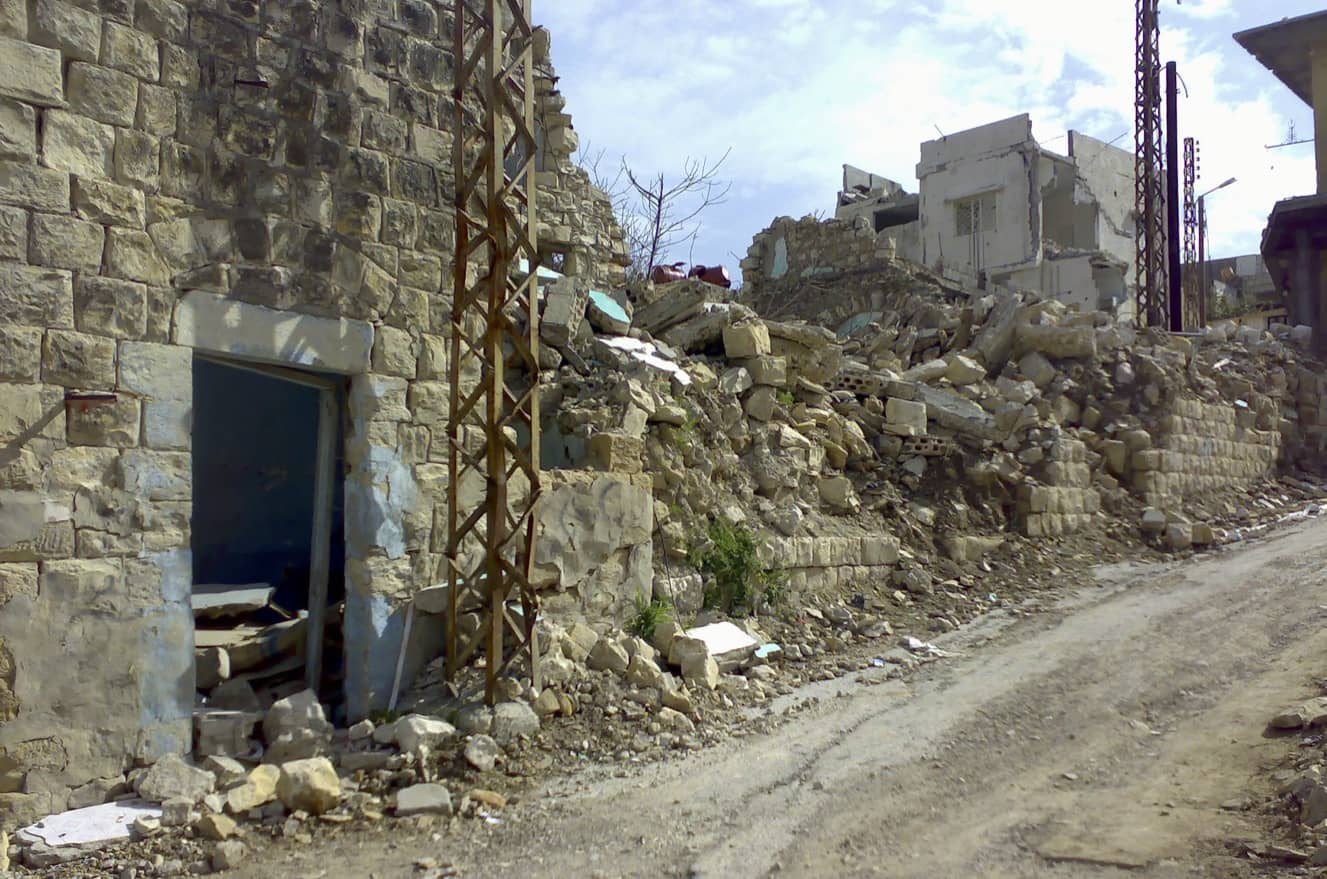
What lessons can be learned from the repeated cycles of destruction and reconstruction?
Lebanon’s history has been shaped by recurrent cycles of war, disaster, and economic collapse, with each episode leaving enduring imprints on the country’s urban and social fabric. Howayda al-Harithy (American University of Beirut) critically examines Lebanon’s historical cycles of destruction and reconstruction. Recovery involves more than rebuilding buildings; it requires a framework that is people-centered, heritage-led and place-specific together with an emphasis on restoring social relations, cultural identity, community agency while addressing structural inequalities.
Lebanon’s recurring crises and fragile urban recovery
Over the past five decades, Lebanon has experienced repeated cycles of war, disaster, and economic collapse that have profoundly reshaped its urban and social landscapes. Since the outbreak of the civil war in 1975, the country has endured multiple episodes of large-scale destruction, including the fifteen-year civil war, the 2006 war with Israel, the 2020 Beirut Port explosion, and most recently the 2024 war. Each crisis has inflicted severe damage on cities, towns, infrastructure, and communities while exposing the fragility of state institutions and the absence of long-term recovery strategies.
Despite periodic inflows of international aid and moments of global attention, reconstruction efforts in Lebanon have repeatedly fallen short of producing sustainable recovery. Interventions have often been reactive, fragmented, and shaped by political interests, donor priorities, or emergency imperatives rather than comprehensive planning. In many cases, reconstruction has focused on restoring physical structures while neglecting social cohesion, cultural continuity, and the underlying vulnerabilities that contributed to urban fragility in the first place.
Neoliberalism and the exclusionary city
The reconstruction of Beirut’s Central District (BCD) following the civil war remains one of the most influential and controversial reconstruction projects in Lebanon’s modern history. The war had devastated the city center, destroying buildings, disrupting economic networks, and fragmenting property ownership. In response, the Lebanese government adopted a privatized reconstruction model and delegated responsibility to the private real-estate company SOLIDERE (Rowe & Sarkis 1998).
The project reflected broader trends in neoliberal urban development that emerged globally during the late twentieth century (Brenner & Theodore 2002; Harvey 2007). Rather than focusing on social recovery, reconstruction sought to transform downtown Beirut into a modern financial and commercial center capable of attracting international investment (Salam 1998). Property owners were converted into shareholders, allowing the company to consolidate fragmented land ownership and implement large-scale redevelopment.
While the project succeeded in rebuilding the physical city center and attracting investment, it generated significant criticism. Former residents and property owners lost meaningful influence over decision-making processes, while many heritage assets and informal social spaces were demolished or marginalized in favor of commercial development (Barakat 2007; Ghandour & Fawaz 2010). The resulting urban environment became increasingly disconnected from the everyday lives of Beirut’s residents and failed to recover the social and cultural functions historically associated with the city center.
Critics argued that reconstruction prioritized real-estate value over social inclusion and transformed the BCD into an exclusive enclave rather than a shared civic space (Al-Harithy & Mneimneh 2022). The project demonstrated how reconstruction can reproduce social inequalities when citizens are excluded from planning processes and when recovery is understood primarily through economic indicators. The experience of SOLIDERE remains a cautionary example of how state–private sector alliances can rebuild infrastructure while simultaneously weakening social belonging and urban inclusivity.
Fragmented approaches and the emergence of non-state actors
The 2006 war presented another major reconstruction challenge. The conflict caused extensive destruction across southern Lebanon and the southern suburbs of Beirut, displacing thousands and damaging housing, infrastructure, and public facilities. Yet the Lebanese state once again assumed only a limited role in directing reconstruction. Rather than developing a comprehensive national strategy, it focused primarily on fundraising and compensation while leaving implementation largely to external actors (Fawaz 2007; Hamieh & MacGinty 2009).
As a result, reconstruction became highly fragmented. International donors, municipalities, political parties, and non-governmental organizations pursued different agendas with limited coordination. Gulf countries and Iran provided substantial financial support, while Western donors linked assistance to governance reforms. The absence of a unified framework produced significant regional variation in outcomes and reinforced existing political divisions.
Two dominant reconstruction models emerged. In southern Lebanon, an owner-driven approach provided households with direct financial compensation to rebuild their homes. While this allowed relatively rapid returns for many displaced families, it often lacked technical oversight and failed to address broader urban and social challenges (Barakat & Zyck 2008). In some cases, reconstruction contributed to the loss of heritage assets and reinforced pre-existing vulnerabilities.
In the southern suburbs of Beirut, reconstruction followed a more centralized model through Hezbollah’s Waad project. Managed by Jihad al-Bina, the initiative focused on restoring the pre-war urban fabric of Haret Hreik and achieved remarkable speed and efficiency (Harb & Fawaz 2010). However, critics noted that community participation remained limited and that reconstruction primarily served political and territorial objectives rather than broader urban development goals.
Alongside these dominant approaches, academic and civic actors proposed alternative models. The Reconstruction Unit at the American University of Beirut advocated participatory planning, heritage conservation, and community engagement. Through projects in Bint Jbeil, Aita al-Shaab, and Haret Hreik, the Unit demonstrated that reconstruction could incorporate local knowledge, collective memory, and cultural identity while involving residents in shaping their future environments (Al-Harithy 2010).
Although these initiatives often faced institutional and political constraints, they provided important lessons. Most importantly, they demonstrated that recovery can move beyond compensation and physical rebuilding to address broader social and cultural dimensions of post-conflict life.
The Beirut Urban Lab
The experiences of post-war reconstruction contributed to the emergence of a new conceptual framework developed by the Beirut Urban Lab (BUL). Established in 2018, the Lab sought to move beyond conventional understandings of reconstruction by focusing on the broader concept of urban recovery.
This shift was informed by Lebanon’s experience with displacement, conflict, and uneven urbanization, as well as by engagements with reconstruction efforts in Syria and Iraq. Rather than treating recovery as a post-conflict phase focused on rebuilding physical infrastructure, BUL conceptualized it as a continuous process that addresses the spatial, social, cultural, and imaginative dimensions of urban life (Al-Harithy 2022).
Within this framework, urban recovery is understood as people-centered, heritage-led, and place-specific. It prioritizes participation, social justice, and local agency while recognizing that cities are shaped by layers of memory, identity, and lived experience. Recovery therefore involves addressing vulnerabilities and injustices that predate a crisis rather than simply restoring pre-existing conditions.
The Lab’s work has emphasized that reconstruction should not be limited to repairing buildings. Instead, it should strengthen communities, preserve cultural heritage, and create opportunities for residents to actively participate in shaping recovery processes. This conceptual shift represents one of the most significant developments in Lebanese debates on reconstruction over the past decade.
Testing bottom-up recovery
The Beirut Port explosion of August 2020 marked a turning point in discussions of urban recovery. The blast devastated several neighborhoods, destroyed vital infrastructure, displaced thousands of residents, and exposed the failures of governance that had contributed to the disaster.
As in previous crises, the state failed to provide a coherent recovery strategy. International donors and civil society organizations filled the resulting vacuum, delivering humanitarian assistance and repairing damaged buildings. However, these interventions often remained fragmented and focused on short-term needs rather than long-term recovery (Fawaz & Harb 2020).
For the Beirut Urban Lab, the explosion created an opportunity to apply and refine its urban recovery framework. Through collaborative research, data-sharing initiatives, and community-based projects, the Lab promoted a holistic approach that integrated social, cultural, economic, and spatial dimensions of recovery.
One of the most significant examples was the recovery strategy developed for Karantina, a historically marginalized neighborhood severely affected by the blast. Adapting the City Development Strategy model to the neighborhood scale, the project combined participatory planning with citizen science methods and extensive community engagement (Al-Harithy & Yassine 2024).
Rather than treating residents as passive beneficiaries, the initiative involved them directly in defining priorities and envisioning the future of their neighborhood. The resulting framework emphasized collaboration among residents, municipalities, experts, and donors while promoting long-term recovery rather than short-term humanitarian interventions.
Importantly, the experience also demonstrated that meaningful recovery cannot ignore state institutions, even when they are weak or dysfunctional. While community participation remains essential, recovery requires engagement with public authorities if it is to achieve broader and more durable outcomes.
Search for new models
The 2024 war has once again exposed Lebanon’s vulnerability to large-scale destruction. Border villages in southern Lebanon, towns in the Bekaa, and neighborhoods in Beirut’s southern suburbs experienced unprecedented damage. In some localities, destruction reached levels far beyond those witnessed in 2006, affecting housing, infrastructure, cultural heritage, public institutions, and productive landscapes.
The consequences extend beyond physical destruction. Many families remain displaced, facing uncertain prospects for return. Continued insecurity, economic collapse, damaged services, and psychological trauma complicate recovery efforts and increase the risk of long-term displacement.
Perhaps most concerning is the continued absence of a national recovery strategy. As in previous crises, there is no comprehensive state-led framework capable of coordinating reconstruction or addressing the complex needs of affected communities. International assistance has become increasingly tied to political reforms and geopolitical considerations, further complicating prospects for recovery.
These conditions highlight the limitations of traditional reconstruction models. Simply rebuilding damaged structures will not be sufficient. Recovery must address questions of displacement, social justice, cultural heritage, local livelihoods, and governance. It must also adapt to new political realities characterized by institutional weakness, donor conditionality, and ongoing insecurity.
Conclusion: toward a transformative urban recovery agenda
Lebanon’s history of repeated destruction demonstrates that reconstruction cannot be understood solely as a technical process of rebuilding physical infrastructure. The experiences of post-civil war Beirut, the 2006 war, the Beirut Port explosion, and the 2024 war reveal the limitations of approaches that prioritize physical reconstruction while neglecting social, cultural, and political dimensions of recovery.
A more transformative model is required—one that is people-centered, heritage-led, and place-specific. Such a model recognizes that recovery involves restoring communities, preserving collective memory, and strengthening local agency as much as rebuilding structures. It also requires meaningful participation, equitable governance, and attention to the historical vulnerabilities that make communities susceptible to repeated crises.
While significant political and institutional obstacles remain, the lessons of the past fifty years suggest that durable recovery will depend not on returning to pre-crisis conditions but on creating more inclusive, resilient, and socially just urban futures. The challenge facing Lebanon today is therefore not simply how to reconstruct what has been destroyed, but how to transform recovery into an opportunity for long-term sustainable urban development.
References
Al-Harithy, H. (Ed.) (2010). Lessons in Post-War Reconstruction: Case Studies from Lebanon in the Aftermath of the 2006 War. Routledge.
Al-Harithy, H. (2022). Urban Recovery: Intersecting Displacement with Post-War Reconstruction. Routledge.
Al-Harithy, H. & Mneimneh, D. (2022). The framing of heritage in the post-war reconstruction of Beirut central district. In H. Al-Harithy (Ed.), Urban Recovery: Intersecting Displacement with Post War Reconstruction (pp. 239–270). New York: Routledge.
Al-Harithy, H. & Yassine, B. (2024). A people-centered urban recovery strategy for Karantina. In Djillali Benouar (ed.), Oxford Research Encyclopedia of Natural Hazard Science. New York: Oxford Academic. https://doi.org/10.1093/acrefore/9780199389407.013.491
Barakat, S. (2007). Postwar reconstruction and the recovery of cultural heritage: Critical lessons from the past fifteen years. In N. Stanley-Price (Ed.), Papers from the ICCROM forum held on October 4–6 2005 (Vol. 6, pp. 26–28). Rome: ICCROM Conservation.
Barakat, S., & Zyck, S. A. (2008). Housing compensation and disaster preparedness in the aftermath of the July 2006 war in South Lebanon. Beirut: Norwegian Refugee Council and PRDU, University of York.
Brenner, N. & Theodore, N. (2002). ‘Cities and the Geographies of Actually Existing Neoliberalism’, Antipode, 34(3), 349–379. https://doi.org/10.1111/1467-8330.00246
Fawaz, M. (2007). Beirut: the city as body politic. ISIM Review, 20, 22–23.
Ghandour, M. & Fawaz, M. (2010). Spatial erasure: reconstruction projects in Beirut. ArteEast Quarterly (Spring 2010)
Hamieh, C.S. and MacGinty, R. (2010), A very political reconstruction: governance and reconstruction in Lebanon after the 2006 war. Disasters, 34: S103-S123. https://doi.org/10.1111/j.1467-7717.2009.01101.x
Harb, M., & Fawaz, M. (2010). Influencing the politics of reconstruction in Haret Hreik. In H. Al-Harithy (Ed.), Lessons in post-war reconstruction: Case studies from Lebanon in the aftermath of the 2006 war (pp. 21–45). Routledge.
Harvey, D. (2007). A Brief History of Neoliberalism. Oxford: Oxford Academic.
Rowe, P.G. & Sarkis, H. (1998). Projecting Beirut: Episodes in the Construction and Reconstruction of a Modern City. Munich and New York: Prestel.
Salam, A. (1998). The role of government in shaping the built environment. Projecting Beirut: Episodes in the construction and reconstruction of a modern city, 122-133.
Latest Peer-Reviewed Journal Content
Moving homes and energy poverty: residents’ concerns, capabilities and responses
M Jalas, J Rinkinen, S Numminen & E Valkealahti
Reference study for biogenic carbon storage in the residential building stock
O Iliescu, I Talvitie, A Amiri & S Junnila
Building space heating and cooling in NDCs 4.0
T P Lützkendorf
Building component reuse as sociomaterial interaction: lessons from precast concrete
J Uusikartano, L Alkki & V Capitani
Validating national reuse indicators from regional demolition data: a Swedish example
F Ericsson, K Mjörnell & U Janson
Climate change risk and decision-making [editorial]
S Foxell & I Cooper
Technologies of reconstruction [editorial]
P Tombesi
Urban form metrics for building occupancy modelling: applications and impacts
D Reiter, M Jehling & R Hecht
Retrofit realism: affordable low-carbon policies for existing homes
N Eyre & R Khosla
Join Our Community

The most important part of any journal is our people – readers, authors, reviewers, editorial board members and editors. You are cordially invited to join our community by joining our mailing list. We send out occasional emails about the journal – calls for papers, special issues, events and more.
We will not share your email with third parties. Read more
Latest Commentaries
Who is Responsible for Climate Change?
Ian Cooper (Eclipse Research) explores the questions of responsibility raised in the recent Buildings & Cities special issue ‘Climate Change Risk and Decision-Making’. Focusing here on carbon emissions and mitigation, global responses will require grounding in what can work locally. New responsibilities arise for the wide range of built environment decision-makers: clients, professionals and their institutions, central and local governments, product suppliers, financiers, insurers, etc. A framework is needed to manage the complexity of responsibilities especially for variety of actors, the time frames and spatial scales.
Professional Ethics in a Climate Crisis
The climate crisis has progressed into a dangerous phase with tragic consequences often counted in numbers of excess deaths, but also by powerful economic impacts of rising food prices, the increased costs of insurance and lending, costly damage to the built environment. Celia Davies, Director of Impact at the UK’s Town and Country Planning Association (TCPA) and Hugh Ellis, Director of Policy at TCPA, consider the responsibilities of professionals in shaping a built environment which is fit not just for today's climate risks but for the dramatic increase in severe and unpredictable weather which is now locked into our climate systems.