
www.buildingsandcities.org/insights/commentaries/rebuilding-energy-infrastructure-war.html
Rebuilding Energy Infrastructure after War
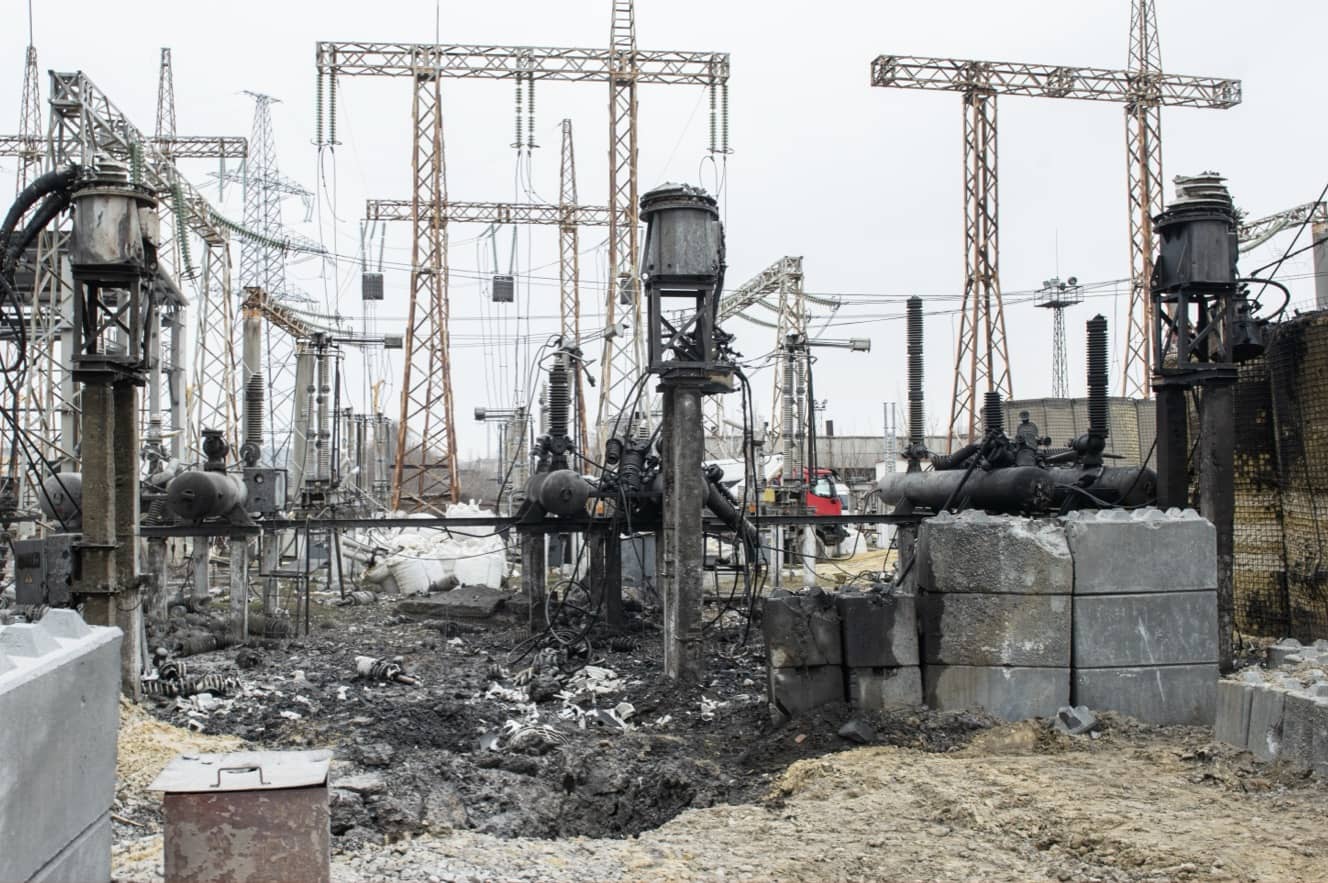
Why reconstructing energy infrastructure is a central challenge in post-conflict environments
Marco Nicola Binetti (University of Bremen) argues that energy reconstruction should be understood as a core pillar of post-conflict recovery rather than a narrowly technical undertaking. Restoring electricity and fuel supplies enables essential services, supports economic growth, strengthens state legitimacy, and reduces the likelihood of renewed violence. However, successful reconstruction requires overcoming substantial financial, logistical, institutional, and political obstacles. Reconstruction strategies must also adapt to emerging threats and vulnerabilities created by modern warfare.
Introduction
The destruction of energy infrastructure is among the most significant and enduring consequences of modern warfare. Electricity generation facilities, transmission networks, fuel pipelines, refineries, and distribution systems frequently become targets of direct attack, collateral damage, sabotage, and neglect. While physical destruction is often visible and immediate, the long-term consequences extend far beyond damaged assets. Energy shortages disrupt healthcare, water provision, communications, education, and economic production while weakening state institutions and delaying recovery.
Recent conflicts in Ukraine, Syria, Iraq, Yemen, Gaza, Libya, Afghanistan, and Myanmar have demonstrated both the vulnerability of energy systems and their importance for recovery. According to the World Bank (2025), Ukraine alone faces energy-sector reconstruction needs of approximately US$68 billion, illustrating the enormous scale of contemporary recovery challenges. Similar patterns can be observed across numerous conflict-affected states, where the collapse of energy systems has undermined economic performance, public service delivery, and government legitimacy.
This commentary argues that energy reconstruction should be understood as a core pillar of post-conflict recovery rather than a narrowly technical undertaking. Restoring electricity and fuel supplies enables essential services, supports economic growth, strengthens state legitimacy, and reduces the likelihood of renewed violence. At the same time, successful reconstruction requires overcoming substantial financial, logistical, institutional, and political obstacles. As warfare evolves through the growing use of drones, cyber operations, and hybrid tactics, reconstruction strategies must also adapt to emerging threats and vulnerabilities.
War and the destruction of energy systems
Energy infrastructure is uniquely exposed during armed conflict because it combines high strategic value with geographical vulnerability. Modern energy systems depend on extensive networks of generation facilities, transmission lines, substations, pipelines, and distribution systems that often span large territories. This geographical dispersion makes comprehensive protection difficult while increasing the likelihood that infrastructure will be affected by military operations.
Belligerents frequently target energy assets intentionally. Electricity and fuel support industrial production, communications, transportation, and military logistics. By disrupting energy supplies, combatants can weaken economic activity, undermine civilian morale, and constrain an opponent’s operational capacity. Historical examples range from the destruction of Kuwaiti oil wells during the Gulf War to attacks on oil infrastructure during conflicts in Iraq and Syria. More recently, Russian missile and drone strikes against Ukraine’s energy sector have demonstrated how infrastructure attacks can become central components of military strategy (IEA 2024).
Energy systems also suffer extensive collateral damage. Power lines often cross contested territory, pipelines traverse front lines, and generation facilities may be located near military installations. As a result, infrastructure may be damaged even when it is not deliberately targeted. In many conflicts, the cumulative effects of indirect damage are as significant as intentional attacks.
The impact of war extends beyond physical destruction. Conflict frequently undermines the institutional and human foundations necessary to operate and maintain complex energy systems. Engineers and technicians may be killed, displaced, or recruited into military service. Governments divert resources toward security expenditures, reducing maintenance budgets and delaying repairs. Supply chains collapse, spare parts become unavailable, and sanctions may further restrict access to critical equipment. These dynamics accelerate the deterioration of infrastructure even in areas not directly affected by combat.
The experience of Iraq after 2003 illustrates how institutional collapse can compound wartime damage. Facilities that survived military operations deteriorated because of looting, inadequate maintenance, and shortages of skilled personnel.1 Similar patterns have been observed in Libya,2 Syria (UNDP 2025), and Myanmar,3 where weakened institutions contributed to prolonged energy crises despite the partial survival of physical infrastructure.
The effects of conflict vary considerably according to the characteristics of the war. Wealthier countries may experience larger absolute losses because they possess more infrastructure, while poorer countries often suffer deeper social consequences due to limited redundancy within their systems. Belligerents’ objectives also matter. Secessionist movements may seek to preserve energy assets that can generate revenue, whereas ideological insurgencies unable to capture strategic centers may resort to asymmetric attacks to maximise economic disruption and publicity. Furthermore, the duration of conflict significantly influences reconstruction needs. Prolonged wars generate cumulative damage that becomes increasingly difficult and expensive to reverse, as illustrated by Syria’s decade-long civil war and the continuing conflict in Ukraine.
Why energy reconstruction matters
The importance of energy reconstruction stems from the central role electricity plays in contemporary societies. Reliable energy supplies underpin virtually every aspect of public service delivery and economic activity. Hospitals depend on electricity to operate life-saving equipment, preserve medicines, and provide emergency care. Water treatment facilities require power for pumping and purification. Educational institutions, communications networks, and government agencies similarly rely on functioning energy systems.
In post-conflict settings, humanitarian organisations often provide temporary solutions through generators, fuel deliveries, and emergency infrastructure. While these measures are essential during crises, they are costly and unsustainable. Restoring permanent energy infrastructure enables humanitarian resources to be redirected toward broader recovery objectives while improving the reliability and quality of service provision (Kreimer et al. 1998).
Energy reconstruction also plays a critical role in strengthening state legitimacy. Research on fragile and conflict-affected states consistently demonstrates that citizens evaluate governments according to their ability to provide basic services (Stel & Ndayiragije 2014; McLoughlin 2015). Electricity is particularly important because its presence or absence is immediately visible to households, businesses, and public institutions. Improvements in electricity supply therefore function as tangible indicators of governmental effectiveness.
The concept of a peace dividend is especially relevant in this context. Citizens emerging from conflict often expect visible improvements in daily life. Reliable electricity can provide such improvements by enabling healthcare, communications, education, and economic activity. Consequently, energy reconstruction can contribute to social stability and reduce support for violent non-state actors. By demonstrating that peace produces concrete benefits, governments strengthen public confidence and reinforce the legitimacy of post-conflict political arrangements (Dagher 2018).
The economic benefits of energy reconstruction are equally significant. Reliable electricity reduces production costs, increases productivity, and facilitates private investment. Businesses can extend operating hours, rely less on expensive backup generators, and invest with greater confidence. These benefits are particularly important for small and medium-sized enterprises, which often play a central role in post-conflict economic recovery (Cook 2011; Binetti 2023).
Energy reconstruction also supports economic diversification. Many conflict-affected countries depend heavily on extractive industries and imported fossil fuels. Such dependence exposes economies to commodity-price volatility and can reinforce patterns of corruption and political instability (Ross 2012). Investments in modern and resilient energy systems can create opportunities for manufacturing, services, and higher-value economic activities, reducing long-term dependence on natural resource exports.
Furthermore, energy reconstruction contributes to the return and reintegration of displaced populations. Refugees and internally displaced persons are more likely to return when basic services are available, and economic opportunities begin to emerge. Electricity supports housing reconstruction, healthcare provision, educational recovery, and employment generation. In this sense, energy reconstruction helps restore both physical infrastructure and social cohesion, while strengthening fragile states’ capacity to suppress new internal threats (Binetti 2025).
An additional benefit concerns resilience and sustainability. Post-conflict reconstruction creates a unique opportunity to modernise infrastructure rather than simply replace damaged assets. Investments in renewable energy, decentralised generation, and more resilient systems can reduce dependence on imported fuels while improving long-term energy security. Such approaches may also lower operating costs and increase resilience to future disruptions.
Challenges to reconstruction
Despite its importance, rebuilding energy infrastructure remains one of the most difficult aspects of post-conflict recovery.
Logistical obstacles are often severe. Wars frequently damage roads, bridges, railways, airports, and ports that are essential for transporting equipment and materials. Fuel shortages further constrain reconstruction efforts by limiting the movement of workers and machinery. In many cases, damaged transportation infrastructure becomes a bottleneck that slows broader recovery processes.
Security concerns represent a second major challenge. Landmines, unexploded ordnance, and improvised explosive devices frequently contaminate conflict-affected areas. Before reconstruction can proceed, sites must be secured and cleared. These activities increase costs, delay implementation, and expose workers to significant risks.
Financial constraints are equally important. Post-conflict governments typically confront declining revenues, damaged economies, and limited access to international capital markets. At the same time, reconstruction costs can be enormous. Private investors are often reluctant to finance large-scale infrastructure projects in unstable environments characterised by political uncertainty and weak legal protections. Consequently, international donors frequently play a decisive role in financing reconstruction.
Institutional capacity constitutes another critical challenge. Conflicts often destroy administrative structures and create shortages of qualified personnel. Engineers, planners, utility managers, and regulators may have been displaced or killed. Rebuilding infrastructure without rebuilding institutions risks creating systems that cannot be effectively maintained over time. Therefore, capacity-building should be considered an essential component of reconstruction rather than a secondary objective.
Political dynamics can further complicate recovery efforts. Infrastructure investments may be allocated according to political or ethnic considerations rather than developmental priorities (Binetti & Steinwand 2025). Such practices risk generating grievances among excluded communities and may undermine broader peacebuilding efforts. Ensuring equitable and transparent allocation of reconstruction resources is therefore essential for long-term stability.
Coordination failures also present significant difficulties. Multiple donors, contractors, government agencies, and international organisations often operate simultaneously in post-conflict environments. Without effective coordination, projects may overlap, resources may be wasted, and reconstruction priorities may become fragmented. Successful recovery therefore requires coherent planning and strong institutional leadership.
Emerging threats and future challenges
Contemporary reconstruction efforts face new challenges associated with changing forms of warfare. Many conflicts no longer conclude with clear peace agreements but instead evolve into prolonged periods of low-intensity confrontation characterised by sabotage, cyber operations, and hybrid warfare.
The proliferation of drones is particularly significant. Unmanned aerial systems provide relatively inexpensive means of targeting critical infrastructure. As demonstrated in Ukraine, drone attacks can destroy substantial reconstruction progress within a matter of days. These technologies increase both the vulnerability of infrastructure and the costs of protecting it.
Cybersecurity represents another emerging concern. Modern energy systems increasingly rely on digital technologies, including automated controls, smart grids, and remote monitoring systems. Although these innovations improve efficiency, they also create new vulnerabilities. Post-conflict governments often lack the expertise and resources necessary to defend critical infrastructure against cyber threats.
As a result, future reconstruction efforts must emphasise resilience as much as restoration. Rather than merely rebuilding pre-war systems, policymakers should seek to create infrastructure that is more secure, decentralised, and adaptable. Investments in renewable energy, distributed generation, cybersecurity, and institutional preparedness will become increasingly important components of post-conflict recovery strategies.
Conclusions
The reconstruction of energy infrastructure is fundamental to post-conflict recovery. Reliable electricity enables the delivery of essential services, supports economic growth, strengthens state legitimacy, and facilitates the return of displaced populations. Without functioning energy systems, broader reconstruction efforts are unlikely to achieve lasting success.
At the same time, rebuilding energy infrastructure remains extraordinarily difficult. Logistical constraints, security risks, financial shortages, institutional weaknesses, and political tensions all complicate recovery efforts. Emerging threats such as drone warfare and cyberattacks further increase the complexity of reconstruction.
For policymakers, the implications are clear. Energy reconstruction must be treated as a strategic priority rather than a narrowly technical sector. International donors should provide sustained financial and institutional support, while post-conflict governments must focus on transparency, equitable resource allocation, and long-term capacity-building. If these challenges can be addressed effectively, energy reconstruction can do more than restore electricity—it can help create the foundations for peace, development, and durable recovery.
Notes
1 https://www.gao.gov/assets/gao-07-677.pdf
2 https://www.eia.gov/todayinenergy/detail.php?id=53419
References
Binetti, M.N. (2023). Rebuilding energy infrastructures and the manufacturing sector in post-conflict countries. Energy Policy, 172, 113298.
Binetti, M.N. (2025). Assessing the impact of non-military aid on tactical military effectiveness: The case of Iraq between 2004 and 2014. International Interactions, 51(5), 822–849.
Binetti, Marco Nicola, & Steinwand, Martin C. (2025). Aid targeting in post-conflict Nepal. Conflict Management and Peace Science, 1–21.
Cook, P. (2011). Infrastructure, rural electrification and development. Energy for Sustainable Development, 15(3), 304–313.
Dagher, R. (2018). Legitimacy and post-conflict state-building. Conflict, Security & Development, 18(2), 85–111.
IEA. (2024). Ukraine’s Energy Security and the Coming Winter: An energy action plan for Ukraine and its partners. Paris: International Energy Agency.
Kreimer, A.I., Eriksson, J.R., Muscat, R.J., Arnold, M. & Scott, C. (1998). The World Bank's experience with post conflict reconstruction. Washington, D.C.: The World Bank. http://documents.worldbank.org/curated/en/666021468766536253
McLoughlin, C. (2015). When does service delivery improve the legitimacy of a fragile or conflict-affected state? Governance, 28(3), 341–356.
Ross, M.L. (2012). The Oil Curse: How Petroleum Wealth Shapes the Development of Nations. Princeton: Princeton University Press.
Stel, N. & Ndayiragije, R. (2014). ‘The eye of the beholder: service provision and state legitimacy in Burundi. Africa Spectrum, 49(3), 3–28.
UNDP. (2025). The Impact of the Conflict in Syria. Damascus: United Nations Development Programme.
World Bank. (2025). Ukraine Rapid Damage and Needs Assessment (RDNA4). Washington, DC: World Bank.
Latest Peer-Reviewed Journal Content

Moving homes and energy poverty: residents’ concerns, capabilities and responses
M Jalas, J Rinkinen, S Numminen & E Valkealahti
Reference study for biogenic carbon storage in the residential building stock
O Iliescu, I Talvitie, A Amiri & S Junnila
Building space heating and cooling in NDCs 4.0
T P Lützkendorf
Building component reuse as sociomaterial interaction: lessons from precast concrete
J Uusikartano, L Alkki & V Capitani
Validating national reuse indicators from regional demolition data: a Swedish example
F Ericsson, K Mjörnell & U Janson
Climate change risk and decision-making [editorial]
S Foxell & I Cooper
Technologies of reconstruction [editorial]
P Tombesi
Urban form metrics for building occupancy modelling: applications and impacts
D Reiter, M Jehling & R Hecht
Retrofit realism: affordable low-carbon policies for existing homes
N Eyre & R Khosla
Join Our Community

The most important part of any journal is our people – readers, authors, reviewers, editorial board members and editors. You are cordially invited to join our community by joining our mailing list. We send out occasional emails about the journal – calls for papers, special issues, events and more.
We will not share your email with third parties. Read more
Latest Commentaries
Who is Responsible for Climate Change?
Ian Cooper (Eclipse Research) explores the questions of responsibility raised in the recent Buildings & Cities special issue ‘Climate Change Risk and Decision-Making’. Focusing here on carbon emissions and mitigation, global responses will require grounding in what can work locally. New responsibilities arise for the wide range of built environment decision-makers: clients, professionals and their institutions, central and local governments, product suppliers, financiers, insurers, etc. A framework is needed to manage the complexity of responsibilities especially for variety of actors, the time frames and spatial scales.
Professional Ethics in a Climate Crisis
The climate crisis has progressed into a dangerous phase with tragic consequences often counted in numbers of excess deaths, but also by powerful economic impacts of rising food prices, the increased costs of insurance and lending, costly damage to the built environment. Celia Davies, Director of Impact at the UK’s Town and Country Planning Association (TCPA) and Hugh Ellis, Director of Policy at TCPA, consider the responsibilities of professionals in shaping a built environment which is fit not just for today's climate risks but for the dramatic increase in severe and unpredictable weather which is now locked into our climate systems.