
www.buildingsandcities.org/insights/commentaries/anticipating-chronic-climate-risks.html
Anticipating Chronic Climate Risks
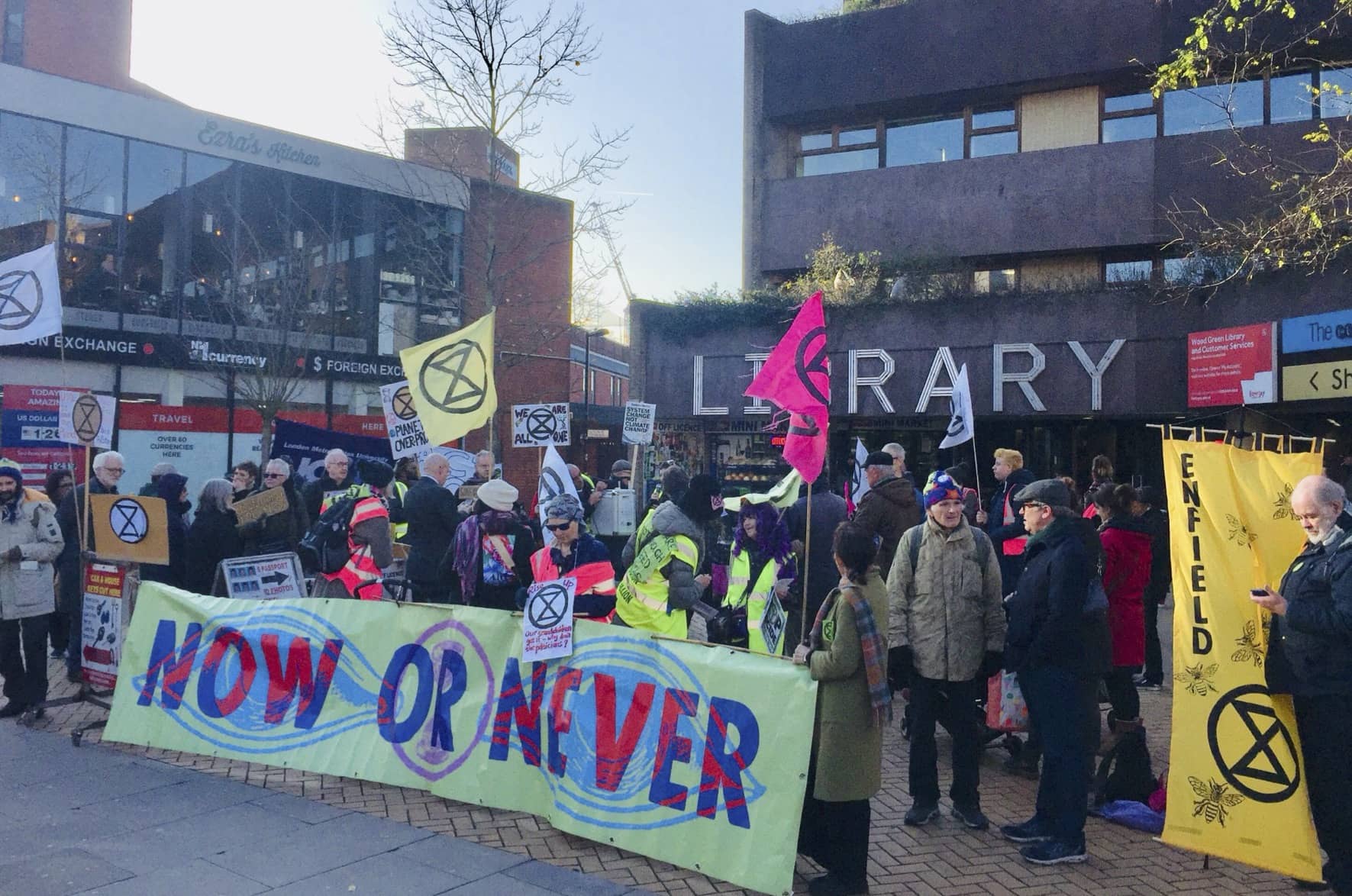
Local authorities could identify climate risks, develop a strategic response and coordinate disparate actors.
How can local authorities better anticipate and reduce chronic climate risks in the built environment? With 20 years' experience working in local authorities tackling climate change, Joe Baker considers the challenges facing local authorities to identify and manage climate risks, and asks: How do we get the leadership, skills, capacity and meaningful action needed?
Climate risk is a growing priority for many countries, as temperatures continue to rise and extreme weather events become more intense and frequent. Annually, the UK is seeing new records being broken with high temperatures and changing rainfall patterns. The Met Office Hadley Centre Climate Programme, through the UK Climate Projections 2018 (UKCP18) programme, gives details on the risk exposure to climate change. They state that the UK will see warmer and wetter winters, hotter and drier summers, and more frequent and intense weather extremes
To respond effectively to climate change, organisations need to review how their policies, infrastructure, services, and behaviours must adapt. Although the broad trends are clear, the scale and nature of the impacts will vary by place. This is where local authorities are important: they understand local circumstances and communities and are well placed to identify the risks that matter most in their areas. To increase the capacity of local authorities to deliver the measures needed for managing and reducing the risks of a changing climate, several changes are needed to:
- demonstrate leadership and increase the power to act
- improve access to local evidence and risks
- facilitate long term planning.
Leadership and powers at national and local levels
Although the UK Government sets the national framework for climate adaptation, local authorities play a critical role in preparing communities and places for climate impacts. This supports the need within the Climate Change Act (2008), which asks local authorities to “adopt proactive strategies to mitigate and adapt to climate change in line with the provisions and objectives of the Act”.
The way authorities in the UK deliver climate change adaptation is governed by a complex landscape of different duties and powers. Research undertaken for the Climate Change Committee1 (CCC) in 2025 highlights significant differences in how adaptation is delivered across the UK. In England, there is no statutory duty for adaptation. Responsibilities are fragmented, relying on duties for flood risk, housing, emergency planning and a requirement by national planning policy. Whereas Scotland, Wales and Northern Ireland all have statutory requirements for local authorities to engage in joined-up working and to deliver and report on progress.
A further study for the CCC2 (2026) found that only around a quarter of English local authorities have climate risk registers. And most have yet to undertake a climate risk assessment of their local area and services. The Government has committed to setting stronger measurable adaptation objectives through the Fourth National Adaptation Programme (NAP4), due in 2028.3 But it is not yet clear what this will entail, and if a statutory requirement and stronger governance will be required, or if funding will be provided.
Alongside this, local government operates within a 4-year electoral cycle, and political leaders tend to focus on projects that deliver visible results before the next election. New leaders or political parties may shift priorities and often cancel projects started by previous administrations. The UK government acknowledges this in its infrastructure strategy4 which states that infrastructure investment has historically been "too erratic" and has suffered from insufficient coordination, highlighting the challenges of maintaining long-term consistency. Residents may also oppose adaptation projects that affect their lifestyle. Low Traffic Neighbourhoods or Sustainable Urban Drainage Systems (SUDS) projects can divide communities5 so politicians are often reluctant to support them if they fear losing public support. This often means that at the local level only the most uncontroversial and fully resourced projects are delivered.
The Local Government Association (LGA), which represents Councils, launched a campaign on behalf of Councils on the powers that Councils should have to deliver adaptation.6 A key request from the LGA was consistent national leadership. Councils emphasised the need for climate adaptation as a strategic priority, clear roles and responsibilities between government agencies. With a statutory duty as the most important lever, the government could introduce the requirement to monitor and report on risks and actions. Without this, it makes it difficult to secure political buy-in, justify officer time, or secure investment.
Evidence, intelligence and awareness
Authorities need evidence to justify changes in services and to develop new policies. This understanding of future risks at a local level is the foundation for proactive adaptation rather than reactive emergency response.
To support decision-making and climate risk assessments, the national government has funded the UK Climate Projections 2018 (UKCP18), which show projected climate conditions up to 2100. The maps identify local climate risks at a 2.2 km scale, helping officers and communities understand the nature and scale of the risks they face. Many councils and communities combine this data with local evidence, including historic newspaper reports of extreme weather, socioeconomic data, and information on key infrastructure. Together, these sources help identify the places, people and buildings most exposed to climate risk.
With this information, councils can work with their communities to use their place-making powers (mostly through planning) and their responsibilities for services and assets to ensure their communities can cope with climate impacts. Some leading authorities have used this to broaden their climate work to include other government agencies, such as the National Health Service (NHS),7 and created Citizen Panels where community focused actions can be designed and delivered.8 Building on local knowledge and lived experiences to design meaningful solutions. Some councils have focused on improving internal awareness of the climate risks with staff.9
These councils are incorporating climate risk assessments into asset management strategies, helping identify the infrastructure and services most at risk. This long-term planning is essential because infrastructure remains in use for decades and must be designed for future climatic conditions. However, it is worth noting that many buildings, such as schools and care facilities, are often not in direct council or public control, as they are often School Academies or private providers. This requires councils to work with these providers to highlight risks and identify funding. While services such as waste collections often need to be changed as a result of prolonged heatwaves. With many Councils starting these collections earlier to avoid midday heat, and some offer staff working outside sun hats.
Councils are one of the few bodies with proven ability to coordinate action across these interconnected sectors at a local scale. This role is key to delivering a strategic response to the climate adaptation challenges, but it’s resource intensive and requires technical upskilling.
Long-term resource planning
The Institute for Fiscal Studies' measure of English local authorities' core funding in 2024–25 is estimated to be 18% lower per person in real terms than in 2010–11. With total core funding 9% lower in real terms than in 2010–11.10 With this in mind, all local authorities have had to cut back non-statutory functions. As Climate Adaptation measures are often framed as “non-core” or “not immediately needed”, they often go undelivered due to limited funding. Even schools or community hubs where there is a known risk of overheating, are often reliant on user funding to deliver measures as simple as painting roofs white.
Delivering climate adaptation is a long-term infrastructure challenge. As a result, councils need long-term funding streams. There is also a need for clear responsibilities across government agencies and neighbouring authorities to deliver adaptation across boundaries. Climate teams in councils are often very small, sometimes consisting of only two or three officers, maybe with one person responsible for adaptation. These teams advise across a wide range of services, including housing, procurement, planning, asset management and reviewing service delivery. Councils can reduce pressure on specialist climate teams by training staff to carry out climate-risk assessments, delivering co-benefits, working with local institutions, and sharing knowledge. But the required technical expertise, funding, and capacity continue to limit effective local adaptation. Research from the LGA11 highlights the need for resources to deliver technical upskilling and collaboration between agencies to accelerate climate adaptation.
Local authorities can reduce climate risks by combining local data, understanding solutions with the community, and long-term finance and governance arrangements. But this challenge is not only technical and financial, it also requires a step change in capacity and leadership to ensure that we are prepared for the climate challenges.
Notes
1. CAG Consultants: Duties and powers of local authorities in the UK to adapt to climate change
2. CAG Consultants: The Role of UK Local Authorities in Climate Adaptation
3. UK Department for Environment, Food & Rural Affairs: Building a more resilient UK: our investment in climate adaptation
4. HM Treasury: UK Infrastructure: A 10 Year Strategy
5. Parliament News: Lambeth residents block street over parking dispute
6. Local Government Association: Back Local Climate Action: further information
7. Local Government Association: London Borough of Haringey: Joint Strategic Needs Assessment on heatwaves
8. Local Government Association: London Borough of Hackney: Citizen’s jury on heatwaves
9. Local Government Association: Central Bedfordshire Council:Carbon Literacy
10. Local Government Association: Core funding for English councils still 18% lower per resident than in 2010–11, and costs are rising
11. Local Government Association: Accelerating adaptation action: Councils preparing for climate change
Latest Peer-Reviewed Journal Content

Building space heating and cooling in NDCs 4.0
T P Lützkendorf
Building component reuse as sociomaterial interaction: lessons from precast concrete
J Uusikartano, L Alkki & V Capitani
Validating national reuse indicators from regional demolition data: a Swedish example
F Ericsson, K Mjörnell & U Janson
Climate change risk and decision-making [editorial]
S Foxell & I Cooper
Technologies of reconstruction [editorial]
P Tombesi
Urban form metrics for building occupancy modelling: applications and impacts
D Reiter, M Jehling & R Hecht
Retrofit realism: affordable low-carbon policies for existing homes
N Eyre & R Khosla
Inside offsite: everyday dwelling in factory-built apartments
L Dorignon & R Horne
MMC for housing: sectoral perception on governance challenges
J Morgan, C Goodier, R Schmidt-III & K Ayinla
Reorganising specification practice for component reuse: an exploratory study
S Gao, K Jones, J Xu & J Glass
Kitchen retrofits to support food practices and wellbeing
F J Andrews, A Sal Moslehian, E Warner & R Tucker
From strategy to delivery: a comparative analysis of MMC roadmaps
G Goldman, D Sorokine, F Suerich-Gulick, C Carbone & M Jemtrud
Thermal comfort, ventilation and mosquito-borne disease risk in Zanzibar hospitals
O Sloan Wood, J B Knudsen, K L Schiøler, E Lupenza, M Msellem & F Saleh
Reusing precast concrete elements in construction: assessing the economic conditions
O Vigren, H Westerlind & T Malmqvist
Institutional readiness for industrialised social housing in Vietnam
T Q Nguyen, B N Nguyen, T H Q To & Z Aziz
Prefabrication for housing retrofit: governance, innovation and resident experience
E Pikas, K Kuusk, P Pihelo, R Liias, J Pukk & T Kalamees
Reframing heat pump transitions: a care perspective
J van der Haer, R Schelwald & F de Haan
Urban informal settlements in Africa: transforming adaptation governance
K Buyana & H Sseviiri
Reusing concrete products in indoor environments: chemical hazard assessment
K Tähtinen, A Helin, E Parshintsev & H Hovi
Negotiating net-zero carbon: an ANT analysis of two buildings
L Schweber & M Green
Design for disassembly: a review of public policy proposals
O Vorobjev, U Uotila, T Joensuu & A Saari
Retrofitting Norwegian residential buildings: an archetype-based dynamic stock model
L S A Rousseau, S Amini, S Akin & E G Hertwich
Decolonising time: vernacular villages and the politics of heritage temporality
R Al-Rabady
Commutes to alternative workplaces: GHG emissions and physical activity
J Taylor, L Thoen, A Espinosa Mireles De Villafranca, P Anashin, J Vanhatalo, D Milián
Bernal & I Okkonen
Nine ‘myths’ about the building stock of Great Britain
S Evans, P Steadman, A Neto-Bradley, D Humphrey, R Liddiard,H Shamsi, J Palmer & G Simons
Join Our Community

The most important part of any journal is our people – readers, authors, reviewers, editorial board members and editors. You are cordially invited to join our community by joining our mailing list. We send out occasional emails about the journal – calls for papers, special issues, events and more.
We will not share your email with third parties. Read more
Latest Commentaries
Who is Responsible for Climate Change?
Ian Cooper (Eclipse Research) explores the questions of responsibility raised in the recent Buildings & Cities special issue ‘Climate Change Risk and Decision-Making’. Focusing here on carbon emissions and mitigation, global responses will require grounding in what can work locally. New responsibilities arise for the wide range of built environment decision-makers: clients, professionals and their institutions, central and local governments, product suppliers, financiers, insurers, etc. A framework is needed to manage the complexity of responsibilities especially for variety of actors, the time frames and spatial scales.
Professional Ethics in a Climate Crisis
The climate crisis has progressed into a dangerous phase with tragic consequences often counted in numbers of excess deaths, but also by powerful economic impacts of rising food prices, the increased costs of insurance and lending, costly damage to the built environment. Celia Davies, Director of Impact at the UK’s Town and Country Planning Association (TCPA) and Hugh Ellis, Director of Policy at TCPA, consider the responsibilities of professionals in shaping a built environment which is fit not just for today's climate risks but for the dramatic increase in severe and unpredictable weather which is now locked into our climate systems.