
www.buildingsandcities.org/insights/commentaries/disaster-reconstruction-rebuilding-trust.html
Disaster Reconstruction: Rebuilding Trust in Fragile States
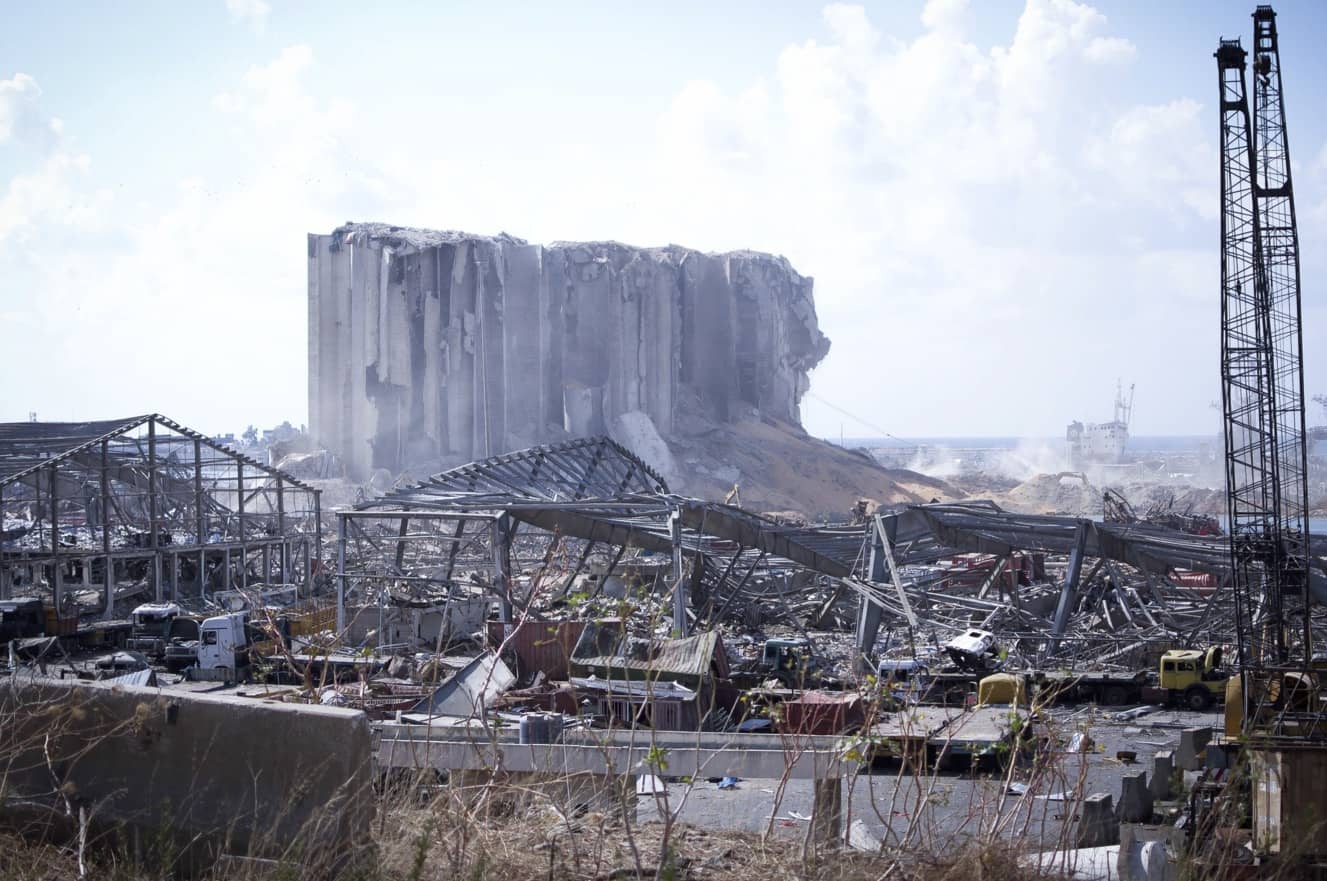
Why do response efforts remain fragmented even when multiple actors mobilise simultaneously?
Tania N. Haddad and Tracy Sakr explain why effective disaster response in fragile institutional environments depends not only on resources but also on governance capacity, coordination mechanisms and institutional trust. The 2020 Beirut Port explosion shows that fragmented governance authority, non-binding coordination arrangements and low public trust resulted in duplicated efforts, uneven aid distribution and limited strategic recovery planning. Institutional reforms can strengthen state capacity, formalise coordination mechanisms between government and civil society, and rebuild trust through transparency and accountability.
Collaboration
Disaster response increasingly depends on collaboration among government institutions, civil society organisations, and international actors. Yet interventions often unfold through fragmented, parallel systems rather than coordinated national frameworks. This raises an important question:
Why do response efforts remain fragmented even when multiple actors mobilise simultaneously?
Governance structures play a critical role in shaping interorganisational collaboration during disasters. They establish the formal and informal rules through which public, private, and nonprofit actors coordinate their efforts. Within the disaster governance literature, interorganisational collaboration is often situated within broader debates on networked governance, where coordination depends on clearly defined roles, shared authority, and mechanisms of accountability. From this perspective, good governance, characterised by transparency, accountability, and role clarity, facilitates coordination by reducing duplication of effort, limiting competition for resources, and enabling joint action across sectors. Conversely, weak governance often produces fragmented responses, unclear mandates, and inconsistent implementation. Consequently, effective disaster management depends not only on technical preparedness but also on the institutional strength of the governance environment within which collaboration occurs. Research on disaster response demonstrates that administrative fragmentation and coordination failures can significantly undermine the effectiveness of disaster response and delay recovery processes (Comfort & Haase 2006).
Although governance structures provide the institutional framework for coordination, the effectiveness of these collaborative arrangements also depends heavily on the level of trust and legitimacy among participating actors and between institutions and society.
Trust and institutional legitimacy
In disaster scenarios, trust is a vital coordination resource: when citizens view public institutions as capable and acting in the public's best interests, compliance with emergency directives tends to rise, and stakeholder cooperation becomes smoother. Conversely, when institutions are seen as ineffective or corrupt, collective action tends to break down, and response efforts lose credibility.
Risk governance scholarship similarly argues that trust in disaster management determines whether citizens accept official decisions without constant contestation. This trust is shaped by perceptions of fairness, competence, and value alignment between institutions and society (Cvetkovich & Löfstedt 1999; Löfstedt 2005). Building on this perspective, three forms of trust can be distinguished: social trust, which refers to confidence among individuals and community groups; political trust, which concerns citizens’ evaluations of government and public authorities; and institutional trust, which relates to confidence in response organisations and emergency services. Together, these forms of trust shape perceptions of legitimacy and influence the willingness of citizens, public authorities, and non-state actors to cooperate during disasters. The speed, transparency, and inclusiveness of government responses play a critical role in strengthening or undermining these trust dynamics.
Taken together, this body of research suggests that effective disaster governance depends not only on institutional capacity but also on the quality of governance arrangements and the level of trust that enables cooperation among state institutions, civil society organisations, and affected communities.
Interorganisational relations
In fragile states, where institutional capacity and legitimacy are limited, low levels of trust can further undermine response systems. As a result, civil society organisations and international actors often assume primary roles in aid delivery and recovery efforts (Haddad 2018; Haddad 2022). Comparative analyses of disasters such as Hurricane Katrina, the 2011 Tōhoku earthquake in Japan, and humanitarian crises in the Global South reveal similar patterns: failures in coordination and governance often coincide with breakdowns in trust and information sharing (Nolte et al. 2012; Martin et al. 2016). By contrast, successful collaborations tend to rely on early relationship-building, transparent communication, and shared decision-making among participating actors.
Several recurring governance factors shape the effectiveness of disaster response systems. First, coordination mechanisms among public, private, and nonprofit actors are essential for managing complex crises that exceed the capacity of individual institutions. Second, governance structures that clearly define roles, responsibilities, and communication channels are necessary to prevent fragmentation and duplication of efforts. Third, trust and institutional legitimacy are central to cooperation between state and non-state actors and to public compliance with emergency measures. Finally, research in fragile and developing contexts shows that when state capacity is limited, disaster response often depends heavily on civil society and informal coordination networks. These insights suggest that disaster governance failures are rarely purely technical; rather, they are deeply embedded in institutional design, governance capacity, and state–society relations.
The Beirut Port explosion exposed these governance limitations with particular clarity. Investigations and field accounts indicate that Lebanon lacked a coherent national disaster management plan capable of coordinating large-scale emergency response. Government agencies lacked clearly defined mandates for disaster coordination, while existing institutions such as the High Relief Committee and the Council for Development and Reconstruction faced operational constraints and political interference. The state response, therefore, appeared largely reactive, with organisations describing it as ‘late,’ ‘disorganised,’ and lacking monitoring or delegation mechanisms.
These dynamics align with patterns identified in the fragile-state literature, in which limited institutional capacity and weak legitimacy of governance undermine the state's ability to perform core functions during crises. The Beirut case, therefore, illustrates how weak governance structures can directly shape disaster response outcomes.
The Beirut Port explosion further highlighted these coordination failures. In the absence of centralised coordination mechanisms, civil society organisations, grassroots initiatives, and volunteer networks mobilised rapidly to provide emergency assistance. These actors organised debris removal, distributed food and medical supplies, supported housing reconstruction, and provided psychosocial services to affected communities. Their rapid mobilisation reflected strong local organisational capacity and community networks.
However, the absence of effective coordination mechanisms also produced significant operational challenges. Many organisations conducted independent needs assessments, created separate databases of affected households, and implemented parallel aid distribution systems. While these initiatives demonstrated strong societal mobilisation, they also led to duplication of efforts and uneven resource distribution. In this context, civil society organisations increasingly step in to address governance gaps and provide services that public institutions were unable to deliver (Haddad 2017; Haddad 2020; Haddad 2013; Haddad 2023; Haddad & Zalzal 2019).
This dynamic corresponds to what the disaster governance literature describes as emergent coordination, in which networks of actors spontaneously organise in response to crises in the absence of formal institutional structures (Comfort 2007). Although such arrangements may compensate for state weaknesses in the short term, they rarely generate coherent long-term recovery strategies without institutional support.
State–society cooperation
A third dimension shaping disaster response concerns the relationship between institutional trust and state–society cooperation. Trust is critical to disaster response, facilitating collaboration among organisations and compliance among affected populations (Hardin 1999; Putnam 2000).
The Beirut Port explosion occurred amid widespread distrust of institutions. Many civil society groups and volunteer organisations hesitated to work directly with government officials, fearing that partnering with state agencies could harm their credibility with beneficiaries and donors.
In response to the crisis, the Lebanese government required NGOs operating in affected areas to register and submit documentation to the Lebanese Army. The army was perceived as a more trusted and relatively apolitical institution compared with other government actors. However, delegating coordination responsibilities to a security institution also highlighted the institutional weakness of civilian disaster governance structures.
Empirical accounts from organisations involved in the Beirut response show that trust issues directly led to coordination problems. Respondents consistently stressed that a trusted government would have enabled more effective coordination, easier data sharing, and fairer aid distribution (Haddad & Sakr 2023).
This shows that trust acts not only as a political factor but also as a practical resource, facilitating coordination in emergencies.
Conclusions
In many fragile and developing settings, disaster response systems rely on hybrid governance arrangements that bring together public institutions, international organisations, and civil society actors for relief and recovery efforts. While these arrangements can boost response capacity, they also pose coordination challenges when institutional roles are unclear and governance authority is contested. In Lebanon, these coordination issues became real operational obstacles. Organisations repeatedly described the response environment as lacking leadership, marked by delays in state intervention, and characterised by limited government involvement. Under such circumstances, coordination mechanisms tend to be largely voluntary and non-binding, enabling organisations to bypass formal structures and operate independently.
These dynamics underscore the importance of the governance triangle that underpins effective disaster management: institutional capacity, transparency and accountability, and public trust. Improving just one of these aspects is insufficient. Successful disaster governance requires progress across all three areas. When state capacity is limited and trust in institutions is low, disaster response systems tend to rely more on civil society mobilisation than on institutional coordination (Haase & Haddad 2015; Haddad 2015; Haddad & El Hindi 2019).
The Beirut evidence further demonstrates that trust is not merely a societal attitude but a critical operational resource for coordination. Without trust in governing institutions, organisations are less likely to share data, adopt unified geographic divisions of labour, or consolidate needs assessments. This lack of information sharing leads to duplication of effort, uneven resource distribution, and fragmented recovery strategies.
Representation and participation can strengthen coordination and trust in disaster response systems. Evidence from the Beirut response shows that women’s participation in decision-making and disaster risk reduction leadership led to more equitable response efforts and improved access to assistance for marginalised groups (Nasser et al. 2024). These findings suggest that inclusive leadership practices can strengthen institutional legitimacy and improve coordination outcomes, underscoring the importance of incorporating gender-responsive governance mechanisms into disaster management systems.
Finally, disaster governance strategies must balance security considerations with reconstruction and recovery planning. In recent crises, government attention has often focused primarily on security stabilisation, while reconstruction planning remained delayed or fragmented. The Beirut response illustrates both the utility and the limitations of security-centred coordination mechanisms. Assigning the Lebanese Army a coordination role helped stabilise logistical operations in the short term, but it did not replace civilian disaster governance institutions or resolve deeper trust deficits within the broader political system.
The Lebanese experience, therefore, underscores a broader lesson for disaster governance in fragile states. While societal resilience and civil society mobilisation can partially offset institutional weaknesses during crises, sustainable disaster management ultimately depends on strengthening governance institutions, establishing clear coordination systems, and rebuilding public trust. In terms of governance, coordination, and trust, system failure occurs when governance cannot lead effectively, coordination remains voluntary and disjointed, and trust issues prevent actors from adopting unified response strategies. Conversely, improving just one aspect without addressing the others is unlikely to move disaster response systems away from isolated networks and toward integrated disaster governance.
References
Comfort, L.K. (2007). Crisis management in hindsight: Cognition, communication, coordination, and control. Public Administration Review, 67(S1), 189–197. https://doi.org/10.1111/j.1540-6210.2007.00827.x
Comfort, L.K. & Haase, T.W. (2006). Communication, coherence, and collective action: The impact of Hurricane Katrina on communications infrastructure. Public Works Management & Policy, 10(4), 328–343.
Cvetkovich, G. and Löfstedt, R. (eds.). (1999). Social trust and the management of risk. London: Earthscan.
Haase, T.W. & Haddad, T. (2015). Building capacity? Civil society education in Lebanon's institutions of higher education. Journal of Nonprofit Education and Leadership, 5(4), 261–288.
Haddad, T. (2013). Civil society and philanthropy in the Arab world. Journal of the Academy of Philanthropy, 1(1), 109–116.
Haddad, T. (2015). Volunteering in the Arab world: Bringing people back into politics? Democracy and Security, 11(2), 145–159.
Haddad, T. (2017). Analysing state–civil society associations relationships: The case of Lebanon. VOLUNTAS: International Journal of Voluntary and Nonprofit Organizations, 28(4), 1742–1761.
Haddad, T. (2018). Confrontation, co-optation and cooperation: Civil society in post-war Lebanon. In: R. Marchetti (ed.), Government–NGO relationships in Africa, Asia, Europe, and MENA. London: Routledge, 235–252.
Haddad, T. (2020). Religious welfare organizations, citizenship, and the state in Lebanon. Nonprofit Policy Forum, 11(3). https://doi.org/10.1515/npf-2019-0040
Haddad, T. (2022). International and local actors in disaster management: Responding to the Beirut explosion. London: Routledge.
Haddad, T. (2023). Governance of the nonprofit sector in Lebanon: Between theory and practice. Journal of Civil Society, 19(3), 330-345. https://doi.org/10.1080/17448689.2023.2239383
Haddad, T. & El Hindi, E. (2019). Changing roles of civil society in the Arab world. In: T. Haddad and E. El Hindi (eds.), Religion and civil society in the Arab world: In the vortex of globalization and tradition. London: Routledge, 1–17.
Haddad, T. & Sakr, T. (2023). Interorganizational relations in disaster response in a developing context: Assessing response to the Beirut explosion. Public Organization Review. https://doi.org/10.1007/s11115-022-00650-9
Haddad, T. & Zalzal, Y. (2019). Civil society and nonprofit governance in the Arab world. In: T. Haddad & E. El Hindi (eds.), Religion and civil society in the Arab world: In the vortex of globalization and tradition. London: Routledge,.40–58.
Hardin, R. (1999). Do we want trust in government? In: M.E. Warren (ed.), Democracy and trust. Cambridge: Cambridge University Press, 22–41.
Löfstedt, R. (2005). Risk management in post-trust societies. Basingstoke: Palgrave Macmillan.
Nasser, F., Haddad, T. & Mezher, H. (2024). Assessing gender leadership and the cultural aspect of disaster response in developing contexts. In: Oxford Research Encyclopedia of Natural Hazard Science. Oxford: Oxford University Press. https://doi.org/10.1093/acrefore/9780199389407.013.493
Nolte, I.M., Martin, E.C. & Boenigk, S. (2012). Cross-sectoral coordination of disaster relief. Nonprofit and Voluntary Sector Quarterly, 41(4), 707–730. https://doi.org/10.1080/14719037.2011.642629
Putnam, R.D. (2000). Bowling alone: The collapse and revival of American community. New York: Simon & Schuster.

Latest Peer-Reviewed Journal Content
Validating national reuse indicators from regional demolition data: a Swedish example
F Ericsson, K Mjörnell & U Janson
Climate change risk and decision-making [editorial]
S Foxell & I Cooper
Technologies of reconstruction [editorial]
P Tombesi
Urban form metrics for building occupancy modelling: applications and impacts
D Reiter, M Jehling & R Hecht
Retrofit realism: affordable low-carbon policies for existing homes
N Eyre & R Khosla
Inside offsite: everyday dwelling in factory-built apartments
L Dorignon & R Horne
MMC for housing: sectoral perception on governance challenges
J Morgan, C Goodier, R Schmidt-III & K Ayinla
Reorganising specification practice for component reuse: an exploratory study
S Gao, K Jones, J Xu & J Glass
Kitchen retrofits to support food practices and wellbeing
F J Andrews, A Sal Moslehian, E Warner & R Tucker
From strategy to delivery: a comparative analysis of MMC roadmaps
G Goldman, D Sorokine, F Suerich-Gulick, C Carbone & M Jemtrud
Thermal comfort, ventilation and mosquito-borne disease risk in Zanzibar hospitals
O Sloan Wood, J B Knudsen, K L Schiøler, E Lupenza, M Msellem & F Saleh
Reusing precast concrete elements in construction: assessing the economic conditions
O Vigren, H Westerlind & T Malmqvist
Institutional readiness for industrialised social housing in Vietnam
T Q Nguyen, B N Nguyen, T H Q To & Z Aziz
Prefabrication for housing retrofit: governance, innovation and resident experience
E Pikas, K Kuusk, P Pihelo, R Liias, J Pukk & T Kalamees
Reframing heat pump transitions: a care perspective
J van der Haer, R Schelwald & F de Haan
Urban informal settlements in Africa: transforming adaptation governance
K Buyana & H Sseviiri
Reusing concrete products in indoor environments: chemical hazard assessment
K Tähtinen, A Helin, E Parshintsev & H Hovi
Negotiating net-zero carbon: an ANT analysis of two buildings
L Schweber & M Green
Design for disassembly: a review of public policy proposals
O Vorobjev, U Uotila, T Joensuu & A Saari
Retrofitting Norwegian residential buildings: an archetype-based dynamic stock model
L S A Rousseau, S Amini, S Akin & E G Hertwich
Decolonising time: vernacular villages and the politics of heritage temporality
R Al-Rabady
Commutes to alternative workplaces: GHG emissions and physical activity
J Taylor, L Thoen, A Espinosa Mireles De Villafranca, P Anashin, J Vanhatalo, D Milián
Bernal & I Okkonen
Nine ‘myths’ about the building stock of Great Britain
S Evans, P Steadman, A Neto-Bradley, D Humphrey, R Liddiard,H Shamsi, J Palmer & G Simons
Join Our Community

The most important part of any journal is our people – readers, authors, reviewers, editorial board members and editors. You are cordially invited to join our community by joining our mailing list. We send out occasional emails about the journal – calls for papers, special issues, events and more.
We will not share your email with third parties. Read more
Latest Commentaries
Who is Responsible for Climate Change?
Ian Cooper (Eclipse Research) explores the questions of responsibility raised in the recent Buildings & Cities special issue ‘Climate Change Risk and Decision-Making’. Focusing here on carbon emissions and mitigation, global responses will require grounding in what can work locally. New responsibilities arise for the wide range of built environment decision-makers: clients, professionals and their institutions, central and local governments, product suppliers, financiers, insurers, etc. A framework is needed to manage the complexity of responsibilities especially for variety of actors, the time frames and spatial scales.
Professional Ethics in a Climate Crisis
The climate crisis has progressed into a dangerous phase with tragic consequences often counted in numbers of excess deaths, but also by powerful economic impacts of rising food prices, the increased costs of insurance and lending, costly damage to the built environment. Celia Davies, Director of Impact at the UK’s Town and Country Planning Association (TCPA) and Hugh Ellis, Director of Policy at TCPA, consider the responsibilities of professionals in shaping a built environment which is fit not just for today's climate risks but for the dramatic increase in severe and unpredictable weather which is now locked into our climate systems.