
www.buildingsandcities.org/phd-video-awards/gallery-2025.html
AWARDS! 2025 Video Challenge
Many congratulations to the winners of the 2025 Video Challenge who displayed creativity, vitality and good communication skills to explain the significance of their PhD research: "Why It Matters".
We also congratulate all the entrants of the Video Challenge who invested much time, effort and learning to create their videos. They developed their communication skills, distilled complex ideas and conveyed them to a wider audience. We believe this has given all entrants new insights, capabilities and confidence to present their research.
The awards for the 2025 Video Challenge go to...


OUTSTANDING VIDEO (€800 prize)
“Designing With, Not For: Why Inclusive Design Matters”
Creator: Menatalla KASEM of Cardiff University, UK


EXCELLENT VIDEO (€600 prize)
"Co-creating Mosquito Free Hospitals"
Creator: Otis SLOAN WOOD of the Royal Danish Academy, DK

EXCELLENT VIDEO (€600 prize)
"The Politics and Poetics of Gecekondu Spaces"
Creator: Ali Rıza BAYRAK of Izmir Institute of Technology, Türkiye

EXCELLENT VIDEO (€600 prize)
"Making Space for Arrival"
Creator: Zhuo PANG of University of Sheffield, UK

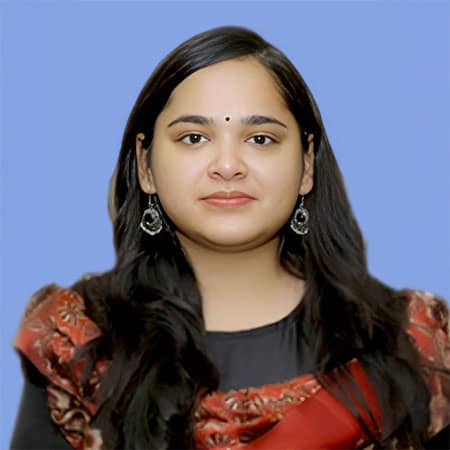
PEOPLE'S VOTE (€400 prize)
"Because what we build today shapes the world we leave behind"
Creator: Swati SINHA of Nicmar University, India
Thank you!
First and foremost, our deep thanks to the participants who invested much time, thought and energy to create a 2-minute video explaining the implications of their research. A formidable task! We are enriched by all your efforts to share your emerging research that will undoubtedly shape our future. We hope this process helped you to hone your communication skills and strategies. Each of you has created a unique description that conveys much about your thinking and your approach to life.
The Outstanding and Excellent videos were selected by a diverse group of 6 judges (Richard Lorch, Andreas Klee, Chiara Tagliaro, Rajan Rawal, Rick Diamond and Sila Ceren Varis Husar). Thank you for watching all the videos and your rich feedback.
The Video Challenge was developed by Buildings & Cities (B&C) and the Academy for Territorial Development in the Leibniz Assocation (ARL). We extend our thanks to our steering group: Kareem Buyana (Makerere University, UG), Rick Diamond (Lawrence Berkeley National Laboratory, US), Virginia Gori (University College London, UK), Sila Ceren Varis Husar (Slovak University of Technology, SK), Andreas Klee (ARL, DE), Richard Lorch (Buildings & Cities, UK), Carolin Pleines (ARL, DE), Freya Nygaard Rasmussen (Norwegian University of Science and Technology, NO), Rajan Rawal (CEPT Research and Development Foundation, IN) and Chiara Tagliaro (Politecnico di Milano, IT).
GALLERY OF OTHER ENTRANTS
Collectively and individually, these videos are a rich celebration of emerging, next generation built environment research.
Building Thermal Mass: Harnessing Nature for Indoor Comfort
Creator: Poorya Shaghaghi, University of Cambridge
CIB PhD Video Challenge - Why it Matters - Peter Donde
Creator: Peter Donde, London South Bank University
Corrosion in the Built Environment
Creator: Faisal Shittu, Loughborough University
Decoding the Cultural Code of Space
Creator: Refaa Sokkar, Bursa Uludag University
Designing What Cities Deserve: Evaluating Before Drawing
Creator: Pegah Eshraghi, Shahid Beheshti University
Exploring Social Integration and Challenges in Elephant and Castle's Gentrification
Creator: Keqin Zhang, University of Greenwich
From Scarcity to Self-Sufficiency: Vertical Farming for Algeria’s Future
Creator: Nour Elhouda Hallas, Strathclyde University
From siloes to bridges - an intergenerational living and learning campus
Creator: Nehchal Kaur Narula, Deakin University
Greening the Grey: Nature-based Solutions for Campus Sustainability
Creator: Mahsa Khanpoor Siahdarka, RMIT
Healing Cities: Designing green space for mental wellness
Creator: Joy Pedro, University of The West of England, Bristol
Join the Spatial Decision Making
Creator: Christin Juliana Müller, Justus-Liebig-Universität, Gießen
Left-behind places - Why it (they) matter
Creator: Siyamthanda Makhwabe, University of the Free State
Not Just A Home, It Is A Hope
Creator: Alaa Abdallah, Loughborough University
Our City, Our Voice
Creator: Norshahida Binti Azili, Universiti Putra Malaysia
Parallel Tracks: When Transit Modernization Meets the Global South City
Creator: Shahan Ahmed, Rutgers University
The Subconscious Home: Why The Inclusion of Emotional Response in the Housing Design Process Matters
Creator: Sara Hayball, The University of the West of England
Toward the Integration of Personalized Environmental Control Systems
Creator: Jeongseo Lee, New Jersey Institute of Technology
Transitioning to Sustainable Living
Creator: Jaisy Davies, Cardiff Metropolitan University
Urban Transformation in Pristina after the war 1999 till 2025
Creator: Muhamet Spahiu, Karlsruhe Institute for Technology, Karlsruhe Germany
When Home Becomes the Workplace
Creator: Sachithra Thilakarathne, Victoria University of Wellington
When the Water Comes
Creator: Olutayo Ekundayo, De Montfort University, Leicester
Why It Matters: Building Thermal Storage for Cleaner Grids
Creator: Yiwei Lyu, Harvard University
Worthy or Worthless
Creator: Lizzie Wynn, Welsh School of Architecture, Cardiff University