
www.buildingsandcities.org/insights/reviews/healthy-buildings-indoor-space-performance-productivity-review.html
Healthy Buildings: How Indoor Spaces Drive Performance and Productivity
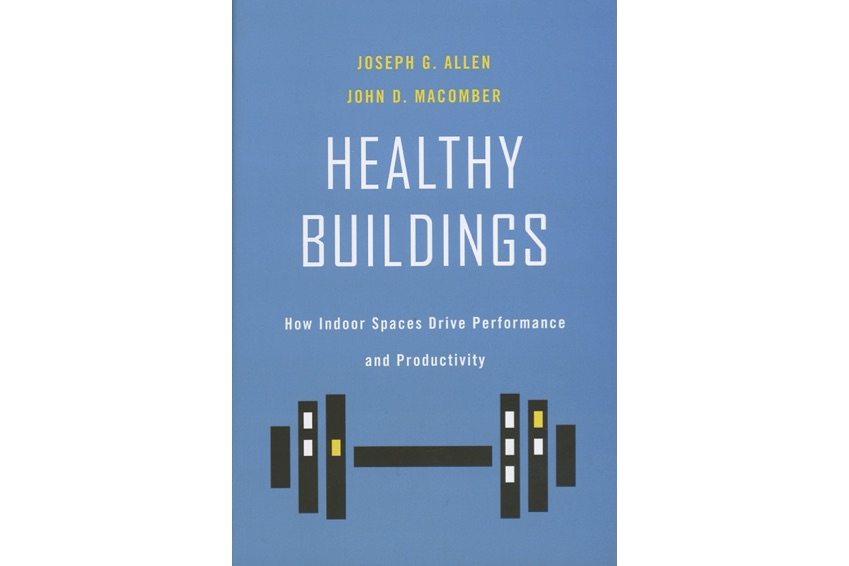
Edited by Joseph Allen and John Macomber. Harvard University Press, 2020, ISBN: 9780674237971
Marcella Ucci (UCL Institute for Environmental Design and Engineering) considers how Healthy Buildings offers a call to action for why we need healthy buildings and how they can be delivered.
When considering the book's title and the academic affiliation of its two Harvard-based authors, prospective readers may perhaps expect a scholastic manual or handbook about the topic. In fact, the book is first and foremost a lucid and passionate outline of why now is the time to acknowledge the huge and unrealised potential for buildings to make a positive contribution to the health and performance of their inhabitants, the economy, society and the planet. In this sense, this is a very different and innovative book compared with other similarly themed ones.
This book is also a call to action, where evidence and its underlying science are explained with the goal of revealing its practical and deeper implications for built environment professionals, business leaders, real estate developers and investors, as well as workers and society at large. Accordingly, the book is structured into two sections starting with the 'why' (Part 1: The Case for Healthy Buildings), followed by the 'how' (Part 2: A Healthy Building Strategy). The focus of the discussion and of the evidence/examples are often centred around air quality considerations, although the importance of other factors is addressed in some sections, especially in Part Two where "The 9 Foundations of Healthy Buildings" presents a comprehensive framework for conceptualising and measuring building performance across nine parameters. These include: water quality, noise, thermal health, lighting and views, safety and security, dust and pets, moisture, air quality, and ventilation.
A fundamental concept, which the authors themselves flag up as the one thing to remember, if nothing else, from their book (p. 240) is asking ourselves the question: "Why are we ignoring the 90%?", which is the title of Chapter 3 addressing, primarily with a focus on air quality considerations, the importance of indoor environments where we spend up to 90% of our time. The section is one of the best and clearest explanations I have come across about this fundamental issue: we have become an 'indoor species', spending up to 90% within indoor environments. Yet the impact of these environments on our health and productivity is largely undervalued or misunderstood. Various compelling examples and evidence are provided, ranging from evocative statements ("Americans spend more time inside buildings than some whale species spend underwater", p. 39), to the provocatively titled Table 3.1 "The dirty secret of air pollution" (p. 44). The table demonstrates quite clearly how our 'indoor species' is likely to be exposed to a bigger dose of outdoor air pollution whilst being indoors, compared to the dose whilst outdoors. This Chapter also gives the opportunity to become acquainted, within a meaningful context and through relevant examples, with key scientific concepts such as exposure and risk. These are not widely understood by built environment and real estate professionals, yet a basic understanding of their fundamentals is key so that any risks to health can be minimised, whilst benefits to health/performance maximised.
Another key section in the book is in Chapter 4, where the core argument of the book is outlined, namely that: 1) healthy indoor air equals better health and productivity; 2) the financial gains from this mechanism are sizeable and thus appealing from a business perspective. Crucially, the authors argue that the issue of split or misaligned incentives (e.g. landlord does not directly benefit from health/productivity gains of tenants) can be overcome, because the financial gains are large enough to be shared between stakeholders. Both arguments are demonstrated with examples, some from research published in peer-reviewed papers. They include tables with specific financial estimates and whilst these are in US dollars, the overall implications are clear enough for those who operate in other countries. Besides the potential for financial gain, throughout the book other key drivers for healthy buildings are highlighted, including the important lever of risk management. It is argued that advances in sensing and digital technology mean that building performance is now easier to measure and, most crucially, can be more visible, e.g. via digital platforms and social media. Hence, real estate investors and business leaders would be wise to minimise the reputational and/or litigation risks arising from poorly performing buildings.
The book does address, although perhaps not as comprehensively as other topics, one of the obvious conundrums in this field: shall we sacrifice energy efficiency and low carbon targets in the pursuit of healthy buildings? The authors' position on this matter is clear: the health of our planet and the health of our species are equally important and completely intertwined. An entire chapter (Chapter 10) is dedicated to these issues, also discussing the 'Health co-benefits of Energy-Efficient Buildings' and aiming to "debunk a myth": namely that the goals of 'green' and 'healthy' are in conflict. The discourse in these sections is as persuasive as in other sections within the book, but perhaps missing some of the more specific examples and tables which can convince the most sceptical readers. For instance, the authors argue that calling for greater ventilation rates in buildings is not equivalent to condoning greater energy use, and suggest that, for example, energy-recovery ventilation (i.e. mechanical ventilation with heat recovery) can mitigate most of the higher energy requirements for higher ventilation rates (p. 209). However, I can think of several HVAC engineers who would frown at this logic, especially those operating in countries where ventilation with energy/heat recovery is commonplace and where there is a push for lowering energy demand as much as possible. On the other hand, since the book's main focus is not centred around the synergies or conflicts between energy efficiency and health, a comprehensive debate may be outside its scope.
One of the sections I personally enjoyed the most is Chapter 9, specifically the section "Doing it Wrong: the Mismanagement of "People Businesses"". It is a clearly articulated and at times almost merciless analysis of the flaws of Post Occupancy Evaluation (POE) surveys, and especially of the way results are commonly reported in professional journals and media. The flaws are addressed with reference to well-known research methods basics, which may sound pedantic to some: yet the examples clearly and simply articulate why these basic principles (e.g. representativeness, selection bias etc.) have a practical significance and thus must be considered when designing, analysing and reporting findings from POE surveys. Some of these flaws are then used by the authors to support the importance of alternative ways to measure building performance, specifically Health Performance Indicators (HPI) whose principles are outlined with interesting examples of their significance.
Overall this is a powerful and enjoyable book, which will appeal to those with an interest in business and built environment alike. Evidence and science are presented in an accessible and clear way, interspaced with colloquialism and personal anecdotes (including how one of the authors narrowly missed becoming an FBI agent), making it both a relatable and authoritative read. Perhaps the most enjoyable aspect of the book is the clear sense of conviction and passion for healthy buildings that the authors' words exude.
I can't help but feel for the authors whose book has been published shortly before the COVID-19 pandemic - they might have loved an opportunity to add some reflections on how this is yet another example of how and why healthy buildings matter: an aspect covered for example by Dr Allen in various media outlets. It is harder however to foresee how some of the market mechanisms outlined in the book as a conduit for healthy buildings may or may not be affected by the COVID-19 pandemic and associated economic crisis.
At the time of writing this review, the world is engulfed
with the short and long-term impacts of the COVID-19 epidemic, which has also
shone a bright light on the deep inequalities embedded within our society. For
example, there is much debate on the disproportionate effect of COVID-19 on
ethnic minorities worldwide (Kirby, 2020). Economic hardship resulting from the
pandemic is likely to hit hardest those already in the most disadvantaged
groups. It is hard to imagine how such deep-rooted inequality issues can be
addressed primarily through market-driven mechanisms and without the determined
effort of policy makers and world leaders, hopefully with support from the
public. The book states that "The Healthy Building strategies in this book must
not only benefit the 1 percent" (p. 238). Yet, interestingly the authors
themselves do not seem to address policy makers in their call for action: for
example, policy makers or public health professionals are not explicitly listed
as stakeholders in the Preface. It would have been hard to write a similarly
compelling and easy to read book which appeals to both policy makers and business leaders. I wonder if this
might give us a clue to the next book from the authors?
References
Kirby T., 8 May 2020, Evidence mounts on the disproportionate effect of COVID-19 on ethnic minorities. The Lancet Respiratory Medicine. https://doi.org/10.1016/S2213-2600(20)30228-9


Latest Peer-Reviewed Journal Content
Building space heating and cooling in NDCs 4.0
T P Lützkendorf
Building component reuse as sociomaterial interaction: lessons from precast concrete
J Uusikartano, L Alkki & V Capitani
Validating national reuse indicators from regional demolition data: a Swedish example
F Ericsson, K Mjörnell & U Janson
Climate change risk and decision-making [editorial]
S Foxell & I Cooper
Technologies of reconstruction [editorial]
P Tombesi
Urban form metrics for building occupancy modelling: applications and impacts
D Reiter, M Jehling & R Hecht
Retrofit realism: affordable low-carbon policies for existing homes
N Eyre & R Khosla
Inside offsite: everyday dwelling in factory-built apartments
L Dorignon & R Horne
MMC for housing: sectoral perception on governance challenges
J Morgan, C Goodier, R Schmidt-III & K Ayinla
Reorganising specification practice for component reuse: an exploratory study
S Gao, K Jones, J Xu & J Glass
Kitchen retrofits to support food practices and wellbeing
F J Andrews, A Sal Moslehian, E Warner & R Tucker
From strategy to delivery: a comparative analysis of MMC roadmaps
G Goldman, D Sorokine, F Suerich-Gulick, C Carbone & M Jemtrud
Thermal comfort, ventilation and mosquito-borne disease risk in Zanzibar hospitals
O Sloan Wood, J B Knudsen, K L Schiøler, E Lupenza, M Msellem & F Saleh
Reusing precast concrete elements in construction: assessing the economic conditions
O Vigren, H Westerlind & T Malmqvist
Institutional readiness for industrialised social housing in Vietnam
T Q Nguyen, B N Nguyen, T H Q To & Z Aziz
Prefabrication for housing retrofit: governance, innovation and resident experience
E Pikas, K Kuusk, P Pihelo, R Liias, J Pukk & T Kalamees
Reframing heat pump transitions: a care perspective
J van der Haer, R Schelwald & F de Haan
Urban informal settlements in Africa: transforming adaptation governance
K Buyana & H Sseviiri
Reusing concrete products in indoor environments: chemical hazard assessment
K Tähtinen, A Helin, E Parshintsev & H Hovi
Negotiating net-zero carbon: an ANT analysis of two buildings
L Schweber & M Green
Design for disassembly: a review of public policy proposals
O Vorobjev, U Uotila, T Joensuu & A Saari
Retrofitting Norwegian residential buildings: an archetype-based dynamic stock model
L S A Rousseau, S Amini, S Akin & E G Hertwich
Decolonising time: vernacular villages and the politics of heritage temporality
R Al-Rabady
Commutes to alternative workplaces: GHG emissions and physical activity
J Taylor, L Thoen, A Espinosa Mireles De Villafranca, P Anashin, J Vanhatalo, D Milián
Bernal & I Okkonen
Nine ‘myths’ about the building stock of Great Britain
S Evans, P Steadman, A Neto-Bradley, D Humphrey, R Liddiard,H Shamsi, J Palmer & G Simons
Join Our Community

The most important part of any journal is our people – readers, authors, reviewers, editorial board members and editors. You are cordially invited to join our community by joining our mailing list. We send out occasional emails about the journal – calls for papers, special issues, events and more.
We will not share your email with third parties. Read more
Latest Commentaries
Who is Responsible for Climate Change?
Ian Cooper (Eclipse Research) explores the questions of responsibility raised in the recent Buildings & Cities special issue ‘Climate Change Risk and Decision-Making’. Focusing here on carbon emissions and mitigation, global responses will require grounding in what can work locally. New responsibilities arise for the wide range of built environment decision-makers: clients, professionals and their institutions, central and local governments, product suppliers, financiers, insurers, etc. A framework is needed to manage the complexity of responsibilities especially for variety of actors, the time frames and spatial scales.
Professional Ethics in a Climate Crisis
The climate crisis has progressed into a dangerous phase with tragic consequences often counted in numbers of excess deaths, but also by powerful economic impacts of rising food prices, the increased costs of insurance and lending, costly damage to the built environment. Celia Davies, Director of Impact at the UK’s Town and Country Planning Association (TCPA) and Hugh Ellis, Director of Policy at TCPA, consider the responsibilities of professionals in shaping a built environment which is fit not just for today's climate risks but for the dramatic increase in severe and unpredictable weather which is now locked into our climate systems.