
www.buildingsandcities.org/insights/research-pathways/lived-experience-outdoor-thermal-comfort.html
Lived Experience in Outdoor Thermal Comfort

RESEARCH PATHWAY: personal reflections on a career in research
Research paths rarely follow a linear route and although some arrive at their PhD journey with very clear research questions, often these radically shift along the way. In Marialena Nikolopoulou’s (University of Kent) case, the focus on outdoor thermal comfort came almost by serendipity and thematic constraints. The questions underpinning her research led to new understandings of the human dimensions of thermal comfort in urban microclimates.
Inspiration for a research question
During my postgraduate studies I became fascinated by thermal comfort and occupants’ interaction. Coming from an architectural engineering background with the focus on energy and the need to reduce energy demand, the emphasis on the occupant, presented a new fascinating world and Nick Baker’s work for the EU-funded PASCOOL project (Baker & Standeven 1996) provided the early inspiration, which could also be tested in my supervisor, Dean Hawkes’1 newly built Maldon library in Essex. It soon became apparent that physical measurements alone were not sufficient to truly understand whether a building was ‘successful’. Talking to people using the space, while also taking physical measurements and observing how they interacted with the building, provided an additional layer of rich information to truly understand a building. The seeds of such insight were transformative and had lasting influence.
Eventually, I returned to the university to work on an EU-funded Project ZED: Towards Zero Emission Development, with Koen Steemers. The focus was at the scale of the urban block, with a broad remit, beyond individual buildings. I had joined as a research assistant without ever considering further studies, but I was encouraged to also enrol for a PhD. In my mind, if I were to engage with a PhD, I was only interested on thermal comfort.
However, despite the broad remit of Project ZED, thermal comfort was the one topic not included. Eventually came the lightbulb moment – what if we were to move thermal comfort from inside buildings to the outside of buildings? We were all sceptical of the idea (including myself); this was still 1995, and beyond Olgyay’s (1963). bioclimatic chart there was hardly anything discussing thermal comfort outdoors in the wider architectural, built environment literature, so I started exploring the idea before committing to it.
Eventually I came across a couple of working papers from Berkeley from the 1980s, a collaboration between urban designers and building scientists on Sun, Wind and Comfort in San Francisco (Bosselmann et al. 1984). These provided evidence of an unknown topic, using predominantly measuring tools to evaluate urban microclimate, along with a mathematical model of the thermoregulatory system for calculating comfort conditions. I could immediately see the potential of transferring methodological approaches used for collecting empirical data in thermal comfort studies in buildings into real urban settings.
Yet Cambridge, UK (where I was working) was not San Francisco. It did not present the same tall-building canyons, wind gusts and long shadows that had motivated research in North American business districts. The question therefore had to be broadened. Rather than treating urban form as the object of study, I focused on the “occupant” of the outdoor room: how people experienced changing conditions, their impact on thermal comfort, and how those conditions shaped their decisions to stay, move, or avoid a place.
The research combined monitoring of microclimatic conditions with questionnaire-guided interviews and observations. It allowed actual comfort conditions to be explored rather than inferred solely from models. This became the first extensive study shedding light on the relationship between climate, people and urban space. The hypothesis was that climate influences behaviour and patterns of use in urban space, often without people being fully conscious of it. This was the point at which outdoor thermal comfort became, for me, a human-centred question rather than solely a physical or environmental one.
Difficulties and barriers before the breakthrough
Adopting a human-centred approach to outdoor comfort revealed a complex, multi-variable issue clouded by prevailing prejudices. These misconceptions ranged from the belief that outdoor comfort is exclusive to Mediterranean climates, to the assumption that the research concerns outer space. This irony highlighted a systemic issue with the public realm treated as an afterthought, referred to as SLAP (Space Left over After Planning), making comfort in spacecraft seem more plausible than comfort in our own outdoor spaces.
The difficulty was not simply that outdoor environments are variable, it was that their variability exposed the limitations of established methods. Measurements outdoors required more than low-cost air-temperature and relative-humidity sensors. Wind needed to be captured from different directions and at varying speeds, while existing globe thermometers had a long-time lag, unsuitable to the rapidly changing conditions. In a school of architecture with limited resources, this led to improvisation: ping-pong balls, aluminium takeaway containers and chocolate wrappers were shaped into globe thermometers, then tested and calibrated under controlled conditions.
Ingenuity cannot compensate indefinitely for inadequate resources and methods must be fit for the question. Making and validating imperfect instruments forced close attention to what, precisely, was being measured and what it might mean for a person in a space. The same was true of the interviews. Approaching strangers in public could be awkward, and refusals greatly outnumbered acceptances. A study ‘about the weather’ amused many; the portable case of protruding sensors helped others to stop. To obtain meaningful evidence, hundreds of interviews were needed. The work became as much a social study of public space as a study of thermal comfort.
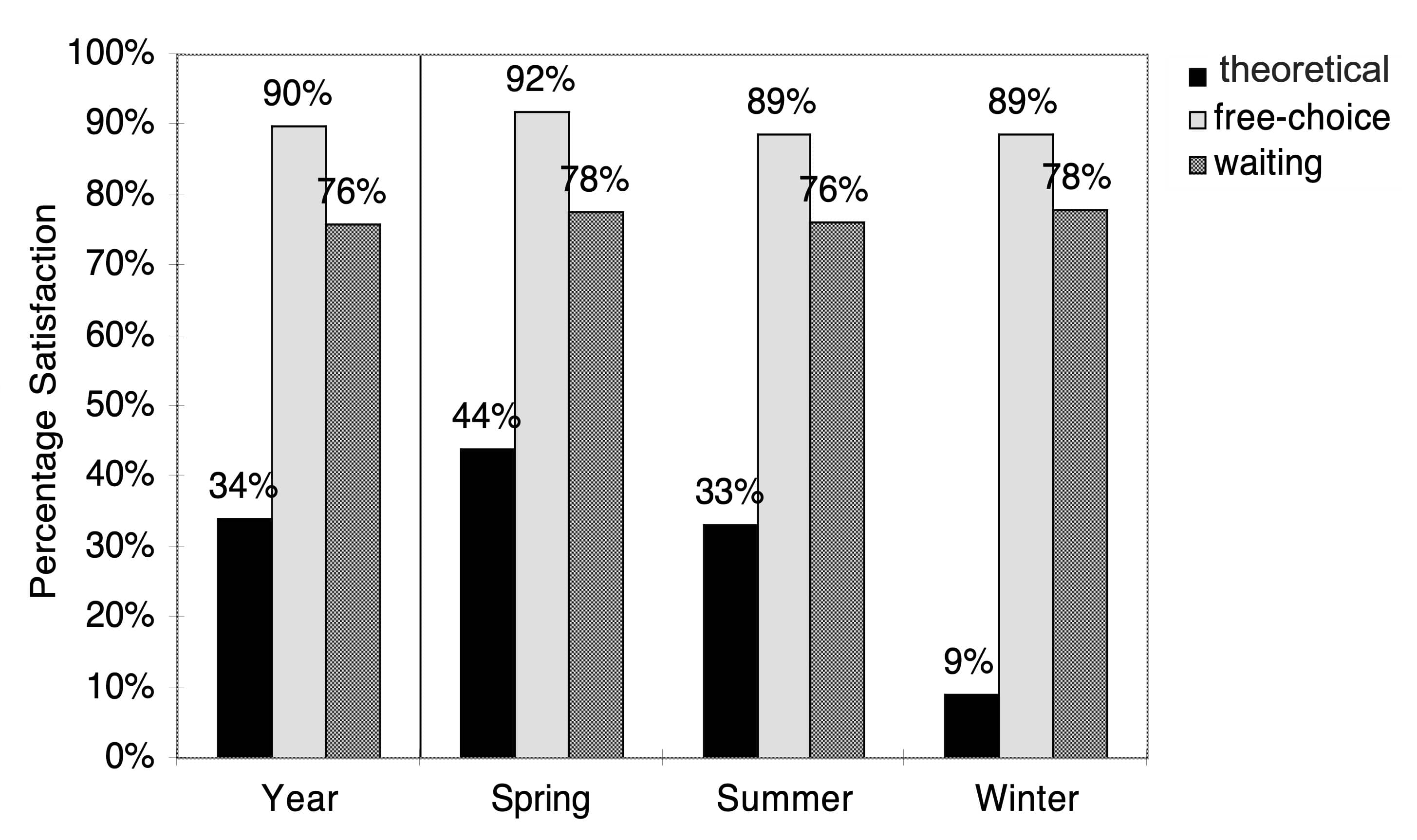
This innovative approach led to some fascinating findings, but interpreting the results required crossing disciplinary boundaries. Thermal comfort, architecture and urban design, and environmental psychology informed understanding. The evidence highlighted that people could be comfortable across a wider range of conditions than heat-balance models would classify as acceptable. The evidence informed the framework for outdoor thermal comfort beyond thermal physiology. Individual expectations and past experiences, a sense of control over a potential stressor, reasons for being outdoors, and the value of environmental stimulation provided the decisive conceptual change. About half of the variation in comfort could be attributed to physical and environmental parameters (Nikolopoulou et al. 2001); psychological adaptation emerged as a leading factor. Outdoor comfort was therefore not simply a physical heat-balance problem. It was adaptive and psychological (Figure 1).
Extending the influence
The subsequent European RUROS project (Rediscovering the Urban Realm and Open Spaces) enabled this framework to be explored across cities and latitudes. With colleagues working across different countries, surveys of thermal, visual and acoustic conditions produced a database of nearly 10,000 interviews and more than half a million data points. At my viva, Professor Michael Humphreys2 urged that as this was the largest outdoor comfort study at the time it would be useful to make the data available to the scientific community for further analysis. That advice shaped the planning of RUROS. Its database (Nikolopoulou & Lykoudis 2004) remains the largest open-access dataset on outdoor comfort to date, supporting meta-analysis and research questions that could not have been anticipated at the outset.
RUROS became an important milestone in outdoor comfort, contributing to the theoretical framework of adaptive thermal comfort outdoors (Nikolopoulou & Lykoudis 2006) and influencing research on the use of open spaces. These empirical methods were subsequently adopted in numerous comfort surveys across the globe and evolved to include dynamic thermal walks and transient environments.
At the same time, growing concern about climate change, and the need for adaptation strategies to enhance urban resilience, brought the urban realm and outdoor environments to the forefront of research. Over the years, my team’s work expanded to encompass urban morphology, nature-based solutions, materiality, and the role of shading, with outdoor thermal comfort emerging as an increasingly important consideration.
Alongside the development of advanced urban-microclimate simulation tools and increasing computational power, these advances have transformed outdoor thermal comfort from a small and emerging research topic at the end of the twentieth century into a mainstream field, under the broader theme of the outdoor thermal environment.
From experience to insight
Could I offer any words of wisdom for early-career researchers? As disciplinary boundaries become more fluid, cross-fertilisation can enable formulation of better questions. Outdoor environments require dialogue between architecture, urban design, geography, urban climatology and meteorology, while psychology and the social sciences keep people -not simply physical conditions- at the centre of enquiry. Reaching across boundaries is now easier than ever; digital resources and communications, formal networks and informal connections make it possible to find expertise and collaborators quickly.
It is also important to treat obstacles as opportunities. Whether limitations with equipment, unexpected results or failing hypotheses can provide a new investigation route. A proposal provides a necessary framework, but research rarely proceeds exactly as planned. Perseverance matters, but so do agility and iterative refinement. Discussions with others can crystallise uncertainties and expose overlooked perspectives; it does not diminish an idea to let it change.
Finally, do not mistake rejection for an endpoint. Funding success rates can fall below 10%, particularly for the smaller schemes often targeted by early-career researchers. Social media tends to highlight success, making it easy to forget that every successful researcher has also experienced rejected proposals and manuscripts, as the statistics clearly demonstrate. When approached critically, peer review can strengthen an argument and improve the work. It is also valuable to design projects so that they can be adapted for a different funder, audience or collaborator if the initial route proves unsuccessful.
The question that began my work -how people experience microclimate in urban space- has become inseparable from wider concerns in our climate crisis. In a warming world, improving the built environment cannot be solely about regulating climate and reducing energy use, but also environmental justice, health, liveability and ultimately social cohesion. That is why the human dimension of urban microclimate remains, for me, the essential thread.
Notes
1. The year 2026 saw the passing of two profoundly influential figures in my professional life. Dean Hawkes, my Master’s supervisor, passed away just one week before this article was submitted. He opened my eyes to new ways of understanding and appreciating the built environment.
2. Michael Humphreys, widely regarded as a founding figure in adaptive comfort theory, also died in 2026. His work and critical advice shaped my own in many ways.
Acknowledgements
I am deeply grateful to my PhD supervisors, external examiners, collaborators and PhD students over the years. None of this would have been possible without them all, it truly takes a village.
References
Baker, N.V. & Standeven, M. (1996). Thermal comfort for free-running buildings, Energy and Buildings, 23:3. https://doi.org/10.1016/0378-7788(95)00942-6
Bosselmann, P., Flores, J., Gray, W., Priestley, T., Anderson, R., Arens, E., Dowty, P., So, S. and Kim, J.J. (1984). Sun, Wind and Comfort: A Study of Open Spaces and Sidewalks in Four Downtown Areas. Institute of Urban and Regional Development, University of California Berkeley.
Nikolopoulou, M., Baker, N. & Steemers, K. (2001). Thermal comfort in outdoor urban spaces: the human parameter, Solar Energy, 70:3. https://doi.org/10.1016/S0038-092X(00)00093-1
Nikolopoulou, M. & Lykoudis, S. (2004). RUROS project outdoor comfort database (Vol. 41) [Data set]. Zenodo. https://doi.org/10.5281/zenodo.14275070
Nikolopoulou, M. & Lykoudis, S. (2006). Thermal comfort in outdoor urban spaces: analysis across different European countries, Building and Environment, 41:11. https://doi.org/10.1016/j.buildenv.2005.05.031
Nikolopoulou, M. & Steemers, K. (2003). Thermal comfort and psychological adaptation as a guide for designing urban spaces, Energy and Buildings, 35:1, https://doi.org/10.1016/S0378-7788(02)00084-1
Olgyay, V. (1963). Design with Climate, Bioclimatic Approach to Architectural Regionalism. New Jersey: Princeton University Press.
Latest Peer-Reviewed Journal Content

Moving homes and energy poverty: residents’ concerns, capabilities and responses
M Jalas, J Rinkinen, S Numminen & E Valkealahti
Reference study for biogenic carbon storage in the residential building stock
O Iliescu, I Talvitie, A Amiri & S Junnila
Building space heating and cooling in NDCs 4.0
T P Lützkendorf
Building component reuse as sociomaterial interaction: lessons from precast concrete
J Uusikartano, L Alkki & V Capitani
Validating national reuse indicators from regional demolition data: a Swedish example
F Ericsson, K Mjörnell & U Janson
Climate change risk and decision-making [editorial]
S Foxell & I Cooper
Technologies of reconstruction [editorial]
P Tombesi
Urban form metrics for building occupancy modelling: applications and impacts
D Reiter, M Jehling & R Hecht
Retrofit realism: affordable low-carbon policies for existing homes
N Eyre & R Khosla
Join Our Community

The most important part of any journal is our people – readers, authors, reviewers, editorial board members and editors. You are cordially invited to join our community by joining our mailing list. We send out occasional emails about the journal – calls for papers, special issues, events and more.
We will not share your email with third parties. Read more
Latest Commentaries
Who is Responsible for Climate Change?
Ian Cooper (Eclipse Research) explores the questions of responsibility raised in the recent Buildings & Cities special issue ‘Climate Change Risk and Decision-Making’. Focusing here on carbon emissions and mitigation, global responses will require grounding in what can work locally. New responsibilities arise for the wide range of built environment decision-makers: clients, professionals and their institutions, central and local governments, product suppliers, financiers, insurers, etc. A framework is needed to manage the complexity of responsibilities especially for variety of actors, the time frames and spatial scales.
Professional Ethics in a Climate Crisis
The climate crisis has progressed into a dangerous phase with tragic consequences often counted in numbers of excess deaths, but also by powerful economic impacts of rising food prices, the increased costs of insurance and lending, costly damage to the built environment. Celia Davies, Director of Impact at the UK’s Town and Country Planning Association (TCPA) and Hugh Ellis, Director of Policy at TCPA, consider the responsibilities of professionals in shaping a built environment which is fit not just for today's climate risks but for the dramatic increase in severe and unpredictable weather which is now locked into our climate systems.