
www.buildingsandcities.org/insights/research-pathways/design-politics.html
Design-Politics: A Long Search to Justify a Hyphen
RESEARCH PATHWAY: personal reflections on a career in research
Lawrence J. Vale (Massachusetts Institute of Technology) explains how his research thinking has evolved over time to consider how politics and design interact at different scales ranging from architectural design to urban design. These ideas have coalesced into new insights that design and politics are co-constitutive and also have significance for designers, planners and the public. A critical question for interrogating any proposal is: who benefits and who loses from development?
If I look back on the first four decades of my research career, I realize how easy it would be to see only undisciplined eclecticism. Is it really the same person who wrote books about bomb shelters, the global spread of designed capital cities, the rise, fall, and redevelopment of American public housing, post-disaster urban recovery, the equitable resilience of cities in the face of climate change, and the signaling of inclusion and exclusion? Yes, it is. Only after I had pursued these seemingly disparate interests for many years (without ever dropping concern about a prior topic when I shifted attention to the next project) did I come to realize that they shared a common thread.
At a basic level, my writing projects were additive and intertwined, rather than just consecutive. The thread that bound it all together was my long-standing double interest in both design and politics. As a 17-year-old high school student in Chicago I first jotted down a note to myself proposing a ‘double major in architecture and psychology’ as my future college focus. Ultimately, this early concern to relate social science and architecture inspired a career-long pair of questions: How are politics and the built environment intertwined? And: How can understanding this relationship help design and planning practitioners see what they are doing more clearly?
With an undergraduate degree in American Studies that entailed coursework spanning 14 different departments, followed by a doctorate in International Relations and—only after this—a master’s degree centered on architecture and urban design, my education could be considered wildly omnidirectional. That said, the same single person chose such paths and never regarded them as purely sequential. Given this, how might I sort out the path to productive convergence? Provided with the remarkable opportunity to spend my entire teaching and research career at a top institution that paid me to think, how would I use that boundless and weighty gift to do more than satisfy my own personal curiosity? How might I build a career in academia that would serve both the next generation of scholars and also productively influence the professional choices made by practicing architects and planners? How might I build intellectual bridges between the visions of designers and the political, social, and cultural contexts in which they operate?
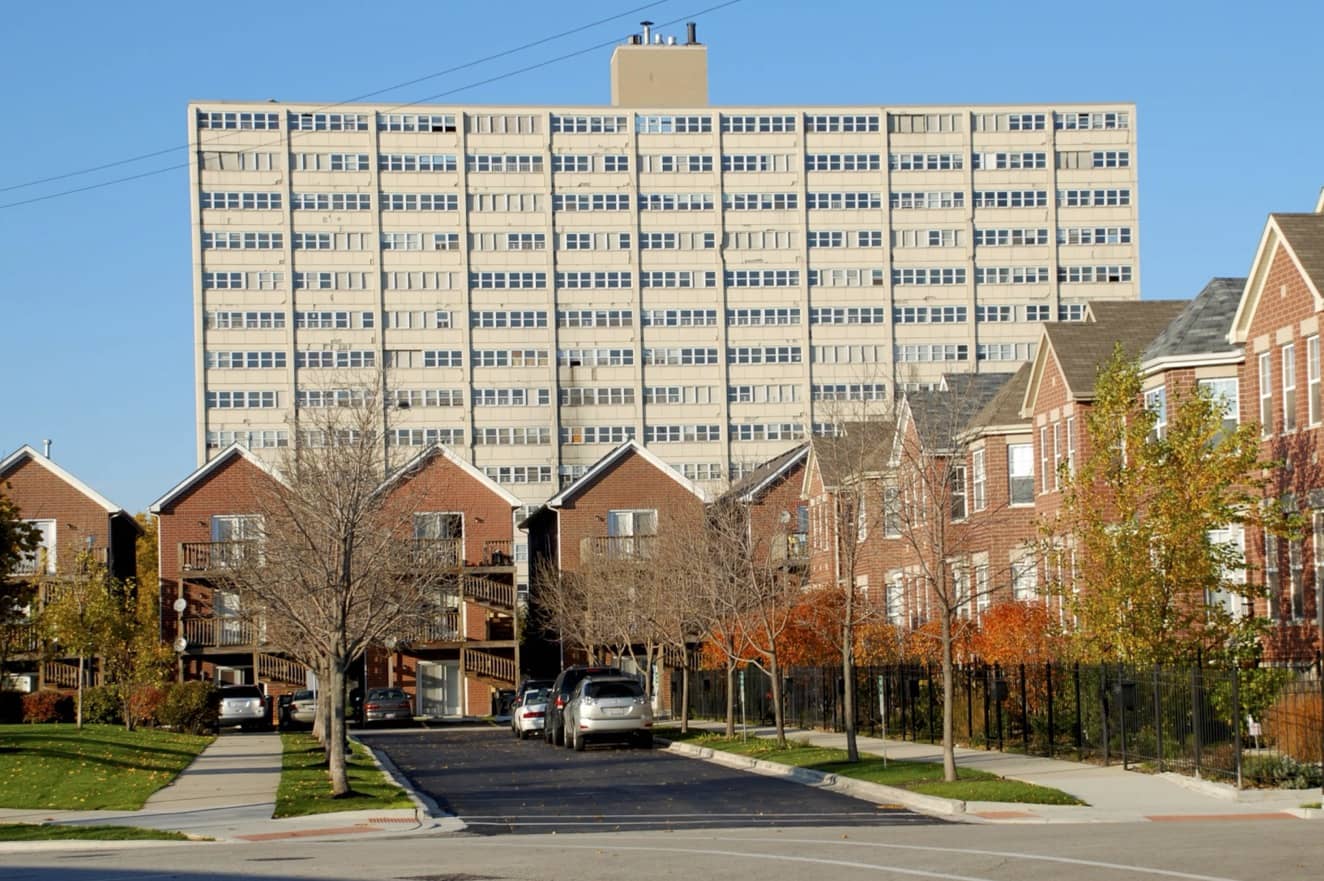
I started out by treating questions of design as products of political history. This formulation enabled design and politics to be considered together but still implied some possibility for separation. Political history surely colored design choices yet remained a lens through which to view choices about architecture and urban design. In my undergraduate thesis, entitled ‘Housing an Ideology,’ I asked, ‘What place does public housing hold in the system of American society?’ Having grown up in an 11th-floor apartment in a safe and well managed building that was, starkly, just a few blocks away from the ill-maintained and notoriously violent high-rises of the Cabrini-Green project in Chicago, it was impossible to view architecture in aesthetic isolation. ‘I am writing,’ my 22-year-old self-declared, ‘not about architects but about the context in which the operate,’ seeking to understand the relationships between architecture and ‘the underlying problems of racism and massive class inequality’ (Vale 1981).
Increasingly, by augmenting formal education though global travels—and still rooted in childhood hobbies that entailed developing classification systems for collectible objects—I honed my observational skills. I started to see simultaneous evidence of design and politics everywhere and at all scales, from tiny objects to entire cities. I saw both design and politics in every kind of choice: How to pick what to commemorate on postage stamps or coinage? How to invent the right shaped table to support multilateral Vietnam peace talks among representative leaders with varying degrees of status and power? (Michaels 2017). How to read the layout of a city council chamber to dissect hierarchies implied by relative elevation, centrality, and boundaries between elected officials and the public? (Goodsell 1988). How to set priorities when siting a newly planned capital city? In many cases, the interconnection of design and politics becomes apparent in the layout and programming of a single building, but it becomes especially potent at the scale of site planning and urban design. In all of the cases I have written about—whether parliamentary districts, public housing projects, disaster recovery priorities, or climate adaptation—urbanistic architecture appears as an extension of policy by other means, endeavoring to educate and reorganize the sense of political belonging. It is not just an outcome of politics; it is a modality of political action.
Looking back, I see that the term design politics is not rendered even once in the text of Architecture, Power, and National Identity—in either the original (Vale 1992) or in the revised second edition (Vale 2008). That second iteration, however, enabled me to expand and update the argument of the first, and its content is about one-third different. While it is true that ‘design politics’ does not enter the language of either edition, something significant did change. That term was not indexed in 1992, but it appears ten times in the index for the 2008 version, with links to 46 different pages, spread all across the volume. This seems a testament to the value of a good index, but it is also an index of my own intellectual development. By the time of the book’s second edition, I had taught my seminar on Urban Design Politics at MIT more than a dozen times and was much more capable of seeing my book topic through a more conceptual and integrative lens. Rather than simply assert that nouns like ‘architecture,’ ‘power,’ and ‘national identity’ ought to be considered together in an interrelated list, I now identified an overarching frame—even though, for the moment, this was more overtly indicated in the index than in the text.
Similarly, while the first two of my (unintended) eventual quartet of volumes about American public housing (Vale 2000, Vale 2002) were thoroughly infused with examples that demonstrated how politics and design could be intertwined at all scales (based on wide-ranging interviews that gave voice to those most impacted), those texts from 2000 and 2002 did not explicitly use a ‘design politics’ frame. By the third volume, Purging the Poorest, (Vale 2013), the notion of design politics permeated the book. It is indexed 33 times, with references spread across 54 different pages. Design politics emerges in all manner of racialized spatial practices and institutional biases and is expressed through freighted decisions about architectural program and site amenities that emerge from a series of largely unspoken political decisions about who belongs where. By this stage in my evolution as a researcher, direct articulation of the relationship between design and politics even warranted inclusion the book’s subtitle: ‘Public Housing and the Design Politics of Twice-Cleared Communities.’ At this point, I even felt compelled to propose putting a hyphen into design-politics, but the editors at the University of Chicago Press balked. They feared it would look like typo on the book’s jacket, especially since the other concept in the subtitle—‘twice-cleared communities’—already used a hyphen as a compound modifier.
Still, more than two decades into my book writing career, I felt more confident in pressing the potential of design politics as a kind of intellectual connective tissue. To me, it implied that politics should be seen as an internal part of the design process and that the processes of design embedded questions of power. Unstated norms, implicit exclusions, and deeply internalized ideologies became encoded in form. My earlier work had already provided detailed empirical examples of such relationships but now I had a way to give a name to this operative mechanism.
Design politics—with or without the hyphen—provided me with a clarifying intellectual lens but did little to assuage lingering self-doubt about how I might best describe myself in terms of field or profession. Despite my various degrees, I was neither a fully credentialed architect or planner, nor a formally trained historian or social scientist. If pushed, I will likely proffer the catchall evasion of ‘urbanist’. Fortunately, though, few people now press me about this. Though my personal uncertainties remain, I have tried to deploy the non-disciplinarity of my identity as its own form of professional license—a license to cross boundaries that others might be more reluctant to infiltrate.
Exemplifying this, the merging of design and politics entered into the way I wrote about the concept of resilience—another key term for me, especially once I saw how it could be applied to a global array of cities (rather than just to deformed structural beams, traumatized individuals, or disrupted ecosystems). Midway between the co-edited volume The Resilient City: How Modern Cities Recover from Disaster (Vale & Campanella 2005) and the co-authored book The Equitably Resilient City: Solidarities and Struggles in the Face of Climate Crisis (Lamb & Vale 2024), my essay “The Politics of Resilient Cities: Whose Resilience and Whose City?” (Vale 2014) concluded with a call to regard the concept of a ‘resilient city’ as both a process and an unfinished project, one that ‘operates through a kind of conjoined design-politics.’ I argued that ‘those who wish to advance the agenda of a “resilient city” must do more than judge the design products onthe ground; they also must assess the power dynamicthat permits new forms of development to beimplemented.’ Centrally, I aimed to show how ‘the symbolic milestones of a resilient city express a designed politics and its processes encode a politicized design’ (Vale 2024, p. 200).
As my work has developed further, I have increasingly asserted the additional value of the design-politics hyphen, deployed in articles such as ‘The Persistent Design-Politics of Race: Power and Ideology in American Public Housing Redevelopment’(Vale 2022a), ‘The Design-Politics of Planning Equitably Resilient Capital Cities’(Vale 2022b) and ‘The Design-Politics of Decolonization: Nationalist Ritual Confronts Imperial Statuary in New Delhi, India’(Janakiraman and Vale 2026). In my seminar on Urban Design Politics, I now begin each session with a segment I call ‘Last Week Today in Urban Design-Politics’—my weekly homage to the incisive British-American humorist John Oliver—enabling timely engagement with both local projects and the latest Trumpian travesties. Seeing how my design-politics lens operates in a classroom composed mostly of those whose careers will center on design practice rather than academia, I am ever more confident that I am offering a tool to analyze the past, present, and future of the built environment, not just a framework for research.
This hyphenated design-politics term that I now use with increased frequency intentionally makes a stronger claim than the hyphenless design politics. It does not simply identify politics within design or suggest motive. It asserts that design and politics are co-constitutive. Political order is not merely expressed in design; it is also materially constituted through it. In this sense, drawings—especially plans, sections, and site plans—are projective forms of governance. The representations, and the resultant structures, are non-verbalized assertions about preferred kinds of habitation and use. This is particularly true of the public buildings and other public-facing mixed-use places I have been drawn to study. Such structures are certainly not environmentally determinative, but nor are they random. Rather, they operate as affordances—design decisions that make some possibilities more likely than others. This happens when particular attributes of the built environment, which start as affordances, get enacted as inhabited sites.
Much of what I see as design-politics inheres not just in choices about architectural style, materiality, tectonics or even in symbolic resonance as a work of architecture but, instead, in its role as an act of urban design. The design of the architectural object matters but once one wants to see a building in relation to larger questions of ‘power’ or ‘national identity’ or ‘equitable resilience’ we are in larger spaces of engagement, not just interiors or even façades (however much they may be altered or annotated over time). In my world of design-politics, buildings become places that either allow or constrain access, thereby facilitating or constricting particular affordances and opportunities.In turn, what architectural historians typically term questions of ‘reception’ are inseparable from questions of ‘approach’—in the quite literal sense that received meanings depend on access. The space between buildings is as important as the buildings themselves. When I place a hyphen in design-politics, I am signaling conceptual integration and resisting disciplinary separation in favor of emphasizing larger systems. I realize, however, that this risks the downside of needing additional explanation, and I really do not wish to succumb to the sort of jargonized neologisms I have long endeavored to avoid. In the end, it sometimes seems simplest to claim no more than design politics, as a middle ground between the fully integrated assertion of design-politics, and the evasiveness implied by disingenuous separation of ‘design’ and ‘politics.’
With hindsight, I see in my own research pathway as following five longstanding commitments:
- Pursuing connective curiosity, rather than treating fields separately
- Finding larger themes across time and space, instead of accepting narrow specialization
- Seeking connections between policy ideas and their expression in the built environment
- Learning from close examination of practicing design and planning professionals and from interviewing those most affected by their actions
- Teasing out underlying political ideas and ideals from practices that may self-present as neutral or technocratic.
By disciplining myself to resist disciplinary silos, I have found evidence of design-politics in all manner of societally urgent domains across many cultures: how we house the least advantaged, how we frame what it means to recover from disasters, how we signal welcome versus rebuff in the environments we craft, how we cope with our collectively-induced climate crisis in the most equitably possible ways. Ultimately, I have tried to stay focused on how that long gestating hyphen linking design and politics helps me—and others—continually ask a crucial question: Who benefits from development?
References
Goodsell, Charles. (1988). The Social Meaning of Civic Space: Studying Political Authority Through Architecture. University Press of Kansas.
Janakiraman, Aarthi & Vale, Lawrence J. (2026, January). The design-politics of decolonization: nationalist ritual confronts imperial statuary in New Delhi, India. Planning Perspectives. https://doi.org/10.1080/02665433.2025.2601101
Lamb, Zachary B. &. Vale, Lawrence J. (2024). The Equitably Resilient City: Solidarities and Struggles in the Face of Climate Crisis. MIT Press. Open Access download: https://direct.mit.edu/books/oa-monograph/5844/The-Equitably-Resilient-CitySolidarities-and
Michaels, Jeffrey. (2017). Stuck in Endless Preliminaries: Vietnam and the Battle of the Paris Peace Table, November 1968-January 1969. Defence-in-Depth. https://defenceindepth.co/2017/05/19/stuck-in-endless-preliminaries-vietnam-and-the-battle-of-the-paris-peace-table-november-1968-january-1969/
Vale, Lawrence John. (1981). Housing an Ideology: Public Housing and the Jeffersonian Tradition, Unpublished Senior Honors Thesis, Amherst College.
Vale, Lawrence J. (1992). Architecture, Power, and National Identity. Yale University Press.
Vale, Lawrence J. (2000). From the Puritans to the Projects: Public Housing and Public Neighbors. Harvard University Press.
Vale, Lawrence J. (2002). Reclaiming Public Housing: A Half Century of Struggle in Three Public Neighborhoods. Harvard University Press.
Vale, Lawrence J. (2008). Architecture, Power, and National Identity, Second Edition. Routledge. Open Access download: https://www.taylorfrancis.com/books/oa-mono/10.4324/9781315880921/architecture-power-national-identity-lawrence-vale
Vale, Lawrence J. (2013). Purging the Poorest: Public Housing and the Design Politics of Twice-Cleared Communities. University of Chicago Press.
Vale, Lawrence J. (2014). The politics of resilient cities: whose resilience and whose city?. Building Research and Information, 42(2), 191-201.
Vale, Lawrence J. (2022a). The persistent design-politics of race: power and ideology in American public housing redevelopment. In Nikolina Bobic and Farzaneh Haghighi, (eds.), The Routledge Handbook of Architecture, Urban Space and Politics, Volume I: Violence, Spectacle and Data (pp. 268-284). Routledge.
Vale, Lawrence J. (2022b). The design-politics of planning equitably resilient capital cities: The Gordon Cherry memorial lecture, Planning Perspectives 37(6), 1268-1284.
Vale, Lawrence J. & Campanella, Thomas J. (eds.) (2005). The Resilient City: How Modern Cities Recover from Disaster. Oxford University Press.

Latest Peer-Reviewed Journal Content
Urban form metrics for building occupancy modelling: applications and impacts
D Reiter, M Jehling & R Hecht
Retrofit realism: affordable low-carbon policies for existing homes
N Eyre & R Khosla
Inside offsite: everyday dwelling in factory-built apartments
L Dorignon & R Horne
MMC for housing: sectoral perception on governance challenges
J Morgan, C Goodier, R Schmidt-III & K Ayinla
Reorganising specification practice for component reuse: an exploratory study
S Gao, K Jones, J Xu & J Glass
Kitchen retrofits to support food practices and wellbeing
F J Andrews, A Sal Moslehian, E Warner & R Tucker
From strategy to delivery: a comparative analysis of MMC roadmaps
G Goldman, D Sorokine, F Suerich-Gulick, C Carbone & M Jemtrud
Thermal comfort, ventilation and mosquito-borne disease risk in Zanzibar hospitals
O Sloan Wood, J B Knudsen, K L Schiøler, E Lupenza, M Msellem & F Saleh
Reusing precast concrete elements in construction: assessing the economic conditions
O Vigren, H Westerlind & T Malmqvist
Institutional readiness for industrialised social housing in Vietnam
T Q Nguyen, B N Nguyen, T H Q To & Z Aziz
Prefabrication for housing retrofit: governance, innovation and resident experience
E Pikas, K Kuusk, P Pihelo, R Liias, J Pukk & T Kalamees
Reframing heat pump transitions: a care perspective
J van der Haer, R Schelwald & F de Haan
Urban informal settlements in Africa: transforming adaptation governance
K Buyana & H Sseviiri
Reusing concrete products in indoor environments: chemical hazard assessment
K Tähtinen, A Helin, E Parshintsev & H Hovi
Negotiating net-zero carbon: an ANT analysis of two buildings
L Schweber & M Green
Design for disassembly: a review of public policy proposals
O Vorobjev, U Uotila, T Joensuu & A Saari
Retrofitting Norwegian residential buildings: an archetype-based dynamic stock model
L S A Rousseau, S Amini, S Akin & E G Hertwich
Decolonising time: vernacular villages and the politics of heritage temporality
R Al-Rabady
Commutes to alternative workplaces: GHG emissions and physical activity
J Taylor, L Thoen, A Espinosa Mireles De Villafranca, P Anashin, J Vanhatalo, D Milián
Bernal & I Okkonen
Nine ‘myths’ about the building stock of Great Britain
S Evans, P Steadman, A Neto-Bradley, D Humphrey, R Liddiard,H Shamsi, J Palmer & G Simons
Join Our Community

The most important part of any journal is our people – readers, authors, reviewers, editorial board members and editors. You are cordially invited to join our community by joining our mailing list. We send out occasional emails about the journal – calls for papers, special issues, events and more.
We will not share your email with third parties. Read more
Latest Commentaries
Who is Responsible for Climate Change?
Ian Cooper (Eclipse Research) explores the questions of responsibility raised in the recent Buildings & Cities special issue ‘Climate Change Risk and Decision-Making’. Focusing here on carbon emissions and mitigation, global responses will require grounding in what can work locally. New responsibilities arise for the wide range of built environment decision-makers: clients, professionals and their institutions, central and local governments, product suppliers, financiers, insurers, etc. A framework is needed to manage the complexity of responsibilities especially for variety of actors, the time frames and spatial scales.
Professional Ethics in a Climate Crisis
The climate crisis has progressed into a dangerous phase with tragic consequences often counted in numbers of excess deaths, but also by powerful economic impacts of rising food prices, the increased costs of insurance and lending, costly damage to the built environment. Celia Davies, Director of Impact at the UK’s Town and Country Planning Association (TCPA) and Hugh Ellis, Director of Policy at TCPA, consider the responsibilities of professionals in shaping a built environment which is fit not just for today's climate risks but for the dramatic increase in severe and unpredictable weather which is now locked into our climate systems.