Research Pathways
RESEARCH LEGACY: personal reflections on a career in research
Marina Fischer-Kowalski considers the key drivers in her interdisciplinary career linking social metabolism and material flow accounting that led to the creation of economy-wide energy and material flow analysis (MEFA). Research into broad, complex issues cannot be done alone. Insights and advice are offered on intensive multidisciplinary collaboration.
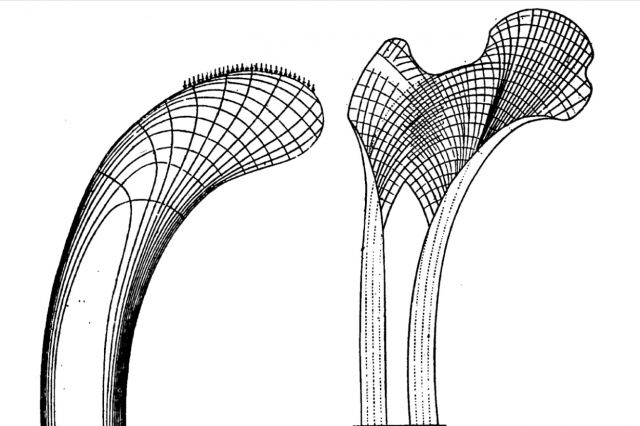
RESEARCH LEGACY: personal reflections on a career in research
Philip Steadman (University College London) considers how seminal theoretical perspectives from biology, maths and architecture helped to shape a revolutionary vision of an architectural morphology over a 55 year period. Personal reflections are offered as insights and advice to early career researchers.

RESEARCH LEGACY: personal reflections on a career in research
Sociologist Elizabeth Shove (Lancaster University) reflects on key drivers that have helped to shape a part of her intellectual career for understanding energy demand in the built environment: the invigorating force of social theory, intellectual curiousity and the importance of challenging what others take for granted.
Latest Peer-Reviewed Journal Content
Urban form metrics for building occupancy modelling: applications and impacts
D Reiter, M Jehling & R Hecht
Retrofit realism: affordable low-carbon policies for existing homes
N Eyre & R Khosla
Inside offsite: everyday dwelling in factory-built apartments
L Dorignon & R Horne
MMC for housing: sectoral perception on governance challenges
J Morgan, C Goodier, R Schmidt-III & K Ayinla
Reorganising specification practice for component reuse: an exploratory study
S Gao, K Jones, J Xu & J Glass
Kitchen retrofits to support food practices and wellbeing
F J Andrews, A Sal Moslehian, E Warner & R Tucker
From strategy to delivery: a comparative analysis of MMC roadmaps
G Goldman, D Sorokine, F Suerich-Gulick, C Carbone & M Jemtrud
Thermal comfort, ventilation and mosquito-borne disease risk in Zanzibar hospitals
O Sloan Wood, J B Knudsen, K L Schiøler, E Lupenza, M Msellem & F Saleh
Reusing precast concrete elements in construction: assessing the economic conditions
O Vigren, H Westerlind & T Malmqvist
Institutional readiness for industrialised social housing in Vietnam
T Q Nguyen, B N Nguyen, T H Q To & Z Aziz
Prefabrication for housing retrofit: governance, innovation and resident experience
E Pikas, K Kuusk, P Pihelo, R Liias, J Pukk & T Kalamees
Reframing heat pump transitions: a care perspective
J van der Haer, R Schelwald & F de Haan
Urban informal settlements in Africa: transforming adaptation governance
K Buyana & H Sseviiri
Reusing concrete products in indoor environments: chemical hazard assessment
K Tähtinen, A Helin, E Parshintsev & H Hovi
Negotiating net-zero carbon: an ANT analysis of two buildings
L Schweber & M Green
Design for disassembly: a review of public policy proposals
O Vorobjev, U Uotila, T Joensuu & A Saari
Retrofitting Norwegian residential buildings: an archetype-based dynamic stock model
L S A Rousseau, S Amini, S Akin & E G Hertwich
Decolonising time: vernacular villages and the politics of heritage temporality
R Al-Rabady
Commutes to alternative workplaces: GHG emissions and physical activity
J Taylor, L Thoen, A Espinosa Mireles De Villafranca, P Anashin, J Vanhatalo, D Milián
Bernal & I Okkonen
Nine ‘myths’ about the building stock of Great Britain
S Evans, P Steadman, A Neto-Bradley, D Humphrey, R Liddiard,H Shamsi, J Palmer & G Simons
Join Our Community

The most important part of any journal is our people – readers, authors, reviewers, editorial board members and editors. You are cordially invited to join our community by joining our mailing list. We send out occasional emails about the journal – calls for papers, special issues, events and more.
We will not share your email with third parties. Read more
Latest Commentaries
Building Performance Evaluation in Education – Why Not?
Building performance evaluation (BPE) is a process to understand how buildings perform in use and how inhabitants interact with their buildings. BPE can harness these insights to improve building design, operation and use. Paradoxically, BPE is rarely part of the curriculum for education of designers, buildings and managers. Fionn Stevenson (independent scholar) considers why BPE / post-occupancy evaluation is not being taught to architecture students in the UK and how to mainstream BPE in education and practice.
Freedom from Stress is Symptomatic of Death
Marcel Schweiker (RWTH Aachen University) and Richard de Dear (University of Sydney) discuss the neutrality fallacy and resilience. They explain why indoor environments do not need to be stress free in order to support their occupants’ resilience.