
www.buildingsandcities.org/insights/commentaries/who-responsible-climate-change.html
Who is Responsible for Climate Change?
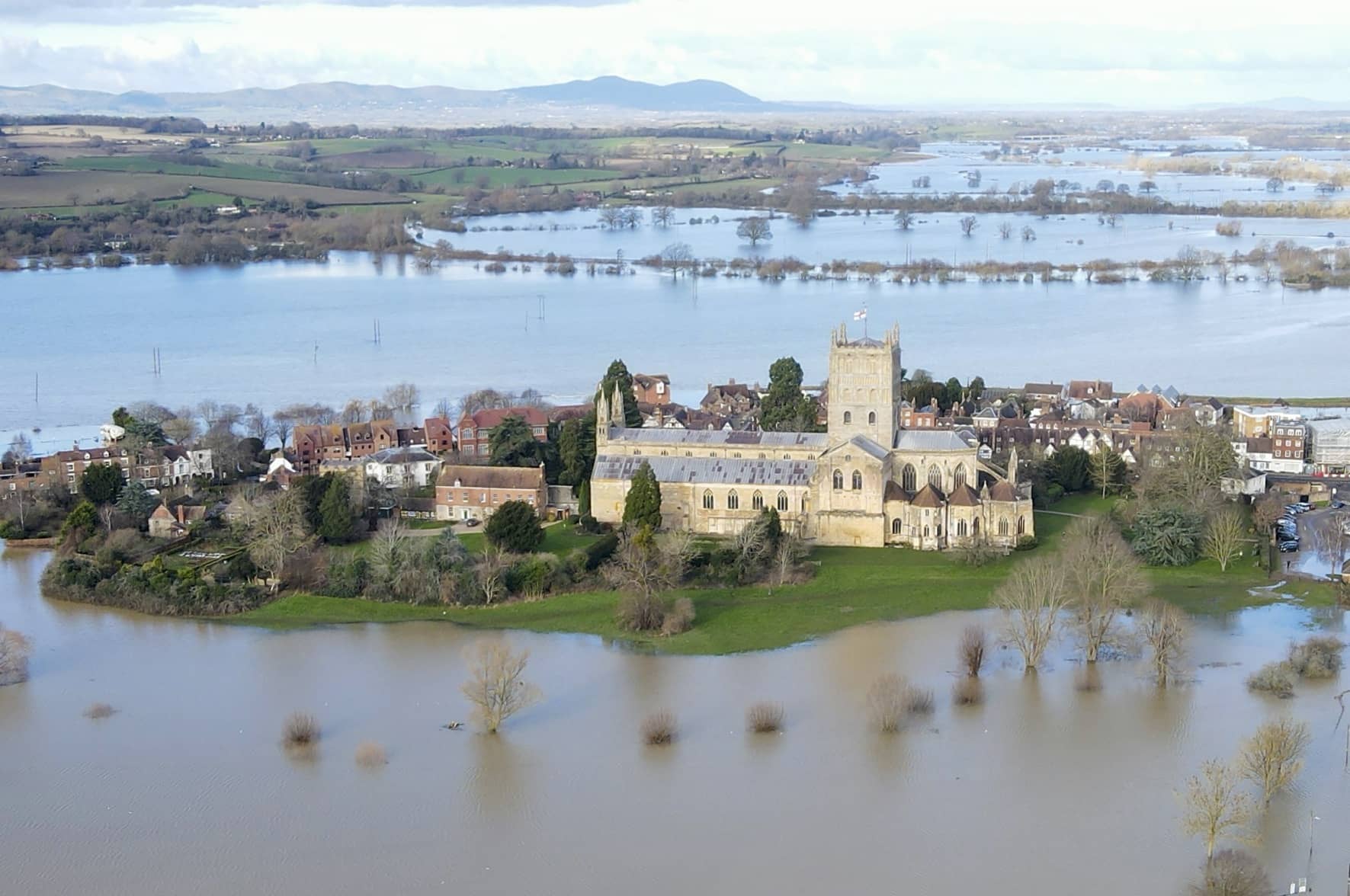
What should be expected of built environment institutions and professionals?
Ian Cooper (Eclipse Research) explores the questions of responsibility raised in the recent Buildings & Cities special issue ‘Climate Change Risk and Decision-Making’. Focusing here on carbon emissions and mitigation, global responses will require grounding in what can work locally. New responsibilities arise for the wide range of built environment decision-makers: clients, professionals and their institutions, central and local governments, product suppliers, financiers, insurers, etc. A framework is needed to manage the complexity of responsibilities especially for variety of actors, the time frames and spatial scales.
Who is responsible for (causing) climate change?
Successive reports published by the Intergovernmental Panel on Climate Change (IPCC, 2026) have detailed the causes and impacts of climate change. These reports combine into ‘an almost-unanimous scientific consensus’ that the planet is warming, that human activity is one of the main drivers, and that some regions will experience its consequences more than others. This consensus inevitably raises questions about which humans are (or were) most responsible for causing climate change. And it is this issue, along with what should be done about it, that lie at the heart of debates about climate justice. Here, as Reyes & Shah (2025) noted:
… science cannot answer the moral and legal questions at the heart of the climate justice conversation: who is at fault? Is responsibility attributable? Does climate change constitute a wrong to be righted, and if so, by whom? While science can assist in responding to these questions, there are normative issues of responsibility, harm and justice that must also be discussed.
Climate change is now implicated in a host of local risks affecting the built environment such as overheating (exacerbated by the failure of natural ventilation to provide nighttime cooling), flooding, drought, wildfires, leading to buildings coming stranded assets (Thompson et al., 2014), as well as in broader, regional ones, such as the AMOC switch off, pests and disease vectors, and demographic and economic shifts. Examples of such risks are discussed in the editorial (Foxell & Cooper, 2026) of the special issue of the journal Buildings and Cities, entitled Climate Change: Risk and Decision-Making. In this commentary, a forlorn attempt is made at simplifying the distribution of decision-making required to respond to the climate emergency by focusing on just one issue - carbon emissions. Forlorn because of the sheer complexity exposed by attempting to examine just this single issue.
Carbon emissions are a primary cause of climate change. The burning of fossil fuels (coal, oil and gas) has been identified as responsible for virtually all global heating over the last 200 years. Where the responsibility for this lies depends on the lens used in the search for culprits. Should this be countries, the industrial complex, or individuals (particularly as consumers)? Wealthy countries, especially the industrialised nations, are identified as having contributed the most to cumulative, historical emissions (Evans, 2021). And the fossil fuel industries and a relatively small number of major corporate entities are responsible for majority of global greenhouse gas emissions (Ives et al., 2024). But disparities also exist within and across societies as well, with the wealthiest 1% of the global population producing a disproportionate share of emissions—often through luxury transport and heavy investments in polluting industries (Climate Change Performance Index, 2024).
Where do built environment professionals fit into this equation? And at which spatial scales can they most effectively intervene? The built environment accounts for up to 42% of global carbon anthropogenic emissions (Architecture 2030, 2026). These emissions have been identified as arising from how we construct, operate or demolish buildings. Of these emissions, 27% is generated during the operation of buildings, while 13% comes from constructing and demolishing them (Webb, 2023). How carbon emissions become embodied within buildings through the materials used to construct them is also significant. This is impacted by decisions made during the design process, especially since, as Lützkendorf & Balouktsi (2022) noted:
… With good design, it is possible to construct low embodied carbon buildings with little or no additional costs and even generate economic benefits.
The responsibility for making decisions which influence the carbon emissions of the built environment involves a complex web of professional groups, operating at a variety of spatial scales – from central and local government policy making and regulations, urban design and master planning, through the design of neighbourhoods and individual buildings, to the manufacture and installation of individual components and parts. Where can the most effective interventions be made and by whom? There are competing claims here.
According to the Institution of Civil Engineers, it is necessary to look beyond buildings to decarbonising infrastructure through master planning (Expedition Engineering, 2025). Working at this scale, it reported urban planners and designers can achieve a 20% reduction on embodied carbon reduction made by ‘simple switches’ to the design of a masterplan, simultaneously achieving biodiversity and climate resilience benefits.
Developers, clients and investors were identified as holding the highest decision-making power since they establish and ultimately decide whether to prioritize sustainable design or short-term financial gains (Carmichael et al., 2018). And they dictate a project's scope, approve any sustainability targets, and decide whether to retrofit existing structures (promoted as the most carbon-efficient approach) or demolish and build anew (Aboagye-Nimo et al., 2024). Architects’ decisions at the early design stage have been signposted as critical because these can determine 70 to 80% of a building’s whole life climate impacts (Tu et al., 2026).
Structural engineers are also important because of their decisions about a building’s operational and embodied carbon footprint through material optimization, especially since concrete remains a key material they use which is major culprit in global emissions (Farley, 2024). Concrete is the most extensively used building material in the world (Gregory et al., 2021) and the production of cement—the active binding agent in concrete—is responsible for approximately 8% of global anthropogenic GHG emissions (Wu et al., 2024). Mechanical engineers’ decisions about mechanical, electrical and plumbing systems have also been labelled as important since these can account for 15% to 50% of a building’s carbon emissions throughout its lifespan (Annan, 2023).
Product manufacturers are implicated too because of their decisions about whether to choose sustainable materials, to minimize material handling, reduce waste generation, and optimize material selection based on life cycle considerations (Harrison, 2024).
In the UK, the Government has acknowledged the importance of decision-making about the built environment: it has recently issued a call for evidence for the development of a strategy for the professions and trades involved (MHLG, 2025). This is significant since it is policy makers who determine the overarching regulatory frameworks, building codes, and zoning laws that mandate standards across industry. So, within the UK, for example, it is the Government’s Net Zero Strategy (DESNZ & BEIS, 2022) that has set out the overall context in all the other decision-makers listed above have to operate.
What the brief description above reveals is claim and counterclaim. There is a lack of clarity, and hence of consensus, about precisely which groups make the most significant decisions affecting the carbon emissions of the built environment. Similarly, there are conflicting assertions about which spatial scales, and which stages in the procurement and operation of the built environment, most need to be addressed. What is evident, however, is that to be effective such decision-making needs to co-ordinated across and between multiple professional groups. Likewise, to be successful, it will have to be integrated across the lifecycles of the built environment, from initial planning and design, through operation and maintenance, to refurbishment and replacement – and this will also require the engagement of building owners and occupiers.
Who should be responsible for (trying to fix) climate change?
It is widely proposed that the most crucial action must come from the top down, from systemic, large-scale changes driven by governments and businesses rather than individuals and their lifestyle choices (Poynting, 2026). Indeed, solutions are seen as needing to be global, coming from strong international cooperation between governments and businesses, including the most polluting sectors (Greenpeace, 2026). What role should the institutions for built environmental professions play here? And what should be expected of their individual members?
The UK’s Green Buildings Council (2026) holds that professional institutions are key here: they must act as the central drivers of the transition to net zero. Their primary role has been identified as standardizing carbon metrics, mandating climate literacy, and driving the adoption of frameworks across the entire construction lifecycle. The UK’s Construction Industry Council has also called for co-ordinated action. In 2021 it published a climate action plan for built environment professionals. The institutions which signed this plan collectively represent more than 350,000 professionals across all sectors of the built environment. Some professional institutions have made commitments to act on carbon emissions mandatory in their codes of professional practice for their own members. For instance, the Whole Life Carbon Assessment, published by the Royal Institution of Chartered Surveyors (2026), sets a standard for consistent and accurate carbon measurement in the built and provides mandatory methodologies for chartered surveyors to evaluate and report life-cycle emissions for both buildings and infrastructure. Other institutions have left compliance voluntary. For example, the Royal Institute of British Architects’ Code of Practice requires its chartered architectural practices to operate with environmental awareness and competence, which includes reducing carbon emissions, but this is primarily voluntary, through encouraging its members to join its 2030 Climate Challenge (RIBA, 2026). However, the Code of Practice published by the Architects Registration Board, which registers individual architects so that they can practice in the UK, goes further and is more prescriptive. It requires architects to minimize their negative environmental impact. It stipulates that architects must actively reduce carbon emissions using whole-life carbon evaluation, a ‘retrofit first’ approach advocating for the preservation, repair and reuse of existing structures over new builds to avoid high embodied carbon emissions, or for new builds ‘fabric first design’, employing passive design, with a focus on energy efficiency.
Nor is it just built environment professionals who need to act. In the UK, the Better Buildings Partnership (2026) encourages the direct enrolment of building owners and occupiers in reducing carbon emissions. And it has pointed to the part being played by investment and insurance companies in promoting this, through green financing, specialized coverage, and strict portfolio decarbonisation targets (Centre for Climate Finance and Investment, 2019). Members of the public also need to act. The UK’s Climate Change Committee itself (CCC, 2015) has signposted the significant impact that occupants themselves can have in reducing carbon emissions from buildings by taking everyday actions such as optimizing how they use energy and water.
What should be done?
As Reyes and Shah (2025) asked, who is at fault here? Is responsibility attributable? Does climate change, and specifically carbon emissions, constitute a wrong to be righted? And if so, by whom? The descriptions above illustrate that apportioning responsibility for mitigation to reduce carbon emissions from the built environment is no simple matter. This is equally true of attempts at adaptation. The range of decision-makers implicated, the spatial scales at which to act, and the stages of the procurement and operation deemed significant – all these make finding culprits and then targeting interventions to best effect highly complex and impossible to implement seamlessly. Of course, this complexity grows once the wider range of climate change risks discussed in the B&C’s Special issue are added to the mix. Unsurprisingly, when faced with such complexity, people frequently cherry-pick which issues to address, typically choosing easier or highly visible actions over more impactful ones. This pattern of behaviour is described by psychologists as ‘single-action bias’ (Choudhary and Dutt, 2024). Here taking one small step gives people the illusion that they have done their part to offset their carbon emissions.
Given the complexities involved here, what contribution can built environment researchers make? One of the issues revealed by the B&C Special Issue is the highly specific groups of decision-makers researchers are choosing as the immediate focus of their attention, despite their almost universal calls for more integrated and inclusive governance arrangements. Development of an overarching framework - for relating top-down, middle-out, and bottom-up contributions to decision-making, mapped across the spatial scales and stages of the procurement and operation of the built environment - would enable overlaps, and more importantly gaps, in current efforts to be identified.
References
Aboagye-Nimo, E., Piroozfar, P., Carmichael, E. & Booth, C. (2024). Insights and experiences of sustainability decision-making by construction clients Infrastructure. Asset Management, 11 (4): 231–239. https://doi.org/10.1680/jinam.23.00047
Annan, G. (2023). Reducing embodied carbon in building systems: from concept to practice. Carbon Leadership Forum. https://carbonleadershipforum.org/reducing-embodied-carbon-in-building-systems/
Architecture 2030. (2026). Why the built environment. https://www.architecture2030.org/why-the-built-environment/
Better Buildings Partnership (2026) Owner benefits. https://www.betterbuildingspartnership.co.uk/sustainable-fit-out-toolkit/benefits/owner-benefits
Carmichael, D., Mustaffa, N. and Shen, X. (2018). A utility measure of attitudes to lower-emissions production in construction. Journal of Cleaner Production, 202: 23-32. https://doi.org/10.1016/j.jclepro.2018.08.086.
Centre for Climate Finance and Investment. (2019). Financing low carbon infrastructure. Business School, Imperial College. https://www.thecityuk.com/media/fsvotw4n/financing-low-carbon-infrastructure.pdf
Choudhary, G. & Dutt, V. (2024). Analyzing single-action bias in dynamic climate change environments: insights from feedback and probability. Humanities & Social Science Communication, 11: 749. https://doi.org/10.1057/s41599-024-03268-y
Climate Change Committee. (2015). Factsheet: Buildings. https://www.theccc.org.uk/wp-content/uploads/2014/08/Fact-sheet-buildings-updated-July-2015.pdf
Construction Industry Council. (2021). Carbon zero: the professional institutions’ climate action plan. https://www.cic.org.uk/policy-and-public-affairs/climate-change
DESNZ & BEIS. (2022). Net Zero Strategy: Build Back Greener. (UK Government Policy paper).https://www.gov.uk/government/publications/net-zero-strategy
Evans, S. (2021). Analysis: which countries are historically responsible for climate change? Carbon Brief. https://www.carbonbrief.org/analysis-which-countries-are-historically-responsible-for-climate-change/
Expedition Engineering. (2025). Beyond the buildings: decarbonising infrastructure on masterplans. https://expedition.uk.com/wp-content/uploads/2025/11/Beyond-the-Buildings-Decarbonising-Infrastructure-on-Masterplans_Final-v3.pdf
Farley, A. (2024). How structural engineers can reduce carbon emissions. Elsevier Connect. https://www.elsevier.com/connect/how-structural-engineers-can-reduce-carbon-emissions
Foxell, S. & Cooper, I. (2026). Climate change risk and decision-making. Buildings & Cities, 7(1). https://doi.org/10.5334/bc.941
Greenpeace. (2026). What are the solutions to climate change? https://www.greenpeace.org.uk/challenges/climate-change/solutions-climate-change/
Gregory, J., AzariJafari, H., Vahidi, E., Guo, F., Ulm, F.J. & Kirchain, R. (2021). The role of concrete in life cycle greenhouse gas emissions of US buildings and pavements. Proceedings of the National Academy of Sciences of the U S A, 118 (37): e2021936118. https://doi.org/10.1073/pnas.2021936118
Harrison, J. (2024). Reducing your carbon footprint in manufacturing: a comprehensive guide to eco-conscious practices. Lineview. https://www.lineview.com/resources/blog/reducing-your-carbon-footprint-in-manufacturing-a-comprehensive-guide-to-eco-conscious-practices
IPCC. (2026). The Intergovernmental Panel on Climate Change. https://www.ipcc.ch
Ives, M., Wade, B. & Rekker, S. (2024). Tracking the generation of CO₂ emissions. The Institute for New Economic Thinking, University of Oxford. https://www.inet.ox.ac.uk/news/only-57-producers-are-responsible-for-80-of-all-fossil-fuel-and-cement-co2-emissions-since-2016-new-report
Lützkendorf, T. & Balouktsi, M. (2022). Embodied carbon emissions in buildings: explanations, interpretations, recommendations. Buildings & Cities, 3(1): 964-973. https://journal-buildingscities.org/articles/10.5334/bc.257
Poynting, M. (2026). A really simple guide to climate change. BBC News. https://www.bbc.co.uk/news/articles/c9w15nggj58o
Reyes, J. & Shah, S. (2025). Climate reparations and the language of justice: a legal imperative. LSE: Global School of Sustainability and the Grantham Research Institute on Climate Change and the Environment. https://www.lse.ac.uk/granthaminstitute/news/climate-reparations-and-the-language-of-justice-a-legal-imperative/
RIBA. (2026). Climate action: supporting meaningful action. https://www.riba.org/campaigns/climate-action/
Riebandt, M.C. (2024). Historical responsibility for the climate crisis: the roots of the unfair imbalance. Climate Change Performance Index. https://ccpi.org/historical-responsibility-for-the-climate-crisis-the-roots-of-the-unfair-imbalance/
Thompson, M., Cooper, I. & Gething, B. (2014). The business case for adapting buildings to climate change: niche or mainstream? Innovate UK. https://uwe-repository.worktribe.com/output/2229379
Tu, S., Roberts, M. & Zhuang, W. (2026). Climate impact reduction strategies in early architectural design. Journal of Building Engineering, 117: 114621. https://doi.org/10.1016/j.jobe.2025.114621
United Nations (n.d.) What is climate change? United Nations Climate Action. https://www.un.org/en/climatechange/what-is-climate-change
Wu, S., Shao, Z., Andrew, R.M. et al. (2024). Global CO2 uptake by cement materials accounts 1930–2023. Scientific Data, 11, 1409. https://doi.org/10.1038/s41597-024-04234-8

Latest Peer-Reviewed Journal Content

Moving homes and energy poverty: residents’ concerns, capabilities and responses
M Jalas, J Rinkinen, S Numminen & E Valkealahti
Reference study for biogenic carbon storage in the residential building stock
O Iliescu, I Talvitie, A Amiri & S Junnila
Building space heating and cooling in NDCs 4.0
T P Lützkendorf
Building component reuse as sociomaterial interaction: lessons from precast concrete
J Uusikartano, L Alkki & V Capitani
Validating national reuse indicators from regional demolition data: a Swedish example
F Ericsson, K Mjörnell & U Janson
Climate change risk and decision-making [editorial]
S Foxell & I Cooper
Technologies of reconstruction [editorial]
P Tombesi
Urban form metrics for building occupancy modelling: applications and impacts
D Reiter, M Jehling & R Hecht
Retrofit realism: affordable low-carbon policies for existing homes
N Eyre & R Khosla
Join Our Community

The most important part of any journal is our people – readers, authors, reviewers, editorial board members and editors. You are cordially invited to join our community by joining our mailing list. We send out occasional emails about the journal – calls for papers, special issues, events and more.
We will not share your email with third parties. Read more
Latest Commentaries
Who is Responsible for Climate Change?
Ian Cooper (Eclipse Research) explores the questions of responsibility raised in the recent Buildings & Cities special issue ‘Climate Change Risk and Decision-Making’. Focusing here on carbon emissions and mitigation, global responses will require grounding in what can work locally. New responsibilities arise for the wide range of built environment decision-makers: clients, professionals and their institutions, central and local governments, product suppliers, financiers, insurers, etc. A framework is needed to manage the complexity of responsibilities especially for variety of actors, the time frames and spatial scales.
Professional Ethics in a Climate Crisis
The climate crisis has progressed into a dangerous phase with tragic consequences often counted in numbers of excess deaths, but also by powerful economic impacts of rising food prices, the increased costs of insurance and lending, costly damage to the built environment. Celia Davies, Director of Impact at the UK’s Town and Country Planning Association (TCPA) and Hugh Ellis, Director of Policy at TCPA, consider the responsibilities of professionals in shaping a built environment which is fit not just for today's climate risks but for the dramatic increase in severe and unpredictable weather which is now locked into our climate systems.