
www.buildingsandcities.org/insights/commentaries/professional-ethics-climate-crisis.html
Professional Ethics in a Climate Crisis
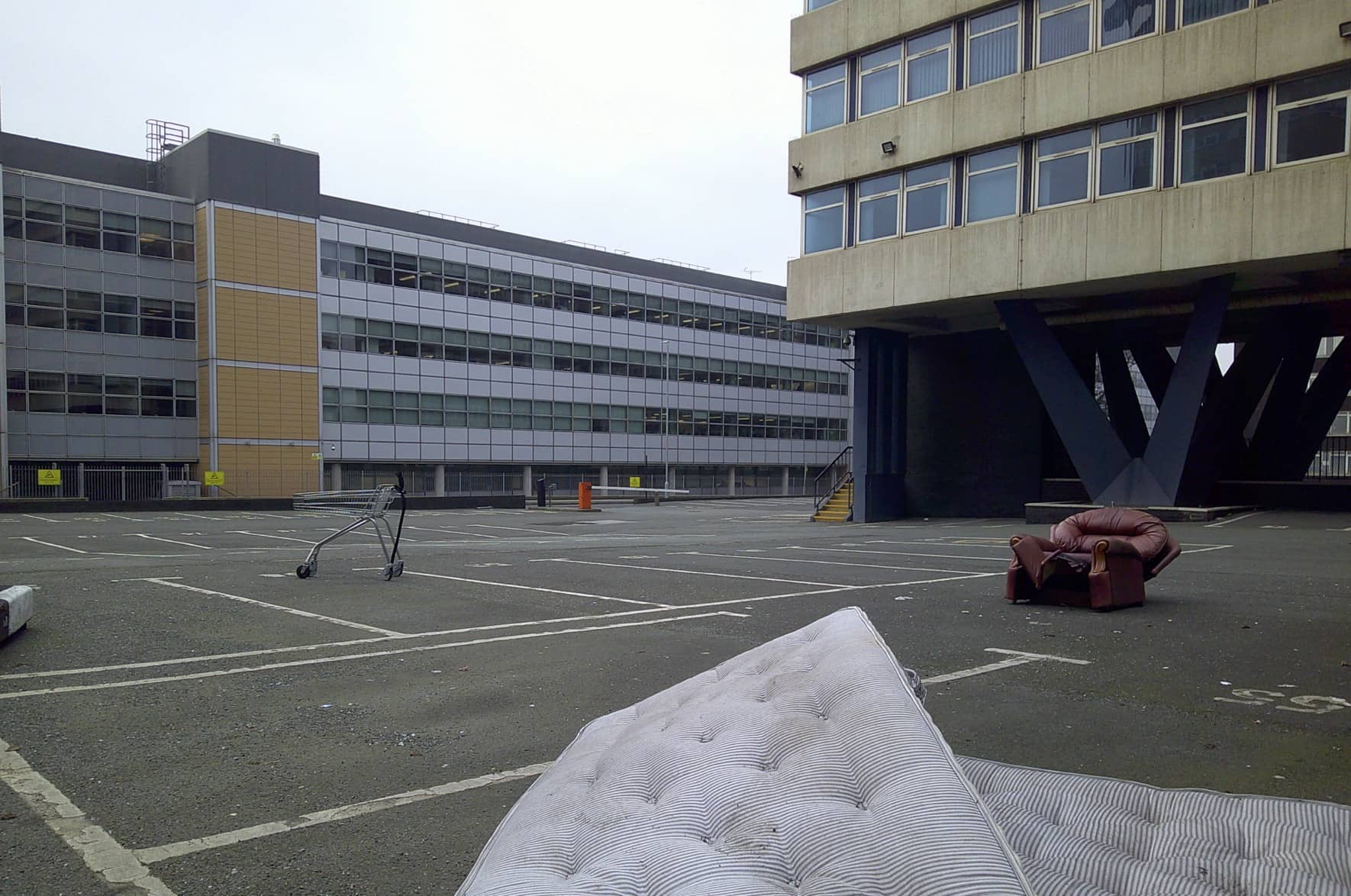
Professional decisions about the built environment are a matter of life and death for people and places.
The climate crisis has progressed into a dangerous phase with tragic consequences often counted in numbers of excess deaths, but also by powerful economic impacts of rising food prices, the increased costs of insurance and lending, costly damage to the built environment. Celia Davies, Director of Impact at the UK’s Town and Country Planning Association (TCPA) and Hugh Ellis, Director of Policy at TCPA, consider the responsibilities of professionals in shaping a built environment which is fit not just for today's climate risks but for the dramatic increase in severe and unpredictable weather which is now locked into our climate systems.
The challenges for built environment professionals extend beyond design and delivery into management of developments which can has been undermined by a deregulatory ideology, promoted by government and by private sector interests. Without regulation necessary to protect peoples’ health and wellbeing, who should take on the role of safeguarding the public interest? What ethical responsibilities do professionals have in an era where regulation is seen as a blocker to economic growth rather than a safety net for those who cannot afford to buy their way out of climate impacts?
In the UK, the TCPA has a long pedigree of advocating for ideal communities and over the last four decades has focused its attention on how the planning system and building regulations can secure resilient and healthy outcomes for people. In that time, the TCPA conducted research for the UK Climate Change Committee and the Environment Agency amongst many others to examine whether or not our current regulatory framework is fit for purpose. The answer to that question in relation to issues such as flooding, overheating, and planning for long term climate resilience is a resounding ‘no’.
The deregulation of planning has operated through a persistent churn of reforms through which volume housebuilders have consistently been awarded a privileged position in policy making. In general terms, any regulatory measures that conflict with the volume house builders’ speculative development models have either been resisted, delayed or removed.
There are multiple examples of this, such as the scrapping of the Code for Sustainable Homes in 2015 and the subsequent failure to achieve adequate energy efficiency standards for new homes. Another clear example is the success of industry lobbies in significantly weakening national planning policy in relation to surface water flooding. A further example is the lobby to end provisions for dual-aspect housing in London which is an essential design measure to prevent overheating.
The problem is that, in general, developers bear no long-term financial responsibility for the property they create, meaning the problems and costs of remedying fuel poverty, flooding or overheating fall to occupiers and the insurance industry - not on developers.
This failure to bring the cost of exposure to climate risk under the responsibility of developers through regulation may inevitably lead to a more litigious planning system in the long run. It is not hard to envisage occupiers of new build flats seeking recompense for homes that are unbearably hot in summer, or residents whose homes are flooded because they were built areas known to be at risk, seeking recourse from housebuilders or the authorities that designed, built and permitted them. But so far, developers have successfully avoided the financial risk associated with building poor quality developments that put people’s health at risk.
The retrenchment of existing regulation is damaging enough but any attempt to improve it, for example to insert comprehensive policy on overheating into the NPPF, have also been resisted by the development sector. As a result, what is required by regulation now lags dangerously behind the kind of technologies and design approaches to the built environment that the climate crisis demands. In short, while we have the technical solutions to creating resilient places, the regulatory capture of government by the development sector is stifling the deployment of this innovation. One can only speculate on how much progress might have been made in carbon reduction and climate resilience if a previous UK government hadn’t cancelled the Code for Sustainable Homes ten years ago. As a result, despite the growing evidence of the economic and health costs of climate change and the complete re-engineering of cities that is required to deal with that problem, there has been no effective progress on this most urgent of issues in national planning policy.
The dysfunction in our existing regulatory approach is not limited to planning. The complex framework of building regulations is poorly related to the safeguards in planning and represents a piecemeal approach which focuses on risk reduction rather than positive health promotion. Standards in building regulations are represented as a bare minimum, and it is significant that government has resisted all attempts through the TPCA’s Campaign for Healthy Homes to create a comprehensive set of standards for all new homes. Initiatives like the Future Home’s Standard, while welcome as interim step on energy performance, fail to meaningfully address aspects of climate adaptation.
The real-world consequences of the government's ideological commitment to deregulation has created a generation of new properties which are plainly unfit for the current climate let alone the impacts which are predicted over the next 100 years. All of the critical measures that we understand that could make a difference to building design are largely absent from new build completions. The deployment of comprehensive blue and green infrastructure, for example, which provides benefits to wildlife, flood management and reducing overheating is limited to a few exemplar developments. In the worst excesses, the conversion of time expired office and commercial property to residential use through permitted development rights (PDR), which bypasses the traditional planning consent route and prevents any consideration of issue such as human health, has created housing units which, as a forthcoming University College London and TCPA research report finds, have a disastrous impact on individuals’ health and well-being.
With a significant proportion of the development industry unable or unwilling to face up to its responsibilities in a growing climate crisis, and a government that has largely left the field as it banks on deregulation driving economic growth, the question remains:
Who will stand up for those most vulnerable to the increasing climate crisis?
Professionals in the built environment now have a unique responsibility to ensure the buildings and places we create are safe and fit for purpose for future generations. The question is whether they will take up that responsibility.
This question was central to the TCPA’s Raynsford Review of planning in 2020 when the impacts of deregulation were already clearly evident. The idea was floated that all built environment professionals should have a new requirement inserted into their various ethical codes to ‘do no harm’ - a principle drawn from long standing medical ethics where the actions of doctors plainly have an immediate life and death character. It was interesting that the private reaction of some professional institutes was that it would be impossible to determine whether many decisions in built environment would have such a direct impact on people’s life chances.
It is of course more complex when making long term decisions about the built environment, but the climate crisis has made the question much more urgent and the background evidence on how the built environment impacts health and well-being is now undisputedly compelling. In many cases it is clearly possible to see that real harm will be created by the location and design of a particular scheme. In this case shouldn’t processionals refuse to be involved? Shouldn’t their professional bodies support them in this decision?
There are of course some very powerful arguments against this ethical stand. A professional may feel that if they refuse to be involved in a project, others will simply fill their place and they would lose their job. Perhaps most compelling is that it’s deeply naive to think individual ethical stands can ever replace the rightful place of government in protecting the public interest.
However, none these arguments can completely remove the question of our own professional responsibilities in the middle of the greatest societal challenge that our generation, perhaps any generation, has ever faced. In the end, individual professionals and the organisations that represent them must decide which side they are on and in doing so drive the kind of culture change in the built environment professions which will enable us to build the inclusive as resilient future which we are more than capable of delivering.


Latest Peer-Reviewed Journal Content

Building space heating and cooling in NDCs 4.0
T P Lützkendorf
Building component reuse as sociomaterial interaction: lessons from precast concrete
J Uusikartano, L Alkki & V Capitani
Validating national reuse indicators from regional demolition data: a Swedish example
F Ericsson, K Mjörnell & U Janson
Climate change risk and decision-making [editorial]
S Foxell & I Cooper
Technologies of reconstruction [editorial]
P Tombesi
Urban form metrics for building occupancy modelling: applications and impacts
D Reiter, M Jehling & R Hecht
Retrofit realism: affordable low-carbon policies for existing homes
N Eyre & R Khosla
Inside offsite: everyday dwelling in factory-built apartments
L Dorignon & R Horne
MMC for housing: sectoral perception on governance challenges
J Morgan, C Goodier, R Schmidt-III & K Ayinla
Reorganising specification practice for component reuse: an exploratory study
S Gao, K Jones, J Xu & J Glass
Kitchen retrofits to support food practices and wellbeing
F J Andrews, A Sal Moslehian, E Warner & R Tucker
From strategy to delivery: a comparative analysis of MMC roadmaps
G Goldman, D Sorokine, F Suerich-Gulick, C Carbone & M Jemtrud
Thermal comfort, ventilation and mosquito-borne disease risk in Zanzibar hospitals
O Sloan Wood, J B Knudsen, K L Schiøler, E Lupenza, M Msellem & F Saleh
Reusing precast concrete elements in construction: assessing the economic conditions
O Vigren, H Westerlind & T Malmqvist
Institutional readiness for industrialised social housing in Vietnam
T Q Nguyen, B N Nguyen, T H Q To & Z Aziz
Prefabrication for housing retrofit: governance, innovation and resident experience
E Pikas, K Kuusk, P Pihelo, R Liias, J Pukk & T Kalamees
Reframing heat pump transitions: a care perspective
J van der Haer, R Schelwald & F de Haan
Urban informal settlements in Africa: transforming adaptation governance
K Buyana & H Sseviiri
Reusing concrete products in indoor environments: chemical hazard assessment
K Tähtinen, A Helin, E Parshintsev & H Hovi
Negotiating net-zero carbon: an ANT analysis of two buildings
L Schweber & M Green
Design for disassembly: a review of public policy proposals
O Vorobjev, U Uotila, T Joensuu & A Saari
Retrofitting Norwegian residential buildings: an archetype-based dynamic stock model
L S A Rousseau, S Amini, S Akin & E G Hertwich
Decolonising time: vernacular villages and the politics of heritage temporality
R Al-Rabady
Commutes to alternative workplaces: GHG emissions and physical activity
J Taylor, L Thoen, A Espinosa Mireles De Villafranca, P Anashin, J Vanhatalo, D Milián
Bernal & I Okkonen
Nine ‘myths’ about the building stock of Great Britain
S Evans, P Steadman, A Neto-Bradley, D Humphrey, R Liddiard,H Shamsi, J Palmer & G Simons
Join Our Community

The most important part of any journal is our people – readers, authors, reviewers, editorial board members and editors. You are cordially invited to join our community by joining our mailing list. We send out occasional emails about the journal – calls for papers, special issues, events and more.
We will not share your email with third parties. Read more
Latest Commentaries
Who is Responsible for Climate Change?
Ian Cooper (Eclipse Research) explores the questions of responsibility raised in the recent Buildings & Cities special issue ‘Climate Change Risk and Decision-Making’. Focusing here on carbon emissions and mitigation, global responses will require grounding in what can work locally. New responsibilities arise for the wide range of built environment decision-makers: clients, professionals and their institutions, central and local governments, product suppliers, financiers, insurers, etc. A framework is needed to manage the complexity of responsibilities especially for variety of actors, the time frames and spatial scales.
Professional Ethics in a Climate Crisis
The climate crisis has progressed into a dangerous phase with tragic consequences often counted in numbers of excess deaths, but also by powerful economic impacts of rising food prices, the increased costs of insurance and lending, costly damage to the built environment. Celia Davies, Director of Impact at the UK’s Town and Country Planning Association (TCPA) and Hugh Ellis, Director of Policy at TCPA, consider the responsibilities of professionals in shaping a built environment which is fit not just for today's climate risks but for the dramatic increase in severe and unpredictable weather which is now locked into our climate systems.