
www.buildingsandcities.org/insights/commentaries/living-labs-maturity-impact-role-of-researchers.html
Living Labs: Maturity, Impact and the Role of Researchers
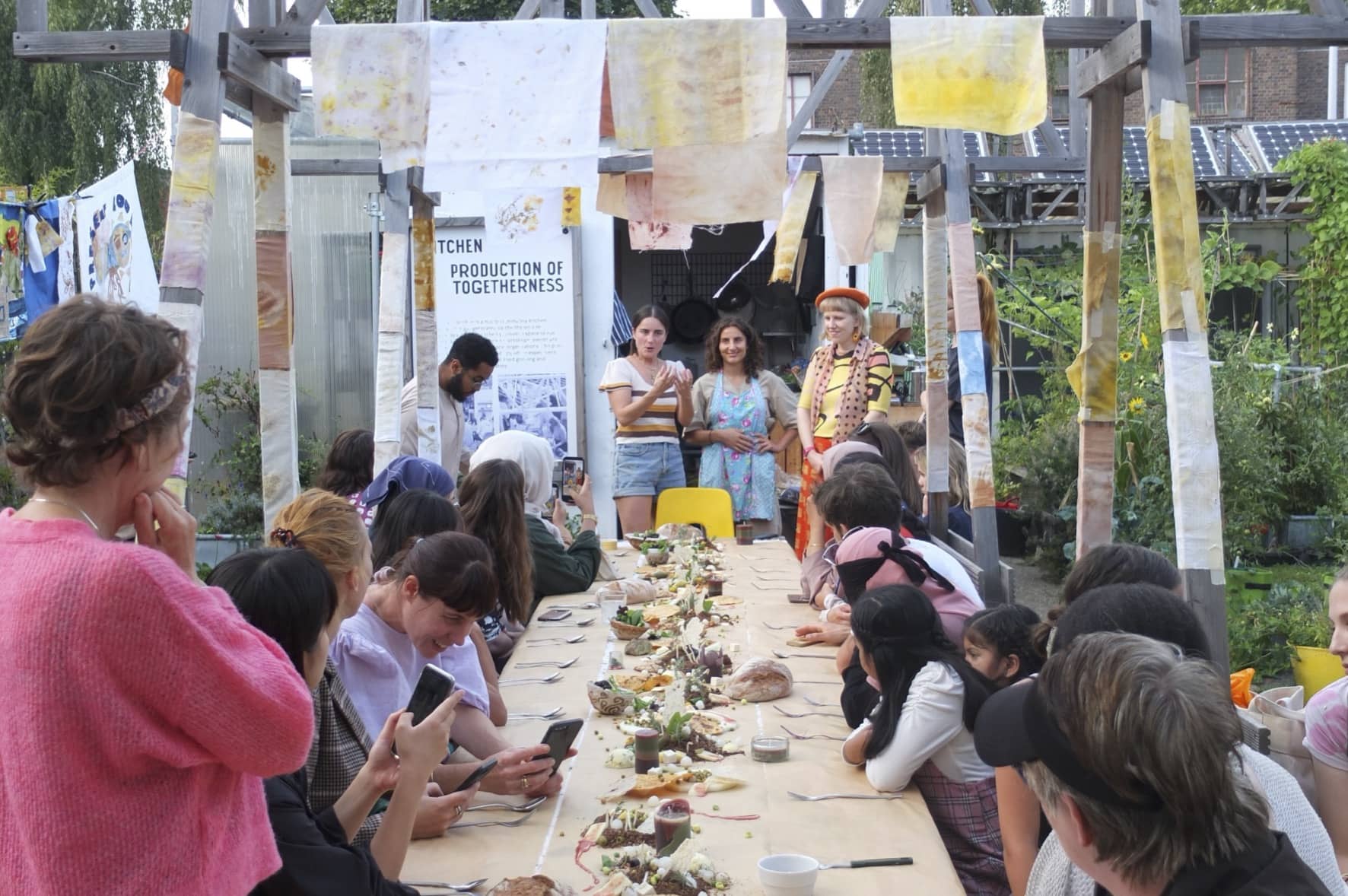
Feedback and reflections on the research in "Living Labs: Agents for Change"
Living labs are blossoming more than ever. Their first appearances in academic literature were roughly 25 years ago. Dimitri Schuurman (Ghent University) responds to the recent Buildings & Cities special issue “Living Labs: Agents for Change” and focuses on two important drawbacks that also come with living labs booming in practice as well as in the literature.
The establishment of the European Network of Living Labs (ENoLL) in 2006 can be viewed as one of the key events in the still rather young history of living labs. This also introduced a formal certification process for living lab organisations. By 2026, the ENoLL has over 200 active members, whereas over the years in total more than 600 organisations have been formally certified. However, there is also a ratio of two to three certified living labs that lost their status as active member (Schuurman 2026). This is a clear indication that living lab organisations seem to struggle with their long-term survival, an issue that has been documented in the literature and that is also dealt with in this special issue (cf. infra).
A second concern is how living labs are referred to in the academic literature. Several special issues on living labs have been published in various journals and on different topics (see e.g. Backhaus & Forbat 2026; Borda et al. 2024; Leminen & Schuurman 2021; Schuurman et al. 2025; Wehrmann et al. 2023), ranging from living labs aimed at sustainability transformation, living labs for health and wellbeing, urban living labs, to operational, methodological and impact-related elements of living labs in general. Whereas the articles from these special issues have living labs as their main topic, the number of academic papers mentioning living labs is increasing even faster, where studies indicate a factor of up to 20 (ENoLL 2025; Schuurman 2026). This leads to two issues: the dilution of the meaning of living labs (“what is a living labs and what is not?”) and the scatteredness of research into living labs (what are the research questions? – what do the research results contribute to our understanding? – how should this influence LL practice?).
The current popularity translates into an all-time high of active ENoLL certified living lab organizations but also indicates issues with the viability of living lab organisations as more than 2/3 of all historically certified living labs are no longer active members. Therefore, we argue for more critical collaboration, exchange and contributions trying to advance the domain of living labs practice and research without labelling every collaborative, co-creative or experimentation approach as a living lab, making a clear distinction between living lab methods and tools, a living lab (project) methodology and living lab organisations (Schuurman 2015).
This commentary focuses on two particularly relevant research contributions from the Buildings & Cities special issue: Dobre & Faldi (2026) consider the role of research and researchers in living labs and Müller (2026) deals with the evaluation and success factors of living labs.
Regarding the role of research and researchers in living labs, this touches upon the distinction between ‘living lab research’ and academic research. Whereas the latter starts from research questions, triggered by previous research, followed by generating a clear research design and analysing the results in the light of the research questions, living lab research is much more focused on the living lab process and making sure this process produces relevant and innovative outcomes. In the past, this led to a large amount of living lab papers presented as ‘single case studies’ that remained (too) descriptive in nature. Although this has improved over time, there remains a need for more quantitative and longitudinal studies, starting from specific research questions grounded in the literature.
Dobre & Faldi (2026) discuss the shifting roles of researchers in living labs. They make the aforementioned distinction between living lab researchers and ‘regular’ academic researchers tangible and explore the different roles living lab researchers may assume. I particularly value the fact they regard living lab researchers as the actors in charge of knowledge production, where this knowledge is (co-)produced by multiple participating stakeholders and by the local, experimental context of the living lab. This means that living lab researchers are not necessarily regarded as producers or facilitators of innovation. Previous studies have also pointed out to knowledge and learning as the main processes in living labs, but this slightly contradicts the majority of living lab studies where innovation (in some form) is regarded as the end-goal of living labs.
How to deal with these different viewpoints? Do they contradict? In my opinion not necessarily as without knowledge production and learning, innovation is not possible. However, their specific research focus is also linked to the type of living labs they used as study material: ‘transition (living) labs’ (known in Germany as ‘real labore’). The goal of these ‘labs’ is more oriented towards (mostly) sustainability transitions with a broader societal impact, with more emphasis on knowledge production and unveiling sometimes hidden patterns and structures on a societal level than on concrete, tangible innovation production or outcomes.
These traditions have for the largest part been disconnected, although these transition labs are also increasingly framed as living labs, especially in the specific case of urban living labs. This reflects a broader challenge of conceptual clarity in living lab research. As transition labs tend to be more short-lived, often operating as living lab projects rather than long-term living lab organisations capable of retaining knowledge across initiatives. This is also echoed by Radosevic et al. (2026) who argue for more institutional capabilities to be able to harness the results from pilots and experimentation. This also resonates with the sometimes-opposing views on urban living labs: are they temporary, local interventions and experiments or are they organisations that operate more long term and that oversee multiple projects?
This also has an impact on the researcher roles. In temporary arrangements, many activities are started from scratch, which requires significant investments in time, effort and resources to start co-creating or co-producing knowledge. This is also witnessed in early-stage living lab organisations, where human and financial resources tend to be limited, which also means that the living lab initiators have to take multiple roles. Only when these living lab organisations mature, become more stable and are able to generate a recurring baseline revenue, they are able to diversify in terms of people and in terms of role division. In the light of this reasoning, the paper by Dobre & Faldi (2026) describes exactly this tension between the limited amount of people and resources, and the complexity of setting-up and facilitating multi-stakeholder co-creation and real-life interventions and experimentation.
Dobre & Faldi (2026) acknowledge the multiplicity of roles that researchers provide. Their study helps to identifies and articulates these different roles by illustrating them in a concrete case study. However, a more mature living lab organisation might be better equipped to deal with some of these extra roles and might give researchers more freedom to operate according to their core research roles.
Müller (2026) considers the success parameters and outcomes of living labs. Via a systematic literature review, this research gives an overview of evaluation frameworks and success parameters to links these with a typology of living labs. This research contributes to the rapidly expanding field of living lab impact studies by illustrating the diverse ways in which impact can be measured. Moreover, this is also an illustration of the complex, multi-facetted nature of living lab impact and that this is inherently linked to the type and strategic orientation of a living lab. I feel the distinction between outcome-oriented, impact-oriented and effectiveness-oriented is valid. However, in line with the Theory of Change, one might argue that ‘output-oriented’ could also be an extra category where the focus is put on elements like number of stakeholders involved, deliverables produced, etc. Hybrid frameworks are understood as measurement instruments that combine elements of the different categories, but I believe that the majority of the instruments used in practice are already hybrid to at least some degree. So rather that calling it a separate type of framework, I think the chosen framework should be hybrid to at least some degree for all living labs.
Regarding the typology of living labs, the inclusion of researcher-driven living labs is an important consideration. First of all, we argued for an extension of Leminen et al.’s (2012) framework in Schuurman (2015) and Schuurman et al. (2016) with researchers as a separate category instead of being part of the provider category. This ‘researcher-driven’ living lab category would be very fitting for the research and knowledge-oriented living labs from the paper of Dobre & Faldi (2026), and would also clearly distinguish them from infrastructure-driven living labs where the living lab projects and activities are focussed on exploring or exploiting mostly technological infrastructure (e.g. testbeds with new information and communication technologies).
Another potential caveat is linked to the use of nomenclature in the literature. The explosion of the usage of the term ‘living labs’ often fails to clearly define or illustrate whether or not the described phenomena are ‘real’ living labs. The majority of the living labs in the paper by Müller (2026) that are used as illustration of Leminen et al.’s original typology are not ENoLL-certified living labs. What is even more striking is that the clearest example of an ENoLL certified living lab, Licalab, is used as example of a provider driven living lab, whereas I would firmly categorise them as a utiliser-driven living lab.
The ‘network-driven’ living lab is regarded as a new type and illustrated with Josephs, an innovation space in Nüremberg. Again, Josephs is not an ENoLL member and from my perspective it has several characteristics of a utiliser-driven living lab, as it is focused on offering services to innovators. This does not mean that I disagree with the addition of another type, but I see the network-driven living lab in the same light of the discussion on living labs maturity. The more mature living labs become, the more they tend to evolve towards a network-driven structure, whereas originally they tend to originate from one driving actor. As an example of a network-driven living lab, I would put forward our own COMON living lab that has a separate organisational entity and is steered by multiple actors from the local ecosystem in Ghent, BE. These public, private, research as well as societal (non-for-profit) actors have a formal role in the steering committee and determine the strategic direction of the living lab.
Therefore, Müller (2026) is very relevant in illustrating the complexity of evaluation frameworks and the link with type of living lab. However, more research is needed to better understand what kind of parameters can be linked to success or failure. We also need a better definition of what is considered success (something that is missing in the study) and failure. This is linked to the type of living lab, but a better definition of what can be considered a living lab is needed. The steering actor of a living lab is only one element, therefore the definition of a living lab needs to move beyond this and reflect other aspects. Numerous other ways can distinguish between types of living lab, these can also be linked to strategic intent and thematic domains. In this regard, more harmonisation of living lab concepts and terminology is needed in order to more clearly differentiate between different living lab organisations and better understand what is more likely to be successful and what is not. In any case, exciting research questions remain to be investigated and resolved.
References
Backhaus, J. & Forbat, J. (2026). Paving the road to sustainability and democracy? The promises and perils of living labs. In Special issue: Living Labs: Reflecting on the Structuration of Transformation and Addressing Impacts, Replicability, and Scalability. Sustainability: Science, Practice and Policy, 22(1), 2678874.
Borda, A., Schuurman, D., Pedell, S., Spagnoli, F. & Konstantinidis, E. (2024). Living labs and open innovation approaches to scale impact for human wellbeing. Frontiers in Public Health, 12, 1378932.
Dobre, C.C. & Faldi, G. (2025). Researchers’ shifting roles in living labs for knowledge co-production. Buildings and Cities, 6(1), 934–951. https://doi.org/10.5334/bc.622
ENoLL. (2025). Living Lab origins, developments and future perspectives. Published by the European Network of Living Labs (ENoLL), 2025 - [D. Schuurman, M.I. DeLosRios-White, M. Desole (eds)]. Licensed under CC BY-NC 4.0. https://doi.org/10.5281/zenodo.14764597
Leminen, S., Westerlund, M. & Nyström, A.-G. (2012). Living Labs as Open-Innovation Networks (September 2012). Technology Innovation Management Review, 2(9): 6-11.
Leminen, S. & Schuurman, D. (2021). Editorial: Living Labs. Technology Innovation Management Review, 11(9/10), 3-5.
Müller, J.M. (2026). Living labs: a systematic review of success parameters and outcomes. Buildings and Cities, 7(1), 92–109. https://doi.org/10.5334/bc.624
Radosevic, S., Tsekouras, G. & Wostner, P. (2026). Beyond pilots and policy labs: institutionalizing experimentation through transformative partnerships. Policy Design and Practice, 1-13.
Schuurman, D. (2015). Bridging the gap between Open and User Innovation?: exploring the value of Living Labs as a means to structure user contribution and manage distributed innovation. Doctoral dissertation, Ghent University.
Schuurman, D. (2026). Long term sustainability for living labs: drivers and barriers. Proceedings of the XXXVII ISPIM Innovation Conference, Granada, Spain, June 7-10 June 2026. ISBN 978-952-65771-2-8
Schuurman, D., Baccarne, B., Marez, L. D., Veeckman, C. & Ballon, P. (2016). Living Labs as open innovation systems for knowledge exchange: solutions for sustainable innovation development. International Journal of Business Innovation and Research, 10(2-3), 322-340.
Schuurman, D., McPhee, C. & Leminen, S. (2025). Living labs and collaborative innovation [Guest Editorial-Special Issue on Living Labs and Collaborative Innovation]. Journal of Innovation Management, 13(1), i-vii.
Wehrmann, C., Pentzold, C., Rothe, I. & Bischof, A. (2023). Introduction: living labs under construction. Journal of Science Communication, 22(03).
Latest Peer-Reviewed Journal Content
Urban form metrics for building occupancy modelling: applications and impacts
D Reiter, M Jehling & R Hecht
Retrofit realism: affordable low-carbon policies for existing homes
N Eyre & R Khosla
Inside offsite: everyday dwelling in factory-built apartments
L Dorignon & R Horne
MMC for housing: sectoral perception on governance challenges
J Morgan, C Goodier, R Schmidt-III & K Ayinla
Reorganising specification practice for component reuse: an exploratory study
S Gao, K Jones, J Xu & J Glass
Kitchen retrofits to support food practices and wellbeing
F J Andrews, A Sal Moslehian, E Warner & R Tucker
From strategy to delivery: a comparative analysis of MMC roadmaps
G Goldman, D Sorokine, F Suerich-Gulick, C Carbone & M Jemtrud
Thermal comfort, ventilation and mosquito-borne disease risk in Zanzibar hospitals
O Sloan Wood, J B Knudsen, K L Schiøler, E Lupenza, M Msellem & F Saleh
Reusing precast concrete elements in construction: assessing the economic conditions
O Vigren, H Westerlind & T Malmqvist
Institutional readiness for industrialised social housing in Vietnam
T Q Nguyen, B N Nguyen, T H Q To & Z Aziz
Prefabrication for housing retrofit: governance, innovation and resident experience
E Pikas, K Kuusk, P Pihelo, R Liias, J Pukk & T Kalamees
Reframing heat pump transitions: a care perspective
J van der Haer, R Schelwald & F de Haan
Urban informal settlements in Africa: transforming adaptation governance
K Buyana & H Sseviiri
Reusing concrete products in indoor environments: chemical hazard assessment
K Tähtinen, A Helin, E Parshintsev & H Hovi
Negotiating net-zero carbon: an ANT analysis of two buildings
L Schweber & M Green
Design for disassembly: a review of public policy proposals
O Vorobjev, U Uotila, T Joensuu & A Saari
Retrofitting Norwegian residential buildings: an archetype-based dynamic stock model
L S A Rousseau, S Amini, S Akin & E G Hertwich
Decolonising time: vernacular villages and the politics of heritage temporality
R Al-Rabady
Commutes to alternative workplaces: GHG emissions and physical activity
J Taylor, L Thoen, A Espinosa Mireles De Villafranca, P Anashin, J Vanhatalo, D Milián
Bernal & I Okkonen
Nine ‘myths’ about the building stock of Great Britain
S Evans, P Steadman, A Neto-Bradley, D Humphrey, R Liddiard,H Shamsi, J Palmer & G Simons
Join Our Community

The most important part of any journal is our people – readers, authors, reviewers, editorial board members and editors. You are cordially invited to join our community by joining our mailing list. We send out occasional emails about the journal – calls for papers, special issues, events and more.
We will not share your email with third parties. Read more
Latest Commentaries
Who is Responsible for Climate Change?
Ian Cooper (Eclipse Research) explores the questions of responsibility raised in the recent Buildings & Cities special issue ‘Climate Change Risk and Decision-Making’. Focusing here on carbon emissions and mitigation, global responses will require grounding in what can work locally. New responsibilities arise for the wide range of built environment decision-makers: clients, professionals and their institutions, central and local governments, product suppliers, financiers, insurers, etc. A framework is needed to manage the complexity of responsibilities especially for variety of actors, the time frames and spatial scales.
Professional Ethics in a Climate Crisis
The climate crisis has progressed into a dangerous phase with tragic consequences often counted in numbers of excess deaths, but also by powerful economic impacts of rising food prices, the increased costs of insurance and lending, costly damage to the built environment. Celia Davies, Director of Impact at the UK’s Town and Country Planning Association (TCPA) and Hugh Ellis, Director of Policy at TCPA, consider the responsibilities of professionals in shaping a built environment which is fit not just for today's climate risks but for the dramatic increase in severe and unpredictable weather which is now locked into our climate systems.