
www.buildingsandcities.org/insights/commentaries/preparedness-for-recovery.html
Preparedness for Recovery
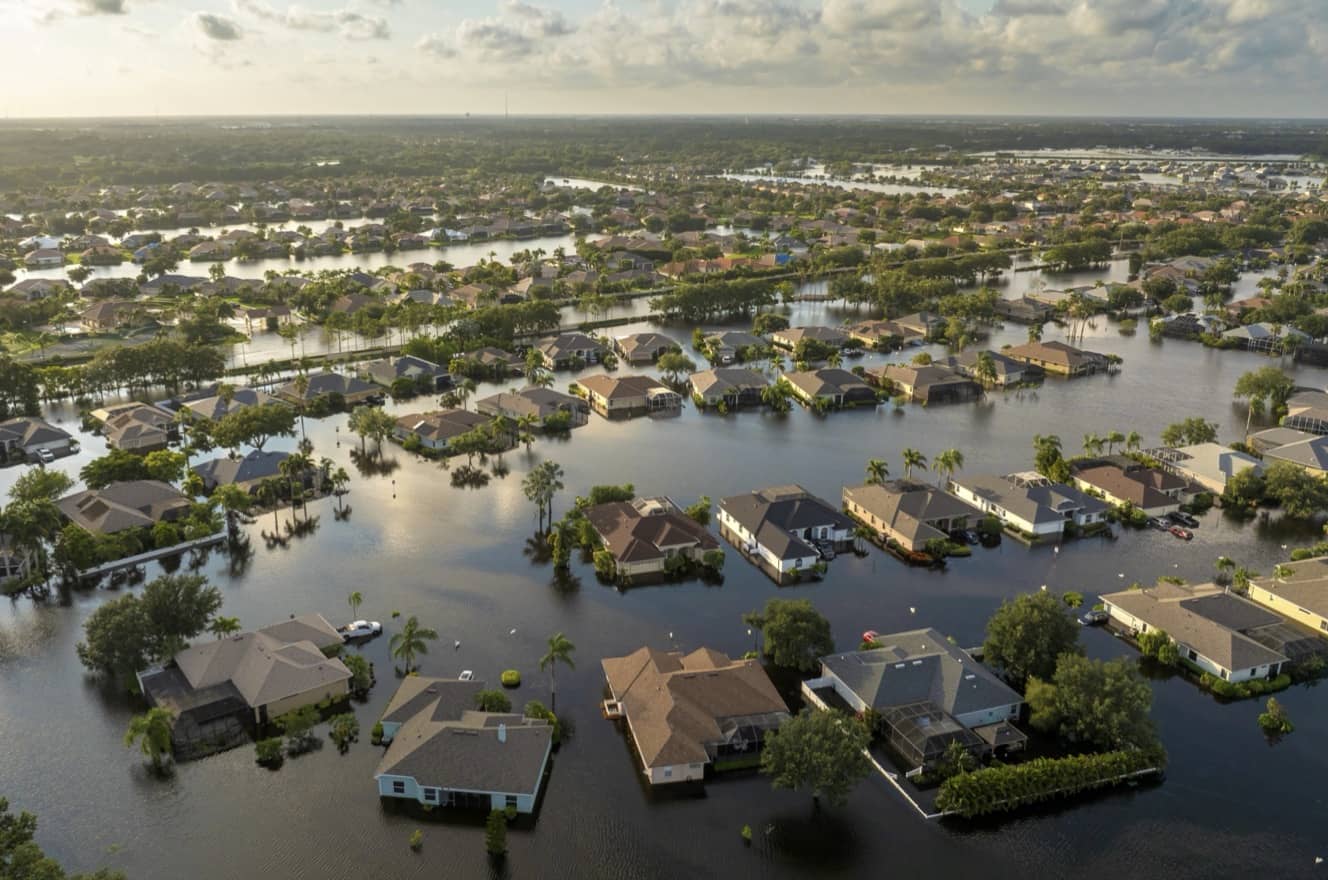
Why strong institutional and community capacities need to be developed BEFORE a disaster
Kristen MacAskill (University of Cambridge) and Lianne Dalziel (University of Canterbury) explain capabilities (and the associated capacity) are essential for preparedness. Capacity for both physical infrastructure and organisational / institutional response are necessary. This commentary focuses primarily on institutional capacity for disaster risk management, and the positive (if slow) developments in the value that is being placed on preparedness.
Introduction
The impact of major disasters on communities is influenced by governance and risk culture to more of an extent than is generally acknowledged. This applies even where the underlying hazard is associated with natural processes. The United Nations has picked up the campaign #NoNaturalDisasters which highlights that a natural hazard event only becomes a disaster when there is the presence of exposure and vulnerability (UNDRR, n.d.-a). Where we build, how we build and how we manage the built environment shapes both that exposure and vulnerability of our communities. Disasters come from a society’s decisions and actions, not nature. Many disasters can be eliminated through design, regulation and social practices (Kelman 2020).
The commission that investigated the Fukushima Daichi nuclear disaster called for fundamental changes across the industry, including the government and regulators, to increase openness, trustworthiness and focus on protecting public health and safety. In practice, it was unthinkable at the time to imagine a realistic possibility that the plant would lose electricity and its total cooling capacity. This is not about the design of the plant specifically, but how the situation was managed. The commission chairman observed:
‘What must be admitted – very painfully – is that this was a disaster 'Made in Japan’. Its fundamental causes are to be found in the ingrained conventions of Japanese culture: our reflexive obedience; our reluctance to question authority; our devotion to 'sticking with the program'; our groupism; and our insularity… …The consequences of negligence at Fukushima stand out as catastrophic, but the mindset that supported it can be found across Japan. In recognizing that fact, each of us (every Japanese citizen) should reflect on our responsibility as individuals in a democratic society.’ (National Diet of Japan Fukushima Nuclear Accident Independent Investigation Commission 2022: 9)
Preparedness as a standard state of play
The societal capacity to manage disaster risk are often shaped by rules and norms ranging from international to local levels – what organisations can and cannot do. Crucially, this is not just in the sense of emergency response, but also for understanding the foundations needed to 'step up' when major reconstruction efforts are required. Greater recognition is needed on the inherent value that preparedness for recovery has for society.
In essence the goal of recovery is to restore or improve livelihoods of a disaster-affected community (UNDRR n.d.-b). It follows that ‘successful’ recovery will achieve this goal. Recovery encompasses the longer-term process following the initial days of emergency response and initial few weeks where critical services are restored to some extent through temporary solutions. These early phases tend to have clear goals and successful operations are often characterised by command-and-control leadership (Glavovic 2014). The restoration associated with recovery will often take years, or even decades. The process is more complex and requires different styles of leadership. However, this complexity does not preclude the possibility of maturing institutional knowledge and associated norms. Successful recovery is rooted in preparedness.
Various constants in the reconstruction process will shape the extent to which recovery goals can be achieved, particularly with respect to using recovery as an opportunity for betterment. First, funding mechanisms are fundamental in defining the scope of intervention possible. Second, recovery involves a large array of organisations, and the nature of relationships between these organisations will influence how the recovery process will both engage and serve affected communities. Third, making decisions based on the need for urgency (real or perceived) does not necessarily lead to community acceptance which is why meaningful engagement is critical.
Evolving policy mechanisms and institutional capabilities
International efforts have evolved on this front under leadership from the United Nations (UN) over the past 50 years. In the early 1970s the UN established its Office for Disaster Relief with the primary focus on bringing the international community together to coordinate ‘assistance in the cases of natural disaster’ (UNDRR n.d.-c). In 1999 the UN International Strategy for Disaster Reduction (UNISDR, now the UN Office for Disaster Risk Reduction – UNDRR) was established, becoming the lead agency for disaster management, with a wider view on the preparation that can be done to manage disasters. A primary agenda is to reduce the chance and impacts of disaster through better development.
The Third World Conference on Disaster Reduction 2015 produced the Sendai Framework for Action on Disaster Risk Reduction 2015-2030 (UNISDR, 2015). Both the timing and the focus on DRR were significant, creating a clear connection with the Paris Agreement1 and the Sustainable Development Goals2. Looking at its priorities, the shift in framing what are mutual obligations is very clear. The international community needs to act collectively to ensure we understand risks (Priority 1), strengthen DRR governance (Priority 2) invest in DRR for resilience (Priority 3) and be fully prepared (Priority 4). It is the last of these priorities that introduces the phrase ‘Build Back Better’ in the context of preparedness:
‘Disasters have demonstrated that the recovery, rehabilitation and reconstruction phase, which needs to be prepared ahead of a disaster, is a critical opportunity to “Build Back Better”, including through integrating disaster risk reduction into development measures, making nations and communities resilient to disasters.’ (UNISDR 2015: 21)
The phrase ‘Build Back Better’ should be regarded as no more than a convenient shorthand for the long-term recovery phase after a disaster and the opportunity it presents to address pre-existing vulnerabilities and to reduce disaster risk for a more resilient future. The need for communities to be fully engaged in the recovery process is vital.
The most effective disaster recovery must begin well before a disaster occurs. This entails making institutional infrastructures both more resilient and more capable before disasters occur (Comerio 2025). Countries and communities that had been affected by disaster were usually much 'better equipped to Build Back Better during the extended period of recovery, rehabilitation, and reconstruction when they have taken actions to strengthen recovery capacity and decision-making effectiveness prior to the onset of disaster' (UNISDR 2017: 4).
The specific clauses that spell out the details of the focus on recovery in the Sendai Framework promote the incorporation of disaster risk management into post-disaster recovery and rehabilitation processes. Reference is made to ‘measures such as land-use planning, structural standards improvement and the sharing of expertise, knowledge, post-disaster reviews and lessons learned’ (UNISDR 2015: 22).
This highlights another vital part of planning for recovery and that is reviewing each experience of recovery, documenting the lessons, and incorporating them into the planning for future events to ensure they are embedded in practice.
Key lessons that emerged from the Boxing Day Tsunami 2004:
‘Progress in reconstruction does not diminish the importance of exploring the myriad challenges encountered in the recovery process, examining gaps in performance, and considering lessons learned. Even if we substantially enhance our efforts at risk reduction, the reality of climate change, settlement patterns, and poverty suggests that natural hazards will continue to result in disasters that require well-managed recovery efforts.’(Clinton 2006: 24).
This was written nearly 20 years ago, and yet recent expert commentators are still asking:
‘Are we resigned to being bystanders as disasters occur, and to keep paying for recovery which often takes longer than it should? Or can we act in unity to stop as many disasters as possible from happening?’ (Byatt & Kelman 2024)
The factors that are said to contribute to prevention are: ‘the right mindset; the right investment/funding; good governance; good data; meaningful inclusion; and meaningful targets’ (Byatt & Kelman 2024). These reinforce the Sendai framework priorities and our own observations.
Australian preparedness
Australia provides a great case to demonstrate increasing maturity of a culture of preparedness for recovery in the context of climate-related events over the past 15 years. Major flooding in 2010-11 in Queensland, Australia, led to the establishment of the Queensland Reconstruction Authority (QRA) to oversee the distribution of large amounts of federal funding being invested in the reconstruction of infrastructure. Initially, this was mainly limited to work involving restoration without betterment. It was modelled on the Victorian Bushfire Reconstruction and Recovery Authority (VBRRA) which was set up to advise governments, coordinate efforts and to develop an overarching plan for restoration and recovery of the affected regions, towns and communities in the wake of the deadly 2009 bushfires.
The QRA evolved over the course of a decade in response to further flooding events and better knowledge about what entailed a good investment. The QRA ultimately became a permanent entity so that its institutional knowledge and capacity could be retained. Its remit has also expanded to work more directly with communities to build their resilience and preparedness capacities.3 Elsewhere in the country, the New South Wales Reconstruction Authority has since been established with a similar remit to work proactively to reduce the impacts of disasters and to support faster community recovery.
The 2019-2020 bushfires in Victoria led to the establishment of Bushfire Recovery Victoria as a dedicated permanent agency. In June 2021, the agency was used to coordinate the clean-up and recovery from the June 2021 floods and storms. In 2022 it became Emergency Recovery Victoria, a permanent and dedicated agency that now leads state and regional relief and recovery coordination on behalf of the Victorian Government for all emergencies. The temporary VBRRA, which had been the original model for the QRA, has now in a full circle, adopted the Queensland model.
Two useful lessons to emerge are: (1) the need for a permanent recovery model (that complements wider resilience planning) and (2) the success of the Victorian assurance model that is based on an independent Inspector General. The oversight that this has provided has meant that reviews have not been left gathering dust but rather have led to recommendations being monitored and implemented.
Conclusion
The recovery mindset should be part of efforts in the development of resilience-oriented policy for infrastructure. It would be impossible to attempt to definitively prepare a recovery programme a priori to an event, but by developing mechanisms and capabilities across these factors in advance, informed by experience and stress-testing of foreseeable (even if unlikely) scenarios, a good foundation can be created for a major recovery process.
Acknowledgements
Lianne was Mayor of Christchurch, New Zealand (2013-2022) during the recovery after the 2010-2011 Canterbury Earthquake Sequence. She recently completed a Master of Laws (International Law and Politics) at Canterbury University, and some of the research for her dissertation is utilised in this commentary. Kristen worked on Christchurch’s reconstruction as an engineer, then conducted a PhD on the governance of disaster recovery. These experiences underpin views expressed in this commentary.
Notes
1. Adopted by the Conference of Parties to the United Nations Framework Convention on Climate Change in 2015 (COP21).
2. Adopted in 2015 as part of the 2030 Agenda for Sustainable Development.
3. For further commentary on the QRA’s journey, see: https://engineeringx.raeng.org.uk/media/gghivzh5/engx-australian-climate-extremes-and-building-transport-network-resilience-short.pdfb
References
Byatt, B. & Kelman, I. (2024). Disasters will be less devastating if we plan for them. https://www.weforum.org/stories/2024/03/natural-disaster-prevention/
Comerio, M. (2025). Lessons from disaster recovery: build better before. [commentary]. Buildings and Cities. https://www.buildingsandcities.org/insights/commentaries/lessons-from-disaster-recovery.html
Clinton, W.J. (2006). Lessons Learned from tsunami Recovery, Key Propositions for Building Back Better, A Report by the UN Secretary-General’s Special Envoy for Tsunami Recovery, December 2006.
Glavovic, B. (2014). Disaster recovery: The particular governance challenge generated by large-scale natural disasters. In: J. Boston, J. Wanna and J. Pritchard, eds., Futureproofing the State. Canberra: ANU Press, 199–214.
National Diet of Japan Fukushima Nuclear Accident Independent Investigation Commission. (2012). The official report f the Fukushima Nuclear Accident Independent Investigation Commission executive summary [English]. The National Diet of Japan. https://www.nirs.org/wp-content/uploads/fukushima/naiic_report.pdf
Kelman, I. (2020). Design professionals challenging disasters. [commentary]. Buildings & Cities. https://www.buildingsandcities.org/insights/commentaries/design-professionals-challenging-disasters.html
UNDRR. (n.d.-a). #NoNaturalDisasters. https://www.undrr.org/our-impact/campaigns/no-natural-disasters
UNDRR. (n.d.-b). Definition: Recovery. https://www.undrr.org/terminology/recovery
UNDRR. (n.d.-c). DRR and UNDRR’s history. https://www.undrr.org/our-work/history
UNISDR (2015). Sendai Framework for Disaster Risk Reduction 2015-2030. https://www.undrr.org/publication/sendai-framework-disaster-risk-reduction-2015-2030
UNISDR (2017), Build Back Better in recovery, rehabilitation and reconstruction 2017, Consultative version. https://www.undrr.org/publication/words-action-guidelines-build-back-better-recovery-rehabilitation-and-reconstruction

Latest Peer-Reviewed Journal Content
Moving homes and energy poverty: residents’ concerns, capabilities and responses
M Jalas, J Rinkinen, S Numminen & E Valkealahti
Reference study for biogenic carbon storage in the residential building stock
O Iliescu, I Talvitie, A Amiri & S Junnila
Building space heating and cooling in NDCs 4.0
T P Lützkendorf
Building component reuse as sociomaterial interaction: lessons from precast concrete
J Uusikartano, L Alkki & V Capitani
Validating national reuse indicators from regional demolition data: a Swedish example
F Ericsson, K Mjörnell & U Janson
Climate change risk and decision-making [editorial]
S Foxell & I Cooper
Technologies of reconstruction [editorial]
P Tombesi
Urban form metrics for building occupancy modelling: applications and impacts
D Reiter, M Jehling & R Hecht
Retrofit realism: affordable low-carbon policies for existing homes
N Eyre & R Khosla
Join Our Community

The most important part of any journal is our people – readers, authors, reviewers, editorial board members and editors. You are cordially invited to join our community by joining our mailing list. We send out occasional emails about the journal – calls for papers, special issues, events and more.
We will not share your email with third parties. Read more
Latest Commentaries
Who is Responsible for Climate Change?
Ian Cooper (Eclipse Research) explores the questions of responsibility raised in the recent Buildings & Cities special issue ‘Climate Change Risk and Decision-Making’. Focusing here on carbon emissions and mitigation, global responses will require grounding in what can work locally. New responsibilities arise for the wide range of built environment decision-makers: clients, professionals and their institutions, central and local governments, product suppliers, financiers, insurers, etc. A framework is needed to manage the complexity of responsibilities especially for variety of actors, the time frames and spatial scales.
Professional Ethics in a Climate Crisis
The climate crisis has progressed into a dangerous phase with tragic consequences often counted in numbers of excess deaths, but also by powerful economic impacts of rising food prices, the increased costs of insurance and lending, costly damage to the built environment. Celia Davies, Director of Impact at the UK’s Town and Country Planning Association (TCPA) and Hugh Ellis, Director of Policy at TCPA, consider the responsibilities of professionals in shaping a built environment which is fit not just for today's climate risks but for the dramatic increase in severe and unpredictable weather which is now locked into our climate systems.