
www.buildingsandcities.org/insights/commentaries/building-performance-evaluation-education.html
Building Performance Evaluation in Education – Why Not?
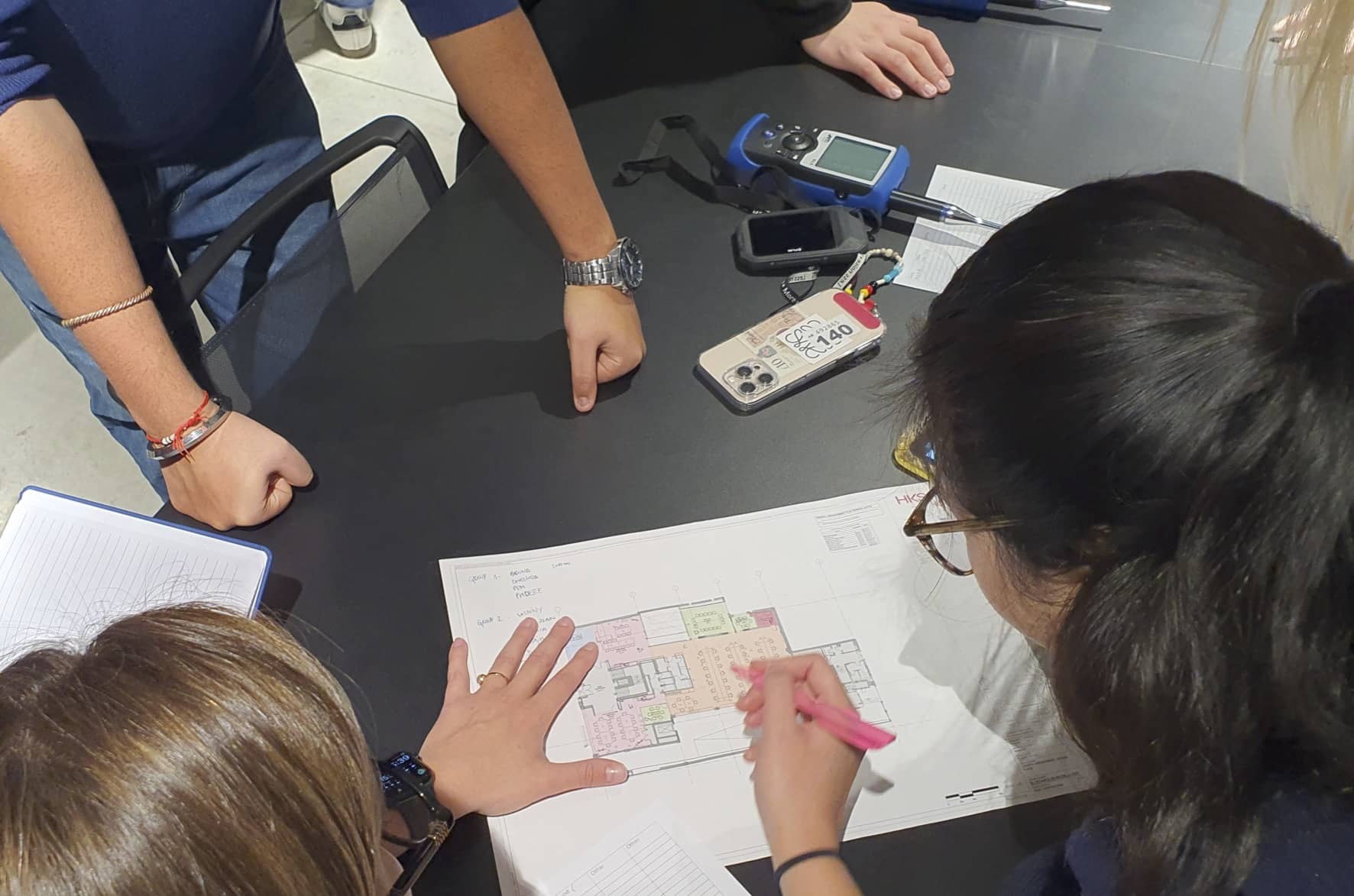
What institutional and professional obligations would mainstream the practice of BPE?
Building performance evaluation (BPE) is a process to understand how buildings perform in use and how inhabitants interact with their buildings. BPE can harness these insights to improve building design, operation and use. Paradoxically, BPE is rarely part of the curriculum for education of designers, buildings and managers. Fionn Stevenson (independent scholar) considers why BPE / post-occupancy evaluation is not being taught to architecture students in the UK and how to mainstream BPE in education and practice.
Education is not fit for purpose
In 2015 a national UK conference called “Beyond Building Performance: Architectural Research, Practice and Education”, with representatives from virtually all Higher Education Institution (HEI) departments of architecture in the UK, sent a manifesto statement to the Royal Institute of British Architects (RIBA) Education Committee:
This conference believes that integrating BPE within education is essential in order to: fulfil our responsibility to society, exploit the potential for collaboration between academia, users, research, disciplines and professional practice in expanding the evidence base for affordable, biodiverse rich, healthy, resource efficient building and urban design, supportive of communities.
In the years since I proposed and developed this initiative with others, there has been little change. It is, arguably, still at the margin of consideration in architectural education. Building Performance Evaluation (BPE) is still not taught as part of the undergraduate curriculum, although there are now a number of Masters programmes where “live” BPE has been introduced within modules, largely through the enthusiasm of individual academics.
Perhaps the most damning evidence comes from a national skills mapping survey of UK HEI staff competencies (SCOSA 2022) related to the newly produced RIBA Climate Literacy Knowledge Schedule. This survey was something I suggested to test the reality, at an Architects Climate Action Network workshop for heads of architecture departments and architecture tutors in 2020. 58 out of 64 departments of architecture across the UK took part in the survey. At undergraduate level (RIBA Part 1), only 11% of departments could offer any expertise related to BPE, while only 50% claimed some knowledge existed among staff, with even less overall knowledge and expertise in the postgraduate architecture courses (Part 2).
Institutional continuous professional development (CPD) related to BPE remains scattered and minimal. The RIBA offers just one element of post-occupancy evaluation (POE) training, which is incorporated into another topic on Sustainable Landscape Design (RIBA 2025). The Chartered Institution of Building Services Engineers is asking its members to consider some aspects of BPE via it’s Climate Action Plan (CIBSE 2024), but again, it’s not mandatory training. One bright light is the suite of CPD BPE modules recently produced by the UK’s Good Homes Alliance (2026). Another is the new voluntary UK Net Zero Carbon Building Standard (NCZBS 2026), which contains a significant amount of BPE measurement and verification.
What is stopping BPE being taught?
Regulations to monitor performance ensure human safety and environmental protection in many other aspects of life: from cars to water quality. Yet, the lack of regulation in the UK is a fundamental reason why HEIs and professional bodies are not compelled to teach BPE as a mandatory element within their professionally accredited programmes. When building regulatory bodies are approached about mandating BPE for buildings in use, their answer is always that regulations are “only required up to the completion stage” for the building. However other regulations already exist for annual building services maintenance, so that can’t be the real reason.
Due to the reluctance of regulatory authorities to include BPE either in
planning or building regulations, efforts have been made by the Good Homes
Alliance and others to try to ensure that some form of BPE is included in The
Future Homes and Buildings Standard (MHCLG 2026a) for England. As a result, there
is greater emphasis on commissioning, certification and homeowner information,
but still no mandatory BPE framework for measuring the performance gap in use.
This is because, once again, the government only asked about “voluntary POE
measurements” in its consultation for this standard (MHCLG, 2026b). This
careful framing of the consultative exercise purposefully excluded the
possibility of regulating BPE.
Despite significant international efforts in the past to mainstream BPE, particularly in the US with the excellent “Vital Signs” and “Agents of Change” national education programmes that ran from 1992-2005 (Gupta et al. 2019), it is also seen as difficult to teach in the design studio, requiring evidence of real-world measurement within buildings. This needs measuring equipment and careful negotiation with building owners and users. Design teaching using predicted “building performance” through modelling is viewed as more cost-effective, even though this can be thoroughly misleading, because environmental modelling software rarely captures real world performance issues in all their complexity and specificity. Such modelling is also usually based on building physics only, and tends to ignores human engagement with buildings and vice versa (Cole et al. 2008) as a key part of overall occupancy performance evaluation.
Professional institutions have a mandate to protect and enhance the “public good”. Despite this fundamental principle, they have failed to mandate an understanding and practice of BPE for chartered status. Recently the RIBA (2026) mandated its members to pass a pilot Climate Literacy test which is valid for five years. This includes understanding “outcomes based briefing and design, Plan for Use, Soft Landings and post occupancy evaluation” as well as “user experience design and occupancy behavior”. However, there is no requirement as such to specifically pass these elements, because you only need to pass 32 out of 40 randomly generated multi-choice questions (based on the 40 topics contained within the RIBA Climate Literacy Knowledge Schedule), which already contain the possibility of passing by simply guessing. Architects are not so different from doctors, really – both deal with the absolute finality of their work either performing or not performing – and yet we treat architectural education as a “relative” process, with no criterion-referenced performance requirements through examination. This is unlike medicine where it’s a case of pass/fail for certain basic requirements. It’s perhaps no wonder so many buildings therefore fail to perform well, when design education is based on hypothesis rather than reality.
Another underlying issue for the development of BPE in both professional CPD and in HEIs lies with professional indemnity insurance, where insurers such as WREN do not allow professionals to evaluate their own work using BPE. Until the insurance industry is comfortable with building faults being routinely revealed post construction, BPE is unlikely to become a mainstream requirement in education. (Ironically, the early identification of faults would create considerable savings due to the avoidance of inappropriate practices spreading widely and thereby reduce subsequent remedial action.) Without BPE, designers are unable to systematically learn from their mistakes, as well as their successes. British Standards, which recognise BPE, such as BS40101 and PAS2035, are also not designed for educational use, and remain unwieldy in an educational setting. A mechanism is needed that is more bespoke and nimble for HEIs and professional bodies to use.
Ways forward
One way forward in this seemingly impenetrable web of institutional barriers to mainstreaming BPE education and training would be to develop a BPE “Champions and Brokers” education model based on a new live BPE practitioner register for the UK. This register was something I initiated as the Campaigns Director for the UK Building Performance Network in 2021. It did not thirve because firm criteria for the assessment and inclusion of experts were hard to come by without any agreed BPE professional standards in operation at the time. This was one of the many reasons to subsequently create the British Standard 40101 for BPE. Such a tool is still urgently needed, perhaps as an RIBA or CIBSE specialist register, and would allow HEIs to directly employ BPE experts as advisors on their building professional education courses, at least until such time as BPE is as mainstream for students as drawing a plan or section diagram of a building.
Using simple “Live Projects” with students to learn about BPE, is another way to demonstrate through BPE by example that many small curricula changes can make a big change in HEI programmes, without having to go wholesale for “new modules” etc. When I taught at Oxford Brookes University from 2007-11, year two architecture students were introduced to very simple monitoring kit (temperature, humidity, light and sound using 4-in-1 meters) and encouraged to measure their indoor environments, in an attempt to make BPE seem like a routine part of design work in the studio. In year five, we encouraged students to base a design intervention in an existing building based on a careful appraisal of its existing condition and talking to the users (Stevenson, 2019). These simple BPE teaching techniques related to design are still not commonplace, due to no “need” for them, according professional requirements.
Teaching BPE needs an interdisciplinary understanding of evaluation and assessment that works across traditional professional boundaries. One excellent example is Hasman’s (2020) Climate Framework developed with the Construction Industry Council and others. HEI are not set up for this, however, and neither are the professions, yet – but they could be. There are already good initiatives in some universities with combined degrees between architecture and civil engineering, as well as architecture, civil engineering and mechanical engineering, which would allow for the necessary “T-shaped” professionals (Ninan et al. 2022) to become BPE experts.
Re-framing BPE
Given that BPE has failed to gain traction significantly within industry and education in its own right, one possibility is to re-frame it as being situated within climate crisis management (thus also developing building “resilience” through BPE) much as CIBSE (2024) is already doing. Another example of this is shown via the RIBA CPD Core Curriculum: Sustainable architecture: Using ecology and biodiversity for flood resilience (RIBA 2025). This text shows how see how POE is woven into landscape design:
This course introduces strategic thinking processes needed for radicalising landscaping into nature-based design approaches, looking at the use of green infrastructure, native plantings, terracing and grading as design drivers. Modules include… Post-occupancy Evaluation (POE) through monitoring and resident feedback, performance metrics and adaptive management through feedback loops.
POE is used to verify landscape design. Could this be extended to include verifying climate resiliency in buildings as a means of including BPE?
It is time to re-approach existing policy and regulation for updating in this manner, too, by placing in BPE into housing regulations. This is beginning to happen via The Future Homes and Building Standard (2026a), but there is still a long way to go before actual monitoring of building performance is mandatory. Alternatively, it could become part of the government’s efforts to develop its resiliency responses to the current climate crisis e.g. using BPE to verify overheating in buildings, and then broadening this exercise to include other BPE performance factors. This can help to alter perceptions that BPE is something to do “on top of everything else” as an extra activity, and frames it instead as an inherent activity within existing legislation requirements. The same approach can be applied to HEI professional education programmes too, where BPE is incorporated into design appraisals which address the climate crisis.
Smart energy data via smart metering offers a means of mobilising building owners and users to use BPE interactively as a form of self-education and improved interaction with their buildings (Cole et al, 2008), as well as offering a form of verification via regulatory frameworks. This smart metering could be extended into wider forms of monitoring such as temperature, humidity and indoor air quality. In Scotland, the provision of visible carbon dioxide meters is already mandatory for dwellings. This form of “citizen science” can enable whole neighbourhoods to interrogate their own buildings, but simple guidance on how to do this effectively is vitally needed now. Registered Social Landlords are also beginning to use smart data platforms to monitor their housing stock for these key factors, particularly in light of Awaab's Law (MHCLG, 2026c) which requires these organisations to remove dampness and other hazards in affordable homes within a strict fixed time frame.
Ultimately, BPE education should also be aimed beyond the usual design disciplines of architecture and engineering and expanded into business management, housing, planning, construction and surveying programmes. This is where the client base often emerges from, and BPE needs client champions too. It is only when BPE is taught and delivered on a fully transdisciplinary basis, using integrated transdisciplinary teamwork, that it becomes truly meaningful and useful to all. Society increasingly depends on its buildings and how they perform to keep us safe and well. It is incumbent on professionals (and the education of professionals) to ensure that buildings perform well in use.
References
CIBSE. (2024). Climate Action Plan. Chartered Instituion of Building Services Engineers. https://www.cibse.org/media/f44bsxsd/cibse-climate-action-plan-2024-rev1.pdf
Cole, R.J., Robinson, J., Brown, Z. & O’Shea, M. (2008). Re-contextualizing the notion of comfort. Building Research & Information, 36 (4), 323-336. https://doi.org/10.1080/09613210802076328
Good Homes Alliance. (2026). Data interpretation, reporting and taking action - BPE Module 4. https://kb.goodhomes.org.uk/guidance/bpe-module-4-data-interpretation-reporting-taking-action/
Gupta, R. Gregg, M., Manu, S., Vaidya, P., & Dixit, M. (2019). Customized performance evaluation approach for Indian green buildings. Building Research & Information, 47(1), 56–74. https://doi.org/10.1080/09613218.2019.1525962
Hasman, M. (2020). Climate Framework. https://www.climateframework.com/about
MHCLG. (2026a). The Future Homes and Buildings Standards: Building Circular 01/2026. https://www.gov.uk/government/publications/the-future-homes-and-buildings-standards-building-circular-012026
MHCLG. (2026b). Consultation outcome. The Future Homes and Buildings Standards: 2023 consultation. Ministry of Housing, Communities and Local Government. https://www.gov.uk/government/consultations/the-future-homes-and-buildings-standards-2023-consultation/the-future-homes-and-buildings-standards-2023-consultation
MHCLG. (2026c). Awaab’s Law: Guidance for social landlords - Timeframes for repairs in the social rented sector. Ministry of Housing, Communities and Local Government. https://www.gov.uk/government/publications/awaabs-law-guidance-for-social-landlords/awaabs-law-guidance-for-social-landlords-timeframes-for-repairs-in-the-social-rented-sector
Ninan, J., Hertogh, M. & Liu, Y. (2022). Educating engineers of the future: T-shaped professionals for managing infrastructure projects. Project Leadership and Society. 3 (100071). https://doi.org/10.1016/j.plas.2022.100071
NZCBS (2026). The UK Net Zero Carbon Building Standard. https://www.nzcbuildings.co.uk/the-standard
RIBA. (2025). Core Curriculum 2025: Sustainable architecture: Using ecology and biodiversity for flood resilience. Royal Institute of British Architects. https://www.riba.org/work/insights-and-resources/professional-features/new-riba-cpd-courses-for-2025/
RIBA. (2026).What do architects need to know about RIBA’s new pilot Climate Literacy Test? Royal Institute of British Architects. https://www.riba.org/work/insights-and-resources/professional-features/what-architects-need-to-know-about-the-new-pilot-climate-literacy-test/
SCOSA. (2022). RIBA Skills Mapping Survey - Phase 1 Final Report. Standing Conference of Schools of Architecture. https://www.scosa.org.uk/_files/ugd/379c04_808115ef78d2479a9d867baa344ce6c3.pdf
Stevenson, F. (2019). Housing Fit for Purpose: Performance, Feedback and Learning. RIBA Publishing. https://doi.org/10.4324/9780429347870


Latest Peer-Reviewed Journal Content

Moving homes and energy poverty: residents’ concerns, capabilities and responses
M Jalas, J Rinkinen, S Numminen & E Valkealahti
Reference study for biogenic carbon storage in the residential building stock
O Iliescu, I Talvitie, A Amiri & S Junnila
Building space heating and cooling in NDCs 4.0
T P Lützkendorf
Building component reuse as sociomaterial interaction: lessons from precast concrete
J Uusikartano, L Alkki & V Capitani
Validating national reuse indicators from regional demolition data: a Swedish example
F Ericsson, K Mjörnell & U Janson
Climate change risk and decision-making [editorial]
S Foxell & I Cooper
Technologies of reconstruction [editorial]
P Tombesi
Urban form metrics for building occupancy modelling: applications and impacts
D Reiter, M Jehling & R Hecht
Retrofit realism: affordable low-carbon policies for existing homes
N Eyre & R Khosla
Join Our Community

The most important part of any journal is our people – readers, authors, reviewers, editorial board members and editors. You are cordially invited to join our community by joining our mailing list. We send out occasional emails about the journal – calls for papers, special issues, events and more.
We will not share your email with third parties. Read more
Latest Commentaries
Who is Responsible for Climate Change?
Ian Cooper (Eclipse Research) explores the questions of responsibility raised in the recent Buildings & Cities special issue ‘Climate Change Risk and Decision-Making’. Focusing here on carbon emissions and mitigation, global responses will require grounding in what can work locally. New responsibilities arise for the wide range of built environment decision-makers: clients, professionals and their institutions, central and local governments, product suppliers, financiers, insurers, etc. A framework is needed to manage the complexity of responsibilities especially for variety of actors, the time frames and spatial scales.
Professional Ethics in a Climate Crisis
The climate crisis has progressed into a dangerous phase with tragic consequences often counted in numbers of excess deaths, but also by powerful economic impacts of rising food prices, the increased costs of insurance and lending, costly damage to the built environment. Celia Davies, Director of Impact at the UK’s Town and Country Planning Association (TCPA) and Hugh Ellis, Director of Policy at TCPA, consider the responsibilities of professionals in shaping a built environment which is fit not just for today's climate risks but for the dramatic increase in severe and unpredictable weather which is now locked into our climate systems.