
www.buildingsandcities.org/insights/commentaries/reducing-co2-emissions-biogenic.html
Reducing CO2 Emissions: Building with Biogenic Materials
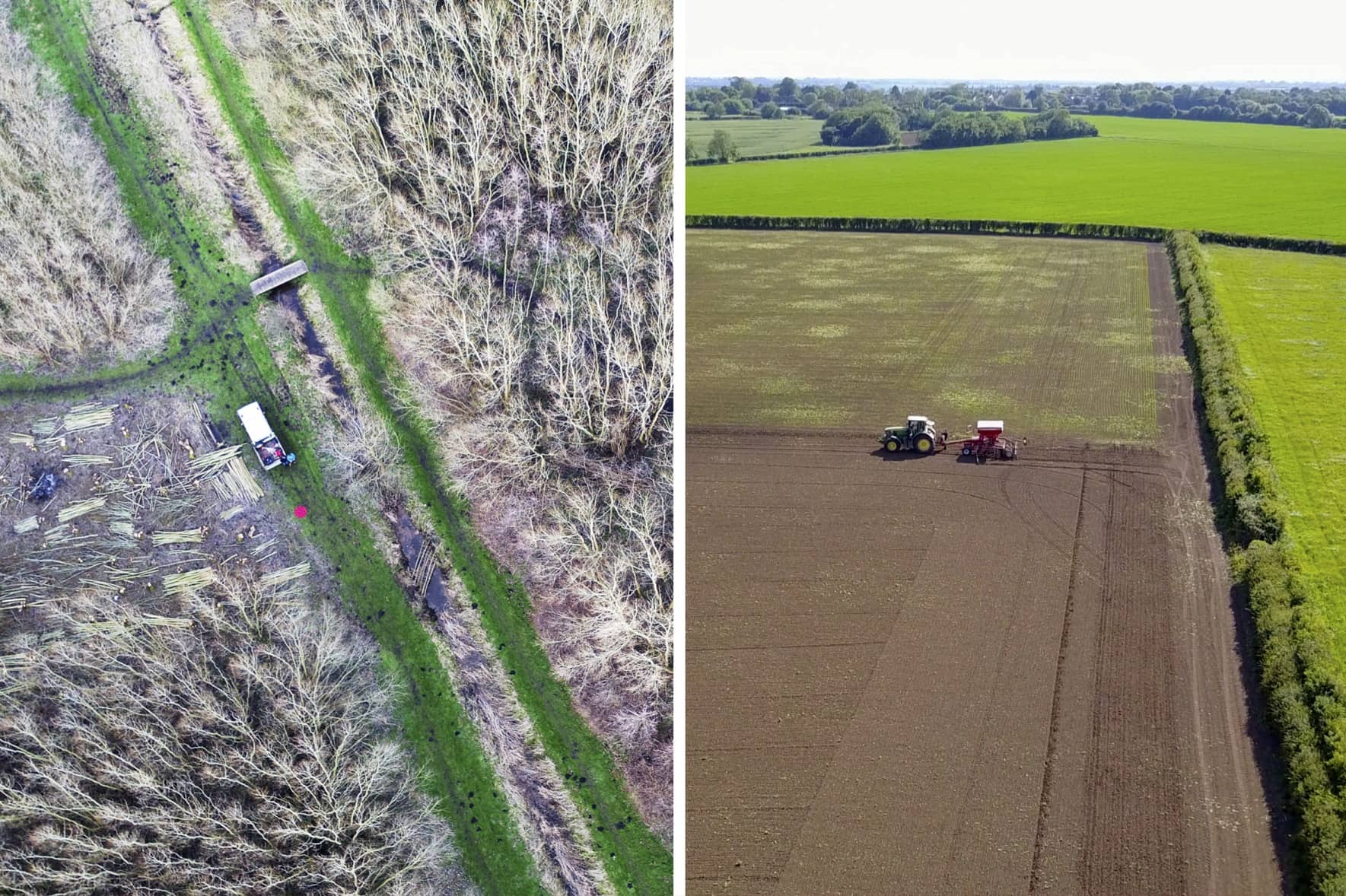
The arguments for building with biogenic materials are explained and compelling. But does the will exist?
At the 2026 Sustainable Buildings and Construction Summit Michael H. Ramage (Manchester School of Architecture, Centre for Natural Material Innovation, Manchester Metropolitan University) explained how new construction can substantially reduce its carbon footprint by using biogenic materials. These materials lock in carbon during their growth and store it in use as building materials. This provides a significant reduction in CO2 emissions. The premises surrounding an inadequate supply of timber are shown to be false.
When we build, we emit
More than half a century ago we understood the need to cut operational energy in buildings, yet it took 25 years before meaningful change began. In the past decade, we have recognised the importance of embodied energy: the CO2 emitted in the extraction, manufacture and transport of building materials, but action has barely started. With the climate emergency accelerating, we cannot afford another quarter-century of delay.
Unlike operational emissions, which can be reduced over time through retrofit and renewable energy, embodied carbon is locked in by design. Every decision a designer makes about materials determines the building’s carbon cost. As buildings become more energy-efficient, embodied carbon increasingly dominates their lifetime emissions (Röck et al. 2020).
The urgency of that decision has sharpened considerably. The global building stock is set to roughly double by 2060. The materials we choose now, across millions of buildings, will determine whether the built environment becomes a part of the climate solution or continues to be one of its largest contributors. This essay argues that biogenic materials have the structural performance, the supply base and the carbon arithmetic to meet that challenge, and that the barriers to doing so are institutional rather than physical.
Biogenic materials: the structural case
Timber is a high-performance structural material. Softwood has a strength-to-weight ratio and stiffness-to-weight ratio comparable to steel. This has been well known (the de Havilland Mosquito aircraft was built from plywood precisely because of that ratio). Engineered timber products extend those properties to large-span, multi-storey construction with the dimensional precision and safety performance that modern codes require.
The embodied carbon figures are unambiguous. The structure of a four-storey residential building in timber emits 126 tCO2e of embodied carbon in its production. The equivalent concrete building would emit 310 tCO2e, nearly 2.5 times as much. Steel would be four times more at 498 tCO2e (Moncaster et al. 2018). These figures vary by building type and specific design, but by almost any measure timber carries substantially lower embodied carbon than the alternatives.
A total of 92% of new homes in the US are wood-framed (NAHB 2021). The world’s largest economy has built most of its housing from timber for over two centuries, demonstrating that scale is not a constraint. We can do this. It is a matter of willpower, not supply.
The building type where this case is clearest is low-to-mid-rise construction of four to eight storeys — housing, schools and other social infrastructure in rapidly urbanising regions. That is also where global construction need is greatest.
The carbon storage argument
Every kilogram of timber holds the equivalent of 1.8 kilograms of CO2. Photosynthesis stores carbon (atomic mass 12) and returns oxygen to the atmosphere. Industrial carbon capture and storage, by contrast, must handle the whole CO2 molecule, with a molecular mass of 44. Nature is therefore 267% more mass-efficient than any industrial process we have yet devised.
This works over long timescales. As an example, the timber roof structure of Sidney Sussex College in Cambridge, UK was built in 1596 and is still standing: 430 years of carbon stored in a building in continuous use. Those who are responsible for the built environment need to think and plan along similar timescales.
Under the EN 15804+A2 (CEN 2019) methodology, biogenic carbon sequestered during a building’s life must be balanced against end-of-life release, which means net biogenic carbon over a full lifecycle approaches zero under current standards. This is an active research question: assuming the wood in a building is burned at the end of life is neither sound nor a good basis for design in the 21st century. The carbon is in the wood; buildings designed for longevity, disassembly, and reuse, as timber structures increasingly are, change the calculation significantly.
The scale of coming demand
In 2018, world population was distributed roughly as one billion in the Americas, one billion in Europe, one billion in Africa and four billion in Asia. By 2100, those figures stay at one billion in the Americas, one billion in Europe, and grow to four billion in Africa and five billion in Asia (Rosling 2018; UN World Population Prospects 2024). Almost all the growth is concentrated in sub-Saharan Africa, with further growth in South Asia. It is also overwhelmingly urban growth, as people move to cities.
To accommodate this, the world needs to build 230 billion m2 of new floor area by 2060 (GlobalABC/IEA 2017). The IEA puts that in terms that are easier to imagine: it is roughly the equivalent of building Paris every week for the next 35 years. Around 80% of this construction will take place in emerging economies. If we build it in steel and concrete and lock in the embodied carbon of those materials, we will be doing immeasurable harm for generations. The buildings needed are predominantly low-to-mid-rise housing and schools in climate-vulnerable regions — the building type and the climate context where bio-based materials perform best.
The supply arithmetic
These figures are large enough that they invite scepticism about whether bio-based materials could plausibly meet the demand. That scepticism has produced specific, widely cited calculations. They depend on the wrong question.
A solid cross-laminated timber (CLT) building, now common in the UK and across northern Europe, requires approximately 30 m3 of timber per 100 m2of floor area. Applied across the full 230 billion m2 of projected new construction, that figure requires roughly 150% of the volume currently harvested globally for construction timber. This is a constraint on a pure CLT approach at this scale.
A hybrid system changes the picture substantially. A structural glulam post-and-beam frame with bio-based infill (e.g. hempcrete cast into prefabricated timber cassettes) requires 15 m3 of timber and 10 m3 of hemp per 100 m2. Applied to the same 230 billion m2, the timber requirement falls to 76% of the volume currently harvested for construction: this is within the existing sustainable yield, with no requirement for new forest (Ramage et al. 2017).
One calculation holds that replacing 25% of global concrete demand with timber would require new forest 1.5 times the size of India (Scrivener 2023). The premise is wrong: timber does not substitute for concrete by volume. A cubic metre of structural timber does far more structural work than a cubic metre of concrete. The right question is how much timber we need to build what the world needs, not how much timber it takes to replace the concrete we currently pour. That figure is 15 m3 per 100 m2.
The hemp requirement is less than 1% of current global agricultural land. Hemp grows in a four-month cycle, rotates with food crops and improves soil structure. Agronomically, it does not compete with food production. At optimised stem yields of 10–12 tonnes dry matter per hectare (Finnan & Styles 2013), and a shiv fraction of roughly 50% by mass (Carus & Sarmento 2016), the hybrid system under a 100% adoption scenario would require around 13 million hectares, which is approximately 0.3% of total global agricultural land (FAO, 2023). Whether market dynamics under large-scale expansion change that depends on governance frameworks.
This is the absolute upper bound: 100% of global new construction in bio-based hybrid systems. We are not going to do this; the point is that we can. The argument that carbon costs of wood harvest outweigh construction benefits, and that standing forests store more carbon than the buildings made from them, has been made (Peng et al. 2023). But we don't have to cut more trees than we can grow. We need to use the ones we do cut better (Yayla et al. 2025; Reck et al. 2026). European forests are currently harvested at 50 to 60% of their annual growth rate, leaving substantial headroom (Ramage et al. 2017). And 90% of global deforestation is driven by agricultural land conversion, not construction timber (Hosonuma et al. 2012): the pressure on forests and the demand for construction timber are largely independent.
Procurement
The constraint on bio-based construction is institutional rather than physical. The supply exists. What is needed is the demand signal. Concrete scaled through the 20th century because procurement standards, public investment and industrial capacity all moved in the same direction at the same time. Professionals and civil society didn’t yet know how devastating it was for the climate. The same mechanism is available for bio-based materials, and some jurisdictions have already used it.
In 2020, France’s Minister for Housing, Julien Denormandie, committed all new state-funded public buildings to a minimum of 50% timber or other bio-based materials. The regulatory vehicle that followed, RE2020, in force from January 2022, sets tightening embodied carbon thresholds for all new construction, with limits reducing every three years through 2031 (French Ministry of Ecological Transition 2022). The effect is to make bio-based materials the path of least resistance for developers and designers meeting the standard. Japan has taken a comparable approach through wood-first procurement policy for public buildings. Several Canadian provinces have raised the allowable height in building codes for mass timber buildings and expanded its use in public programmes.These are supply signals, which the industry responds to (Wiegand & Ramage 2022).
For the 80% of new construction happening in emerging economies, development finance institutions are the most powerful lever available. The IFC, the World Bank, the Inter-American Development Bank and the African Development Bank all commission technical assistance on exactly the questions that determine whether bio-based construction programmes can be delivered: feasibility, supply chain development, materials specification and capacity-building with local manufacturers. Modelling of increased adoption of engineered wood products in construction globally suggests this could reduce annual emissions by 236 MtCO2-eq per year through to 2070, with a cumulative total of 10.9 GtCO2-eq (Reck et al. 2026). A demand signal from development finance institutions, directed toward bio-based systems, would accelerate the transition in the markets that need it most. We have the materials. We have the numbers. We need the commissions.
References
Carus, M. & Sarmento, L. (2016). The European Hemp Industry: Cultivation, processing and applications for fibres, shivs, seeds and flowers. European Industrial Hemp Association (EIHA).
CEN (2019). EN 15804:2012+A2:2019: Sustainability of construction works — Environmental product declarations — Core rules for the product category of construction products. European Committee for Standardization, Brussels.
FAO (2023). FAOSTAT Land Use Data. Food and Agriculture Organization of the United Nations, Rome. https://www.fao.org/faostat/en/#data/RL
Finnan, J. & Styles, D. (2013). Hemp: A more sustainable annual energy crop for climate and energy policy. Energy Policy, 58, 152–162. DOI: 10.1016/j.enpol.2013.02.046
French Ministry of Ecological Transition (2022). Environmental Regulation RE2020 (Réglementation environnementale 2020). French Republic, in force from 1 January 2022. https://www.ecologie.gouv.fr/politiques-publiques/re2020
GlobalABC/IEA (2017). Global Status Report 2017: Towards a Zero-Emission, Efficient and Resilient Buildings and Construction Sector. UN Environment Programme, Nairobi.
Hosonuma, N., Herold, M., De Sy, V., De Fries, R., Brockhaus, M., Verchot, L., Angelsen, A. & Romijn, E. (2012). An assessment of deforestation and forest degradation drivers in developing countries. Environmental Research Letters, 7(4), 044009.
Moncaster, A.M., Pomponi, F., Symons, K.E. & Guthrie, P.M. (2018). Why method matters: temporal, spatial and physical variations in LCA and their impact on choice of structural system. Energy and Buildings, 173, 389–398. https://doi.org/10.1016/j.enbuild.2018.05.039
NAHB/US Census Bureau (2021). Characteristics of New Housing. National Association of Home Builders / US Census Bureau. https://www.census.gov/construction/chars/
Peng, L., Searchinger, T.D., Zionts, J. & Waite, R. (2023). The carbon costs of global wood harvests. Nature, 620, 110–115. https://doi.org/10.1038/s41586-023-06187-1
Ramage, M.H., Burridge, H., Busse-Wicher, M., Fereday, G., Reynolds, T., Shah, D.U., Wu, G., Yu, L., Fleming, P., Densley-Tingley, D., Allwood, J., Dupree, P., Linden, P.F. & Scherman, O. (2017). The wood from the trees: The use of timber in construction. Renewable and Sustainable Energy Reviews, 68, 333–359. https://doi.org/10.1016/j.rser.2016.09.107
Reck, B.K., Johnston, C., Foong, A., Gupta, A., Karpov, A., Holsten, A., Misselwitz, P., Keenan, R.J., Formenton Cardoso, N., Walter, S., Bull, L. & Steel, E.A. (2026). Wood products in the bioeconomy: Scenario-based assessment of the potential for engineered wood products in climate change mitigation. Rome, FAO. https://doi.org/10.4060/ce0315en
Röck, M., Ruschi Mendes Saade, M., Balouktsi, M., Rasmussen, F.N., Birgisdottir, H., Frischknecht, R., Habert, G., Lützkendorf, T. & Passer, A. (2020). Embodied GHG emissions of buildings — the hidden challenge for effective climate change mitigation. Applied Energy, 258, 114107. https://doi.org/10.1016/j.apenergy.2019.114107
Rosling, H., Rosling, O. & Rönnlund, A.R. (2018). Factfulness: Ten Reasons We’re Wrong About the World — and Why Things Are Better Than You Think. New York: Flatiron Books.
Scrivener, K. (2023). The confused world of low-carbon concrete. EPFL Laboratory of Construction Materials. https://www.epfl.ch/labs/lmc/the-confused-world-of-low-carbon-concrete/
UN World Population Prospects (2024). United Nations Department of Economic and Social Affairs, Population Division. https://population.un.org/wpp/
Wiegand, E. & Ramage, M.H. (2022). The impact of policy instruments on the first generation of tall wood buildings. Building Research & Information, 50(3), 255–275. https://doi.org/10.1080/09613218.2021.1905501
Yayla, A., Mason, A.R., Wang, J., van Ewijk, S. & Myers, R.J. (2025). Global wood harvest is sufficient for a climate-friendly transition to timber cities. Nature Sustainability, 8, 1013–1025. https://doi.org/10.1038/s41893-025-01605-w

Latest Peer-Reviewed Journal Content

Building space heating and cooling in NDCs 4.0
T P Lützkendorf
Building component reuse as sociomaterial interaction: lessons from precast concrete
J Uusikartano, L Alkki & V Capitani
Validating national reuse indicators from regional demolition data: a Swedish example
F Ericsson, K Mjörnell & U Janson
Climate change risk and decision-making [editorial]
S Foxell & I Cooper
Technologies of reconstruction [editorial]
P Tombesi
Urban form metrics for building occupancy modelling: applications and impacts
D Reiter, M Jehling & R Hecht
Retrofit realism: affordable low-carbon policies for existing homes
N Eyre & R Khosla
Inside offsite: everyday dwelling in factory-built apartments
L Dorignon & R Horne
MMC for housing: sectoral perception on governance challenges
J Morgan, C Goodier, R Schmidt-III & K Ayinla
Reorganising specification practice for component reuse: an exploratory study
S Gao, K Jones, J Xu & J Glass
Kitchen retrofits to support food practices and wellbeing
F J Andrews, A Sal Moslehian, E Warner & R Tucker
From strategy to delivery: a comparative analysis of MMC roadmaps
G Goldman, D Sorokine, F Suerich-Gulick, C Carbone & M Jemtrud
Thermal comfort, ventilation and mosquito-borne disease risk in Zanzibar hospitals
O Sloan Wood, J B Knudsen, K L Schiøler, E Lupenza, M Msellem & F Saleh
Reusing precast concrete elements in construction: assessing the economic conditions
O Vigren, H Westerlind & T Malmqvist
Institutional readiness for industrialised social housing in Vietnam
T Q Nguyen, B N Nguyen, T H Q To & Z Aziz
Prefabrication for housing retrofit: governance, innovation and resident experience
E Pikas, K Kuusk, P Pihelo, R Liias, J Pukk & T Kalamees
Reframing heat pump transitions: a care perspective
J van der Haer, R Schelwald & F de Haan
Urban informal settlements in Africa: transforming adaptation governance
K Buyana & H Sseviiri
Reusing concrete products in indoor environments: chemical hazard assessment
K Tähtinen, A Helin, E Parshintsev & H Hovi
Negotiating net-zero carbon: an ANT analysis of two buildings
L Schweber & M Green
Design for disassembly: a review of public policy proposals
O Vorobjev, U Uotila, T Joensuu & A Saari
Retrofitting Norwegian residential buildings: an archetype-based dynamic stock model
L S A Rousseau, S Amini, S Akin & E G Hertwich
Decolonising time: vernacular villages and the politics of heritage temporality
R Al-Rabady
Commutes to alternative workplaces: GHG emissions and physical activity
J Taylor, L Thoen, A Espinosa Mireles De Villafranca, P Anashin, J Vanhatalo, D Milián
Bernal & I Okkonen
Nine ‘myths’ about the building stock of Great Britain
S Evans, P Steadman, A Neto-Bradley, D Humphrey, R Liddiard,H Shamsi, J Palmer & G Simons
Join Our Community

The most important part of any journal is our people – readers, authors, reviewers, editorial board members and editors. You are cordially invited to join our community by joining our mailing list. We send out occasional emails about the journal – calls for papers, special issues, events and more.
We will not share your email with third parties. Read more
Latest Commentaries
Who is Responsible for Climate Change?
Ian Cooper (Eclipse Research) explores the questions of responsibility raised in the recent Buildings & Cities special issue ‘Climate Change Risk and Decision-Making’. Focusing here on carbon emissions and mitigation, global responses will require grounding in what can work locally. New responsibilities arise for the wide range of built environment decision-makers: clients, professionals and their institutions, central and local governments, product suppliers, financiers, insurers, etc. A framework is needed to manage the complexity of responsibilities especially for variety of actors, the time frames and spatial scales.
Professional Ethics in a Climate Crisis
The climate crisis has progressed into a dangerous phase with tragic consequences often counted in numbers of excess deaths, but also by powerful economic impacts of rising food prices, the increased costs of insurance and lending, costly damage to the built environment. Celia Davies, Director of Impact at the UK’s Town and Country Planning Association (TCPA) and Hugh Ellis, Director of Policy at TCPA, consider the responsibilities of professionals in shaping a built environment which is fit not just for today's climate risks but for the dramatic increase in severe and unpredictable weather which is now locked into our climate systems.