
www.buildingsandcities.org/phd-video-awards/winners-video-challenge.html
AWARDS! 2022 PhD Video Challenge
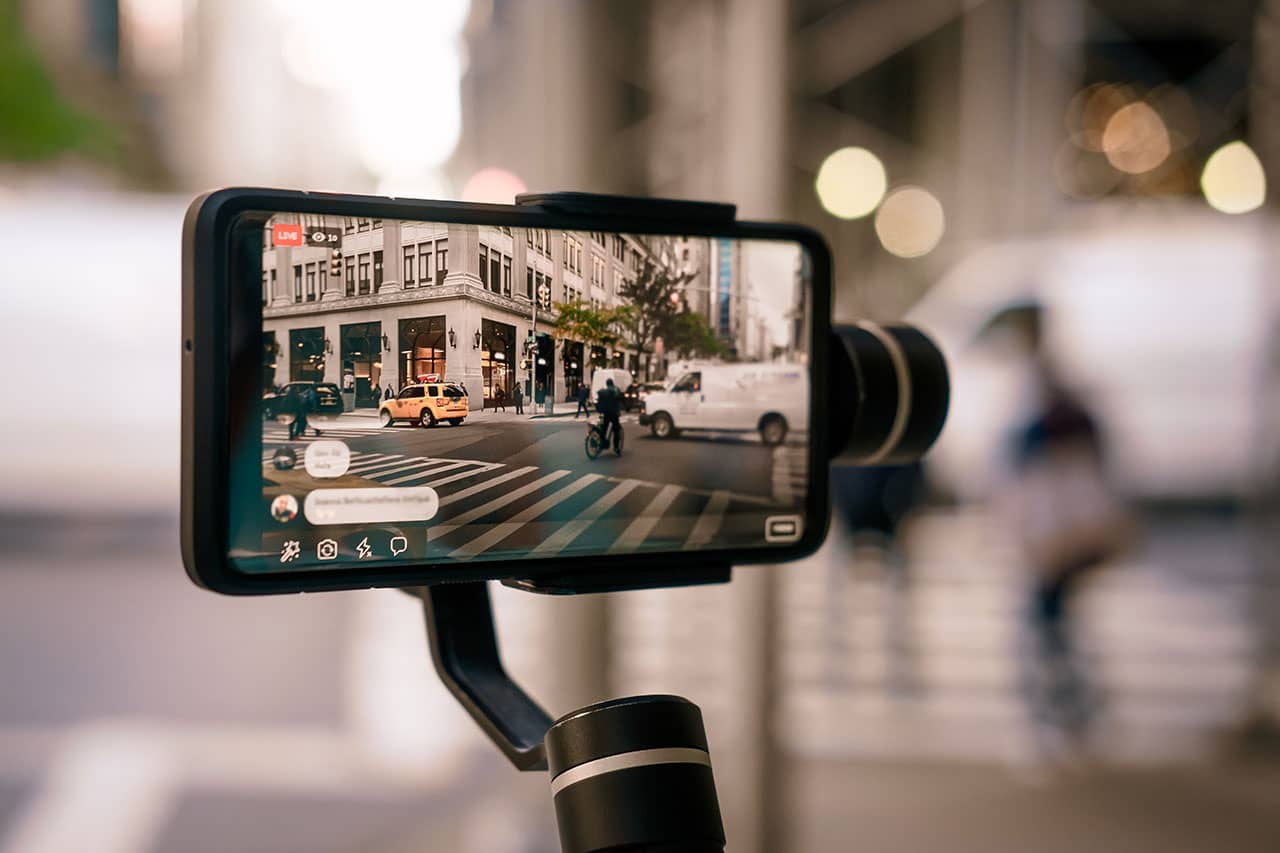
Collectively and individually, all the videos are a rich celebration of emerging, next generation built environment research.
Congratulations to the all the entrants of the "Why it Matters" Video Challenge who displayed creativity, vitality and good communication skills to explain the significance of their research. The judges were impressed and persuaded us to award 9 prizes. In addition, a further prize was decided by the People's Vote. And the 10 awards for the 2022 Video Challenge go to....
OUTSTANDING VIDEOS (€600)
Dalia ALY
University of Strathclyde
Cairo Green Spaces
Marta SMEKTALA
Wrocław University of Science and Technology
Why Balconies Matter
EXCELLENT VIDEOS (€400)
Vera GÖTZE
University of Bern
Why It Matters: Comparing Patterns of Densification
Anna CONZATTI
University of Bath
Improving Shelter Design for Saving Lives
Freya WISE
Open University
Realistically Reducing Carbon While Retaining Heritage in Residential Buildings
Kadir KURU
Istanbul Technical University
Model Proposal for Effective Risk Management in Public Private Partnerships
Jonna LJUNGE
Norwegian University of Science and Technology (NTNU)
Aggregates: The Hidden Foundation of Our Modern Society
Aditi BISEN
CEPT University
Wastewater Transitions in the Global South: Pollutant to Resource
Ahmad ALADAWI
Loughborough University
They May Forget Us, But Never We Will!
PEOPLE'S VOTE prize (€400)
Mark COLLETT
Leeds Beckett University
How Can QUB Keep Us On Track for Net Zero?
Thank you!
First and foremost, our deep thanks to the 49 participants studying in 14 countries (AU, DE, IN, IT, IE, MY, NG, NZ, PL, CH, TR, UK, US) who invested much time, thought and energy to create a 2-minute video explaining the implications of their PhD. A formidable task! We are enriched by all your efforts to share your emerging research that will undoubtedly shape our future. And we hope this process helped you to hone your communication skills and strategies. Each of you have created a unique description that conveys much about your thinking and your approach to life.
The Outstanding and Excellent videos were selected by a diverse group of 7 judges (Richard Lorch, Andreas Klee, Chiara Tagliaro, Vanesa Castán Broto, Rajan Rawal, Michael Donn & Rick Diamond). Thank you for watching all the videos and your rich feedback.
As of 15.11.2022, there were over 13,000 views of the videos - clearly a strong interest in this content. Over 2,200 people from 59 countries voted in the People's Vote. Thank you for your participation and enthusiasm.
The Video Challenge was developed by Buildings & Cities (B&C) and the Academy for Territorial Development in the Leibniz Association (ARL). We extend our thanks to our steering group: Richard Lorch (B&C), Andreas Klee (ARL), Chiara Tagliaro (Politecnico di Milano), Rajan Rawal (CEPT University), Rick Diamond (Lawrence Berkeley National Laboratory), Freddie Paige (Virginia Tech) and Carolin Plienes (ARL).

Latest Peer-Reviewed Journal Content
Urban form metrics for building occupancy modelling: applications and impacts
D Reiter, M Jehling & R Hecht
Retrofit realism: affordable low-carbon policies for existing homes
N Eyre & R Khosla
Inside offsite: everyday dwelling in factory-built apartments
L Dorignon & R Horne
MMC for housing: sectoral perception on governance challenges
J Morgan, C Goodier, R Schmidt-III & K Ayinla
Reorganising specification practice for component reuse: an exploratory study
S Gao, K Jones, J Xu & J Glass
Kitchen retrofits to support food practices and wellbeing
F J Andrews, A Sal Moslehian, E Warner & R Tucker
From strategy to delivery: a comparative analysis of MMC roadmaps
G Goldman, D Sorokine, F Suerich-Gulick, C Carbone & M Jemtrud
Thermal comfort, ventilation and mosquito-borne disease risk in Zanzibar hospitals
O Sloan Wood, J B Knudsen, K L Schiøler, E Lupenza, M Msellem & F Saleh
Reusing precast concrete elements in construction: assessing the economic conditions
O Vigren, H Westerlind & T Malmqvist
Institutional readiness for industrialised social housing in Vietnam
T Q Nguyen, B N Nguyen, T H Q To & Z Aziz
Prefabrication for housing retrofit: governance, innovation and resident experience
E Pikas, K Kuusk, P Pihelo, R Liias, J Pukk & T Kalamees
Reframing heat pump transitions: a care perspective
J van der Haer, R Schelwald & F de Haan
Urban informal settlements in Africa: transforming adaptation governance
K Buyana & H Sseviiri
Reusing concrete products in indoor environments: chemical hazard assessment
K Tähtinen, A Helin, E Parshintsev & H Hovi
Negotiating net-zero carbon: an ANT analysis of two buildings
L Schweber & M Green
Design for disassembly: a review of public policy proposals
O Vorobjev, U Uotila, T Joensuu & A Saari
Retrofitting Norwegian residential buildings: an archetype-based dynamic stock model
L S A Rousseau, S Amini, S Akin & E G Hertwich
Decolonising time: vernacular villages and the politics of heritage temporality
R Al-Rabady
Commutes to alternative workplaces: GHG emissions and physical activity
J Taylor, L Thoen, A Espinosa Mireles De Villafranca, P Anashin, J Vanhatalo, D Milián
Bernal & I Okkonen
Nine ‘myths’ about the building stock of Great Britain
S Evans, P Steadman, A Neto-Bradley, D Humphrey, R Liddiard,H Shamsi, J Palmer & G Simons
Join Our Community

The most important part of any journal is our people – readers, authors, reviewers, editorial board members and editors. You are cordially invited to join our community by joining our mailing list. We send out occasional emails about the journal – calls for papers, special issues, events and more.
We will not share your email with third parties. Read more
Latest Commentaries
Living Labs: Maturity, Impact and the Role of Researchers
Living labs are blossoming more than ever. Their first appearances in academic literature were roughly 25 years ago. Dimitri Schuurman (Ghent University) responds to the recent Buildings & Cities special issue “Living Labs: Agents for Change” and focuses on two important drawbacks that also come with living labs booming in practice as well as in the literature.
Building Performance Evaluation in Education – Why Not?
Building performance evaluation (BPE) is a process to understand how buildings perform in use and how inhabitants interact with their buildings. BPE can harness these insights to improve building design, operation and use. Paradoxically, BPE is rarely part of the curriculum for education of designers, buildings and managers. Fionn Stevenson (independent scholar) considers why BPE / post-occupancy evaluation is not being taught to architecture students in the UK and how to mainstream BPE in education and practice.