
www.buildingsandcities.org/insights/commentaries/integrating-nature-into-cities.html
Integrating Nature into Cities
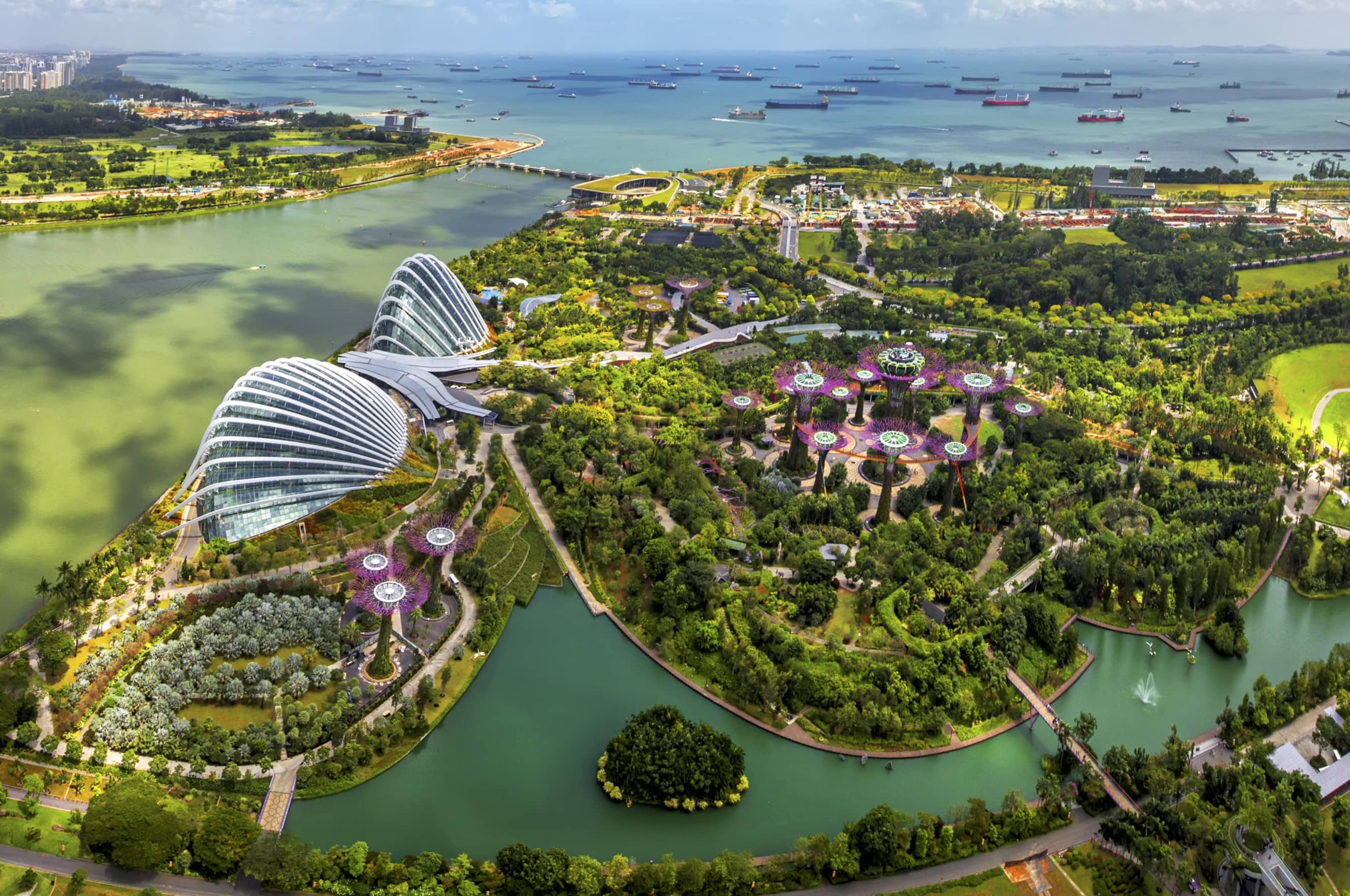
Nature-based design, combined with the transformation of underlying worldviews, can enhance urban resilience.
Increasing vegetation and green and blue spaces in cities can support both climate change mitigation and adaptation goals, while also enhancing biodiversity and ecological health. Maibritt Pedersen Zari (Auckland University of Technology) explains why nature-based solutions (NbS) must be a vital part of urban planning and design.
Nature-based solutions for climate change
Climate change and biodiversity loss are interconnected and worsening crises that threaten our survival and that of many other species (Pörtner et al. 2023). Most of the global human population now lives in urban environments, and cities have been shown to be significant contributors, directly and indirectly, to both these crises (Alberti 2024; Gurney et al. 2021), thus, the need for rapid transformation in cities is urgent. Professionals of the built environment, including researchers, designers, and policymakers, must lead the way in driving this.
The benefits of NbS are well-documented (Seddon et al. 2020; Pedersen Zari et al. 2022; Hobbie & Grim 2020; Frantzeskaki et al. 2022), including helping to mitigate urban heat islands, improving air quality, managing stormwater, providing habitat for urban wildlife and potentially increasing carbon sequestration. NbS can also support human physical health, well-being, foster social cohesion and offer opportunities for recreation (Van den Bosch & Sang 2017).
Given these tangible benefits, a radical scaling up and rethinking of how we integrate nature into cities is needed, such that nature is not considered merely as a decorative element but as an integral part of the urban fabric, helping to address climate, ecological and social crises (Tzoulas et al. 2007). To achieve this requires an approach that sees cities, and the people within them, as embedded within the broader natural systems they impact, not separate from them.
What is missing from this fast-evolving nature-based discourse in academia and design is an understanding of, not only what needs to change technically, but also why humans must fundamentally shift their perspective regarding living within the planet's ecological and climatic systems (Maller 2021). This touches upon the paradigm shift that regenerative design experts and others have long advocated for (Reed 2007). The current crises stem partly from viewing biodiversity and ecosystems as just resources for human use alone, rather than recognising their intrinsic value as part of a larger living network. The exploration of nature-based design must expand to include investigation and dialogue about what it means to work with nature and how such design can help repair and redefine human-nature relationships.
Learning from Indigenous knowledge
Forward-thinking, nature-based and vegetation-integrated urban and architectural design is a bold vision for future cities; reducing climate change drivers, adapting to its impacts, and improving the health of biodiversity and ecosystems (Lafortezza et al. 2018). Some cities are moving towards this vision already through policy and implementation such as Singapore's Green Plan 2023 and Melbourne' Green Our City Strategic Action Plan (Beatley 2023). However, to truly succeed, researchers must not only investigate technical approaches to NbS but also explore and discuss deep values of respect and reciprocity between people and the living world. These values, which see humans as part of the living world, or even kin to it often underpin Indigenous worldviews (Salmón 2000).
Nature-based design is not new (Mihaere et al. 2024). Indigenous communities have long developed ways of working with nature that enhance resilience, biodiversity, and sustainability. Practices like agroforestry, rotational land use and certain kinds of water management are often based on an understanding of ecological interdependence and socio-ecological systems design. Examples of Indigenous landscape-scale, nature-based systems that support dense human communities include the ahupua'a system in Hawai'i, tapere in the Cook Islands, and other similar systems throughout Oceania (Latai-Niusulu et al. 2024). These socio-ecological systems conserve ecosystems and strengthen human-environment relationships, and are underpinned by a relational way of thinking (Beamer et al. 2022).
Indigenous knowledge, which includes vernacular architecture (Piesik 2023), provides both practical tools and philosophies for understanding human-nature relationships (Petzold et al. 2020), encouraging people to re-examine their approach to built environment design and construction. These time-tested approaches may provide examples of worldviews needed to achieve long lasting resilience and living systems designs (Watson 2019).
Research for nature-based design
It is essential to consider cultural context when designing cities and buildings for climate change adaptation and addressing ecological degradation. Without this consideration, adaptation design risks becoming an accidental vehicle for neo-colonisation (Mihaere et al. 2024). This is particularly relevant given that Indigenous peoples are more likely to be affected by climate change (Ford et al. 2020) and that 80% of the world's remaining biodiversity is preserved by Indigenous peoples (FAO 2021).
In Aotearoa New Zealand, for instance, Tangata Whenua (Indigenous people) see themselves as literally related to certain mountains, rivers, oceans and other ecological elements, all of which are considered to have mauri, or a kind of life essence. This worldview is reflected at national policy level to a certain extent through recognition of legal personhood of certain rivers, forests, and mountains (Magallanes 2018). NbS that involve altering an urban river, for example, will have vastly different implications for Indigenous people in Aotearoa New Zealand, who may see that river as their ancestor, compared to how the same intervention might be perceived in a place without such a worldview. As urban transformations accelerate by necessity, it is crucial that nature-based design supports just transitions (Mihaere et al. 2024). Understanding nature-human worldviews is therefore key to ensuring nature-based interventions are socially and culturally respectful, just, and appropriate (Pineda-Pinto et al. 2021). Understanding these worldviews alongside technological innovations can inform new ways of designing cities that are more sustainable, equitable, and connected to the ecosystems on which they depend. As investigation into nature-based urban and architectural design increases, researchers and implementers must be mindful of this, and be willing to follow or partner with local knowledge holders and question their own perceptions.
Conclusion: research to support change
While nature-based urban interventions may offer immediate local benefits, real transformation requires a shift in mindsets; valuing integration and reciprocity with nature. High-tech NbS alone will be insufficient without the values and knowledge that ensure their longevity and meaningful impact. Nature-based design, combined with the transformation of underlying worldviews, offers practical, culturally grounded methods to enhance resilience. Vegetation-integrated cities with hybrid blue, green, and grey infrastructures provide a vision for reimagining the built environment, driving the rapid transformation needed to mitigate and adapt to climate change and biodiversity loss. Beyond mitigation and adaptation, well-researched, strategic NbS could help cities evolve into living systems, positioning them not as ecological and social challenges, but as catalysts for global regeneration, supporting biodiversity, ecological health, and human well-being.
References
Alberti, M. (2024). Cities of the Anthropocene: urban sustainability in an eco-evolutionary perspective. Philosophical Transactions of the Royal Society B, 379(1893), 20220264.
Beamer, K., Tau, T., & Vitousek, P.M. (2022). Islands and Cultures: How Pacific Islands Provide Paths Toward Sustainability. London: Yale University Press.
Beatley, T. (2023). Canopy Cities: Protecting and Expanding Urban Forests. Taylor & Francis.
FAO.(2021), The White/Wiphala Paper on Indigenous Peoples' food systems. Rome: Food and Agriculture Organization of the UN.
Ford, J. D., King, N., Galappaththi, E. K., Pearce, T., McDowell, G.,& Harper, S. L. (2020). The resilience of indigenous peoples to environmental change. One Earth, 2(6), 532-543.
Frantzeskaki, N., Oke, C., Barnett, G., Bekessy, S., Bush, J., Fitzsimons, J. ... & Ossola, A. (2022). A transformative mission for prioritising nature in Australian cities. Ambio, 51(6), 1433-1445.
Gurney, K. R., Liang, J., Roest, G., Song, Y., Mueller, K. & Lauvaux, T. (2021). Under-reporting of greenhouse gas emissions in US cities. Nature Communications, 12(1), 553.
Hobbie, S. E., & Grimm, N. B. (2020). Nature-based approaches to managing climate change impacts in cities. Philosophical Transactions of the Royal Society B, 375(1794), 20190124.
Lafortezza, R., Chen, J., Van Den Bosch, C. K. & Randrup, T. B. (2018). Nature-based solutions for resilient landscapes and cities. Environmental Research, 165, 431-441.
Latai-Niusulu, A., Taua'a, S., Lelaulu, T., Pedersen Zari, M. & Bloomfield, S. (2024). Working with nature, working with Indigenous knowledge: Community priorities for climate adaptation in Samoa. Nature-Based Solutions, 6, 100144.
Magallanes, C.I. (2018). From rights to responsibilities using legal personhood and guardianship for rivers. ResponsAbility, 216-239.
Maller, C. (2021). Re-orienting nature-based solutions with more-than-human thinking. Cities, 113, 103155.
Mihaere, S., Holman-Wharehoka, M., Mataroa, J., Kiddle, G. L., Pedersen Zari, M., Blaschke, P. & Bloomfield, S. (2024). Centring localised Indigenous concepts of wellbeing in urban nature-based solutions for climate change adaptation: case-studies from Aotearoa New Zealand and the Cook Islands. Frontiers in Environmental Science, 12, 1278235.
Pedersen Zari, M., MacKinnon, M., Varshney, K. & Bakshi, N. (2022). Regenerative living cities and the urban climate-biodiversity-wellbeing nexus. Nature Climate Change, 12(7), 601-604.
Petzold, J., Andrews, N., Ford, J. D., Hedemann, C., & Postigo, J. C. (2020). Indigenous knowledge on climate change adaptation: A global evidence map of academic literature. Environmental Research Letters, 15(11), 113007.
Piesik, S. (2023). Habitat: Vernacular Architecture for a Changing Climate. London: Thames and Hudson.
Pineda-Pinto, M., Frantzeskaki, N. & Nygaard, C. A. (2021). The potential of nature-based solutions to deliver ecologically just cities: Lessons for research and urban planning from a systematic literature review. Ambio, 1-16.
Pörtner, H. O., Scholes, R. J., Arneth, A., Barnes, D. K. A., Burrows, M. T., Diamond, S. E. ... & Val, A. L. (2023). Overcoming the coupled climate and biodiversity crises and their societal impacts. Science, 380(6642), eabl4881.
Reed, B. (2007). Shifting from 'sustainability' to regeneration. Building Research & Information, 35(6), 674-680.
Salmón, E. (2000). Kincentric ecology: Indigenous perceptions of the human-nature relationship. Ecological applications, 10(5), 1327-1332.
Seddon, N., Chausson, A., Berry, P., Girardin, C. A., Smith, A. & Turner, B. (2020). Understanding the value and limits of nature-based solutions to climate change and other global challenges. Philosophical Transactions of the Royal Society B, 375(1794), 20190120.
Tzoulas, K., Korpela, K., Venn, S., Yli-Pelkonen, V., Kazmierczak, A., Niemela, J. & James, P. (2007). Promoting ecosystem and human health in urban areas using green infrastructure: A literature review. Landscape and Urban Planning, 81(3), 167-178.
Van den Bosch, M. & Sang, Å. O. (2017). Urban natural environments as nature-based solutions for improved public health-A systematic review of reviews. Environmental Research,158, 373-384.
Watson, J. (2019). Lo-Tek. Cologne: Taschen.


Latest Peer-Reviewed Journal Content
Building space heating and cooling in NDCs 4.0
T P Lützkendorf
Building component reuse as sociomaterial interaction: lessons from precast concrete
J Uusikartano, L Alkki & V Capitani
Validating national reuse indicators from regional demolition data: a Swedish example
F Ericsson, K Mjörnell & U Janson
Climate change risk and decision-making [editorial]
S Foxell & I Cooper
Technologies of reconstruction [editorial]
P Tombesi
Urban form metrics for building occupancy modelling: applications and impacts
D Reiter, M Jehling & R Hecht
Retrofit realism: affordable low-carbon policies for existing homes
N Eyre & R Khosla
Inside offsite: everyday dwelling in factory-built apartments
L Dorignon & R Horne
MMC for housing: sectoral perception on governance challenges
J Morgan, C Goodier, R Schmidt-III & K Ayinla
Reorganising specification practice for component reuse: an exploratory study
S Gao, K Jones, J Xu & J Glass
Kitchen retrofits to support food practices and wellbeing
F J Andrews, A Sal Moslehian, E Warner & R Tucker
From strategy to delivery: a comparative analysis of MMC roadmaps
G Goldman, D Sorokine, F Suerich-Gulick, C Carbone & M Jemtrud
Thermal comfort, ventilation and mosquito-borne disease risk in Zanzibar hospitals
O Sloan Wood, J B Knudsen, K L Schiøler, E Lupenza, M Msellem & F Saleh
Reusing precast concrete elements in construction: assessing the economic conditions
O Vigren, H Westerlind & T Malmqvist
Institutional readiness for industrialised social housing in Vietnam
T Q Nguyen, B N Nguyen, T H Q To & Z Aziz
Prefabrication for housing retrofit: governance, innovation and resident experience
E Pikas, K Kuusk, P Pihelo, R Liias, J Pukk & T Kalamees
Reframing heat pump transitions: a care perspective
J van der Haer, R Schelwald & F de Haan
Urban informal settlements in Africa: transforming adaptation governance
K Buyana & H Sseviiri
Reusing concrete products in indoor environments: chemical hazard assessment
K Tähtinen, A Helin, E Parshintsev & H Hovi
Negotiating net-zero carbon: an ANT analysis of two buildings
L Schweber & M Green
Design for disassembly: a review of public policy proposals
O Vorobjev, U Uotila, T Joensuu & A Saari
Retrofitting Norwegian residential buildings: an archetype-based dynamic stock model
L S A Rousseau, S Amini, S Akin & E G Hertwich
Decolonising time: vernacular villages and the politics of heritage temporality
R Al-Rabady
Commutes to alternative workplaces: GHG emissions and physical activity
J Taylor, L Thoen, A Espinosa Mireles De Villafranca, P Anashin, J Vanhatalo, D Milián
Bernal & I Okkonen
Nine ‘myths’ about the building stock of Great Britain
S Evans, P Steadman, A Neto-Bradley, D Humphrey, R Liddiard,H Shamsi, J Palmer & G Simons
Join Our Community

The most important part of any journal is our people – readers, authors, reviewers, editorial board members and editors. You are cordially invited to join our community by joining our mailing list. We send out occasional emails about the journal – calls for papers, special issues, events and more.
We will not share your email with third parties. Read more
Latest Commentaries
Who is Responsible for Climate Change?
Ian Cooper (Eclipse Research) explores the questions of responsibility raised in the recent Buildings & Cities special issue ‘Climate Change Risk and Decision-Making’. Focusing here on carbon emissions and mitigation, global responses will require grounding in what can work locally. New responsibilities arise for the wide range of built environment decision-makers: clients, professionals and their institutions, central and local governments, product suppliers, financiers, insurers, etc. A framework is needed to manage the complexity of responsibilities especially for variety of actors, the time frames and spatial scales.
Professional Ethics in a Climate Crisis
The climate crisis has progressed into a dangerous phase with tragic consequences often counted in numbers of excess deaths, but also by powerful economic impacts of rising food prices, the increased costs of insurance and lending, costly damage to the built environment. Celia Davies, Director of Impact at the UK’s Town and Country Planning Association (TCPA) and Hugh Ellis, Director of Policy at TCPA, consider the responsibilities of professionals in shaping a built environment which is fit not just for today's climate risks but for the dramatic increase in severe and unpredictable weather which is now locked into our climate systems.