
www.buildingsandcities.org/journal-content/special-issues/housing-adaptability2.html
Housing Adaptability
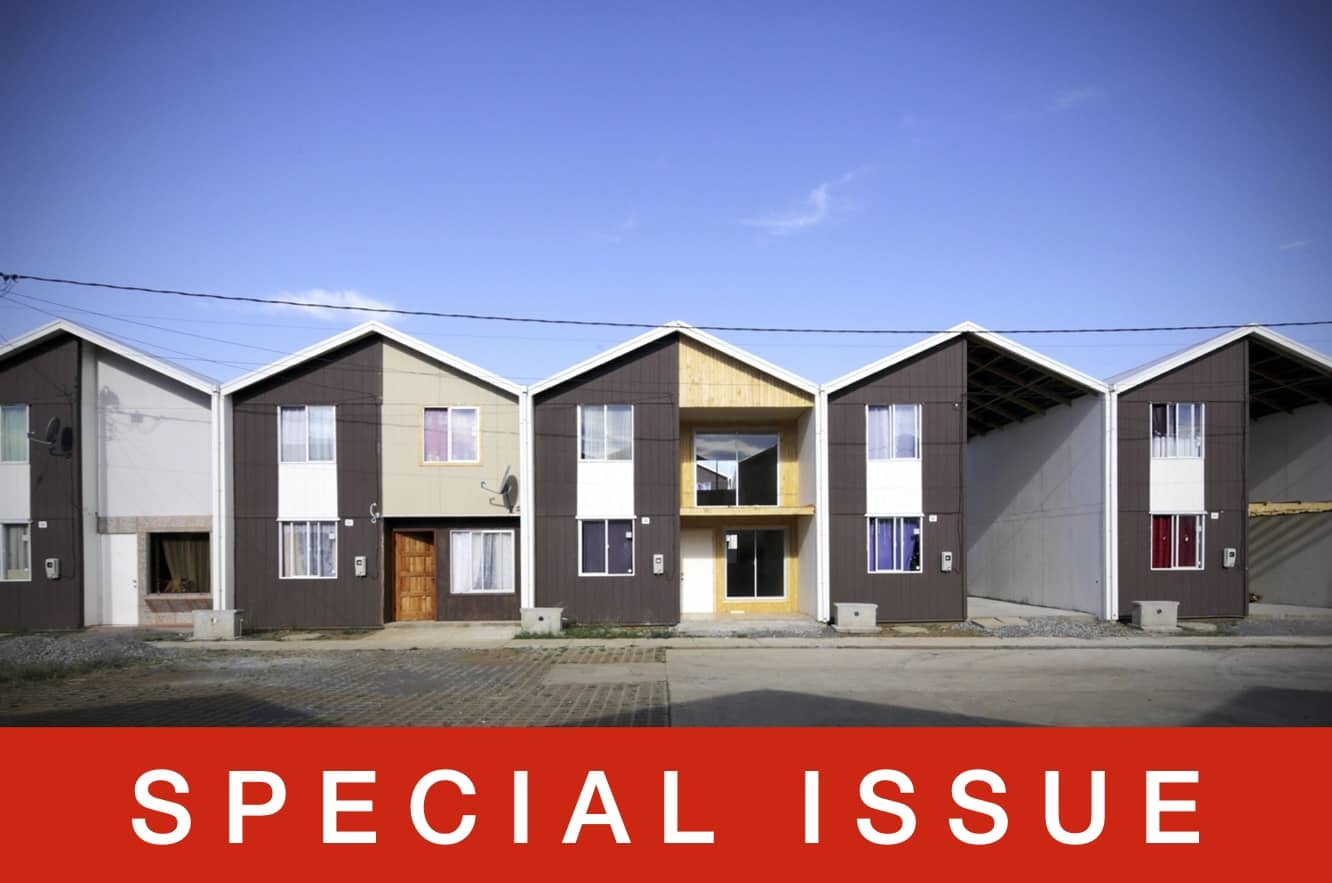
This special issue advances the understanding and implementation of housing adaptability and flexibility across a range of issues: spatial, social, environmental, economic, time and multi-use and multiuser adaptability.
The adaptability of our homes is a social, emotional and cultural issue as much as a technical or construction challenge. The need for housing adaptability and flexibility became apparent during the pandemic, when an increasing range of activities, such as working, studying, home-schooling, exercising etc., occurred in homes that were never designed for this purpose and thus ill-suited. However, the need for adaptability and flexibility is also necessary at other times during a building's lifespan. Dwellings need to accommodate new working practices promoted by digitisation, or a changing demographic (ageing population, migration, fluctuation of household members).
Guest editors: Sofie Pelsmakers and Elanor Warwick
This special issue explores how to best adapt spaces to accommodate different and changing user needs (on a daily, seasonal, long term basis) and user generations. The papers in this special issue explore:
- Concepts of adaptability and flexibility in housing and their implications
- The potential for existing and new housing to become more adaptable over time
- Drivers and barriers to implementing housing adaptability
- How residents may overcome unadaptable spaces
- The benefits and unintended consequences
- What shapes inhabitants' needs, perceptions and expectations for adaptable spaces
The papers in this special issue challenge policymakers, planners, clients, developers and designers to make new and existing dwellings more adaptable. This special issue makes clear both the needs and benefits that accrue from providing adaptability in housing. Moreover, it is financially viable to do so. When embarking on retrofitting strategies to mitigate greenhouse gas emissions from the housing stock, it would be wise and cost-effective to include adaption in retrofit programmes. But there is an equal justification for making the housing stock more widely adaptable - especially given the decreasing size of dwellings and changing nature of work and education. A home's adaptive capacity supports an individual's and community's resilience when faced with different life events and their associated disruptions and consequences.
Table of contents
Housing adaptability: new research, emerging practices & challenges (Editorial)
S. Pelsmakers & E. Warwick
Sharing a home under lockdown in London
F. Blanc & K. Scanlon
Adapting owner-occupied dwellings in the UK: lessons for the future
T. Hipwood
Architects' 'enforced togetherness': new design affordances of the home
E. Marco, M. Tahsiri, D. Sinnett & S. Oliveira
Inclusive Living: ageing, adaptations and future-proofing home
V. McCall
Balconies as adaptable spaces in apartment housing
T. Peters & S. Masoudinejad
The use of apartment balconies: context, design and social norm
M. Smektała & M. Baborska-Narożny
Residents' views on adaptable housing: a virtual reality-based study
J. Tarpio & S. Huuhka
Lack of adaptability in Brazilian social housing: impacts on residents
S.B. Villa, P.B. Vasconcellos, K.C.R. de Bortoli, & L.B. de Araujo
Commentaries
Housing Adaptability: Some Past Lessons
A. Rabeneck
Key Lessons for Adaptable Housing
F. Holliss
Launch Events - Videos
To promote a wider international dialogue, an international virtual event was hosted by a leading UK building industry think tank, The EDGE, on 27 February 2023 (chaired by John Palmer, UK Department for Levelling Up, Housing and Communities).
Speakers
Introduction to Adaptable Housing
Elanor Warwick (Clarion Housing Group)
The Value of Adaptability to Residents
Jyrki Tarpio (Tampere University)
Housing Adaptability: Design Strategies
Astrid Smitham (Apparata Architects)
Balcony Design: Do We Know What Inhabitants Need?
Marta Smektala (Wroclaw University of Science & Technology)
Respondents
Three key respondents from industry, government and academe briefly consider the whether and how adaptability in housing can be fostered: